
精细化投资

Search documents
基金早班车丨千亿港股ETF现身,公募南下布局再提速
Jin Rong Jie· 2026-01-28 00:36
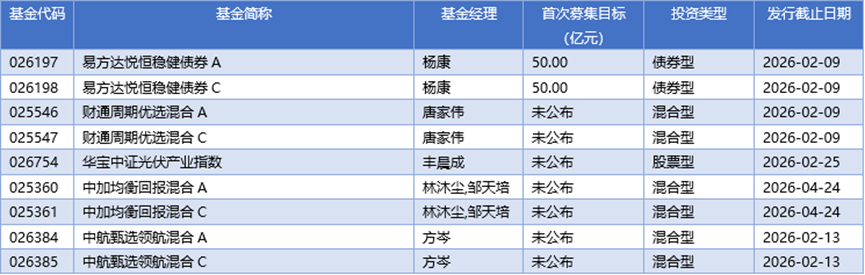
Group 1 - Hong Kong stocks have become a core battleground for public offerings at the beginning of the year, with 26 new Hong Kong stock-themed products reported since 2026, focusing on technology, pharmaceuticals, and cyclical sectors [1] - Hong Kong-themed ETFs have seen a net inflow of nearly 30 billion yuan this year, with the Fuguo Hong Kong Stock Connect Internet ETF being the first to exceed 100 billion yuan in assets [1] - The combination of low valuations and favorable policies is expected to lead to continued inflows of southbound capital, accelerating the expansion of Hong Kong's financial products [1] Group 2 - On January 27, a total of 9 new funds were launched, primarily mixed and bond funds, with the E Fund Yueheng Stable Bond A aiming to raise 5 billion yuan [2] - In the context of A-share market fluctuations, stock ETFs have seen significant trading volume, with a noticeable shift in funds; the CSI 300 ETF and the CSI 1000 ETF experienced net outflows of 336.9 billion yuan and 78 billion yuan respectively [2] - Meanwhile, resource and technology sector-themed ETFs have attracted a combined net inflow of 158.5 billion yuan, indicating a shift from broad-based to high-growth sector investments [2] Group 3 - China Life recently announced plans to establish a pension industry fund and a Yangtze River Delta private equity fund, with a total subscription scale of nearly 12.5 billion yuan [2] - Insurance capital has been increasingly allocated to private equity and other equity assets, with regulatory encouragement for long-term capital entering the market, leading to a diversified investment approach [2]

告别押注式增长:“牛基”画像揭示公募发展逻辑正在迭代
Zheng Quan Shi Bao· 2026-01-06 18:24
Core Insights - The public fund industry in 2025 achieved a record high average return rate of 141.87% for the top 20 funds, with the leading product reaching an astonishing 233.29%, setting a new annual return record for the industry [1] - The industry is transitioning from a "betting" growth model to a more refined and systematic operation, marking a significant evolution in the active equity fund sector [1] Group 1: Performance and Trends - The top 20 active equity funds in 2025 displayed a notable shift in their investment research structure, moving towards a "platform-based, integrated, multi-strategy" research system [2] - The average tenure of fund managers for the top 20 funds was 4.66 years, the lowest in the past decade, indicating a trend towards younger managers [2] - 95% of the fund managers in the top 20 funds held master's degrees, with 5% holding doctoral degrees, showcasing a higher educational background compared to the industry average [3] Group 2: Investment Strategies - Fund managers with diverse professional backgrounds, particularly in science and engineering, are becoming increasingly important, allowing for better understanding of emerging sectors like technology and renewable energy [3] - The investment style has shifted from "high-frequency trading" to "steady and in-depth research," with the median turnover rate for the top 20 funds dropping to 309.49%, a decrease of over 30% from 2024 [3] - The top two sectors for the leading funds were electronics and communications, indicating a consensus on industry trends among fund companies [4] Group 3: Methodology Evolution - The methodology for achieving high returns has evolved from relying on short-term market speculation to focusing on long-term value creation, with the median excess return over benchmarks for the top 20 funds reaching 121.45%, a new high [5] - The information ratio for the top 20 funds improved to an average of 0.3, reflecting enhanced efficiency in generating excess returns while managing portfolio volatility [6] - The average Calmar ratio for the top 20 funds reached 5.3, indicating a significant improvement in risk-adjusted returns compared to previous years [7] Group 4: Strategic Adjustments - The public fund industry is moving towards a more refined and systematic operation, with a focus on multi-strategy investment approaches to enhance performance and stability [9] - The integration of research across different sectors is becoming standard practice, allowing for more precise investment decisions based on comprehensive industry insights [10] - The shift towards a diversified asset allocation strategy is seen as essential for mitigating market volatility and enhancing long-term performance stability [12]