精致露营

Search documents
户外露营装备市场调研报告-主要企业、市场规模、份额及发展趋势
Sou Hu Cai Jing· 2026-02-26 08:09
Core Insights - The global outdoor camping equipment market is projected to reach approximately $928 million by 2025 and $1.433 billion by 2032, with a compound annual growth rate (CAGR) of 6.5% from 2026 to 2032 [1] Market Drivers - Consumer perception upgrades and diversified scenarios are driving the market, with a shift from traditional camping to leisure and entertainment, leading to new models like "glamping" and "camping+" [2] - The integration of camping with family activities, team-building, and educational experiences is expanding market boundaries, exemplified by the "camping + homestay" model [2] Policy Support and Infrastructure Improvement - National policies such as the "Action Plan for Promoting Outdoor Sports Facility Construction and Service Improvement (2023-2025)" support the establishment of camping sites and encourage scenic areas to designate camping zones [3] - Upgrades in campsite facilities, including restrooms and power supply, enhance the camping experience and attract more consumers, creating a positive cycle of "site construction - equipment demand - consumption growth" [3] Technological Innovation and Environmental Demand - Trends in lightweight and smart equipment are emerging, such as carbon fiber trekking poles and solar charging devices that reduce outdoor burdens [4] - The use of eco-friendly materials, like biodegradable fabrics and recycled plastics, minimizes ecological impact and aligns with sustainable development goals, becoming a new competitive focus for companies [4] Industry Overview - The report analyzes the development status of the global and Chinese outdoor camping equipment market during the "14th Five-Year Plan" period and forecasts based on strategic priorities for the "15th Five-Year Plan" [6][7] - Key manufacturers in the Chinese market include Decathlon, Mugu, and others, with Decathlon holding approximately 25% market share [1][7] Report Structure - Chapter 1 covers the report's scope, product segmentation, downstream application fields, and overall industry development [8] - Chapter 2 details the overall market size in global and Chinese regions, including market shares [8] - Chapter 3 analyzes the competitive landscape, including revenue rankings and market shares of companies in the outdoor camping equipment sector [8] - Chapter 4 focuses on the overall size and share of different product types in the global market [8] - Chapter 5 discusses the overall size and share of outdoor camping equipment by application [8] - Chapter 6 addresses industry development opportunities and risks [8] - Chapter 7 provides a supply chain analysis, including industry procurement and sales models [8] - Chapter 8 introduces major companies in the global outdoor camping equipment market, including company profiles and revenue updates [8] - Chapter 9 concludes the report [8]


户外博主踩在风口上
Xin Lang Cai Jing· 2025-06-17 01:31
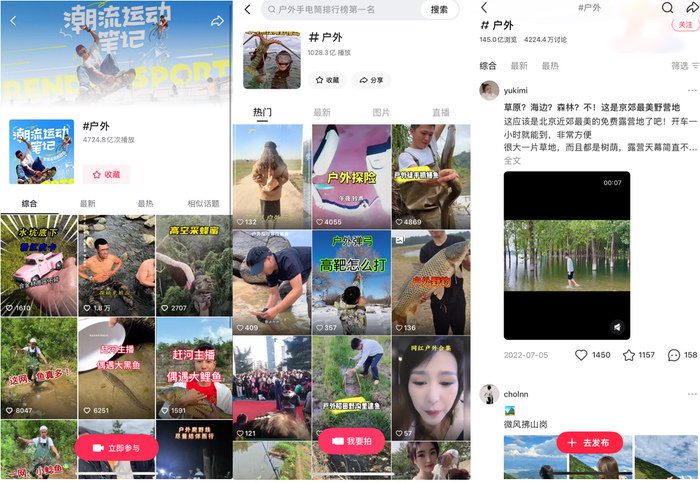
Core Insights - The outdoor activities have become a popular trend among young people in China, with significant growth in sales of outdoor-related products on e-commerce platforms during promotional events like "618" [1][5][12] - Social media plays a crucial role in promoting outdoor activities, with platforms like Douyin and Xiaohongshu seeing billions of views on outdoor-related content, indicating a strong interest in nature and outdoor exploration among the youth [2][4][12] - Outdoor influencers are emerging as key players in the market, leveraging their expertise to drive sales and engagement, although the sustainability of this model remains uncertain [4][13] Group 1: Market Trends - Outdoor sports are increasingly popular, driven by users' desire to relieve stress, improve health, and connect with nature, with nearly 90% of respondents engaging in outdoor activities monthly [5] - The sales of outdoor products on platforms like Tmall and JD.com have seen substantial increases, with some brands reporting over 100% year-on-year growth during promotional events [1][12] - The concept of "Citywalk" has gained traction, with a 140-fold increase in search volume on Xiaohongshu, indicating a shift towards simpler outdoor activities [8] Group 2: Influencer Impact - Outdoor influencers are distinct from traditional travel bloggers, focusing on authentic experiences and specialized knowledge, which enhances their ability to drive sales [4][13] - The rise of the "first snow mountain" concept has resonated with the public, making snow climbing more accessible and appealing to a broader audience [11] - Influencers with smaller followings can still achieve significant engagement and monetization opportunities, with some reporting monthly incomes of up to 100,000 yuan [13][14] Group 3: Market Potential - The outdoor equipment market in China is projected to grow significantly, with estimates suggesting a market size of approximately 44.5 billion USD by 2024 [12] - Brands like Decathlon are capitalizing on this trend, with rapid revenue growth reported in recent years [16] - The commercialization of outdoor activities is evident, with influencers and brands collaborating to create a robust ecosystem for outdoor products [12][13] Group 4: Challenges and Content Gaps - Despite the growing interest, there is a notable lack of professional knowledge dissemination in the outdoor space, leading to potential misperceptions about the challenges of outdoor activities [20][21] - The focus on marketing over research and development among new outdoor brands has raised concerns about product quality and user satisfaction [17][18] - The outdoor content landscape is crowded, but many influencers struggle to maintain relevance and provide valuable insights, highlighting the need for high-quality, differentiated content [22]