
系统医学

Search documents
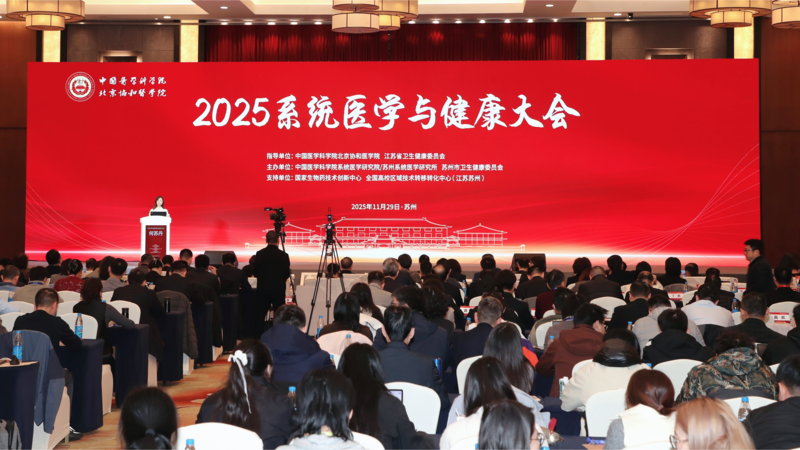
2025系统医学与健康大会在苏州举行
Su Zhou Ri Bao· 2025-11-30 01:17
Core Insights - The 2025 System Medicine and Health Conference was held in Suzhou Industrial Park, highlighting the importance of system medicine in the biopharmaceutical industry [1][2] - Suzhou is positioning itself as a strategic hub for biopharmaceuticals, emphasizing innovation and collaboration in the sector [2][3] Group 1 - The conference featured key figures from the Chinese Academy of Medical Sciences and local government, indicating strong institutional support for system medicine [1][2] - The theme of the conference was "Strengthening Industry-Innovation Integration to Support New Quality Development," focusing on major disease mechanisms, drug and device development, clinical translation, and new treatment strategies [3] - Several strategic partnerships were announced during the event, including collaborations between the System Medicine Institute, Suzhou University, and various medical and innovation partners [3] Group 2 - The Suzhou base of the National Medical Science and Technology Innovation System reached a significant milestone with the completion of its transformation center project [4]

清华大学玉泉医院马羽教授团队推动帕金森病诊疗迈入新阶段
Feng Huang Wang Cai Jing· 2025-11-27 10:32
Core Viewpoint - The Tsinghua University Yuquan Hospital team has introduced an innovative "Disease-Brain-Body" three-dimensional integrated treatment system for Parkinson's disease, marking a shift from symptom-based treatment to a systematic and precise approach [1][2]. Group 1: Treatment Framework - The "Disease-Brain-Body" system aims to address the limitations of traditional treatment methods by providing a comprehensive framework that includes three key dimensions: disease assessment, brain evaluation, and body condition [1][2]. - The team developed the DM motion assessment system to quantify motor symptoms like tremors and rigidity, providing objective biomarkers for treatment [1]. - HEMA multimodal imaging technology allows for individualized assessment of brain functional networks, enhancing the precision of deep brain stimulation (DBS) surgery [2]. Group 2: Clinical Application and Benefits - The new system demonstrates three significant advantages: precise diagnosis through multidimensional assessment, personalized treatment plans driven by data rather than experience, and a comprehensive management model that ensures continuous optimization of treatment outcomes [2]. - The integration of traditional Chinese medicine principles into the treatment framework aims to improve overall patient functionality by balancing bodily systems [2]. Group 3: Future Directions - The team plans to explore new clinical and research directions, including the use of big data and artificial intelligence for intelligent diagnosis, establishing more refined disease classifications based on multi-omics data, and updating industry treatment standards through evidence-based research [3].
香港浸会大学:数据显示中医药研究领域发展蓬勃
Xin Hua Wang· 2025-08-08 02:27
Core Insights - The report titled "Inheritance and Innovation: Decoding the Development Trajectory of Traditional Chinese Medicine (TCM) Science" highlights the rapid development and interdisciplinary integration of TCM research from 2014 to 2023 [1] Group 1: Research Growth - TCM research has seen participation from 188 countries and regions, with over 200,000 research papers published [1] - The compound annual growth rate (CAGR) of research quantity is 10.6%, significantly higher than the global average growth rate of 3.9% [1] - The total volume of related literature has nearly tripled, indicating a robust growth in the TCM research field [1] Group 2: Academic Impact - 14.2% of TCM literature ranks among the top 10% of the most cited papers globally, showcasing its academic influence [1] Group 3: Interdisciplinary Trends - 61.9% of TCM-related research falls within the medical field, while 33.1% pertains to biochemistry, genetics, and molecular biology, and 28.1% covers pharmacology, toxicology, and pharmacy [1] - This distribution reflects the trend of interdisciplinary collaboration and development in TCM research [1] Group 4: Institutional Contributions - Hong Kong Baptist University (HKBU) emphasizes the report as a significant achievement in promoting the standardization, modernization, and internationalization of TCM [1] - The report illustrates the extensive influence of TCM research in areas such as digital health and systems medicine [1] Group 5: Future Directions - The Vice President of HKBU suggests that TCM is moving towards a modern phase centered on systems medicine, integrating life sciences and data technology, which may establish new standards for the integration of Chinese and Western medicine [2]