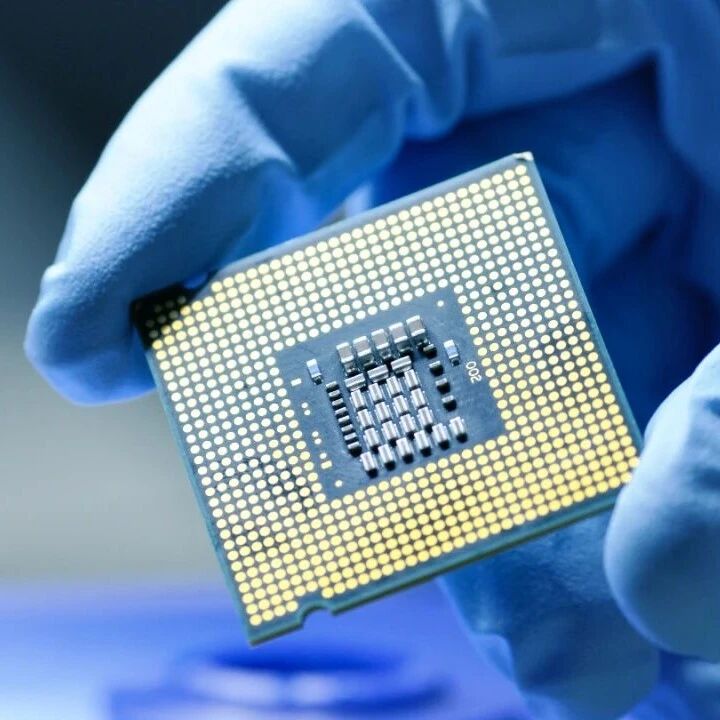
系统级封装(System-on-Package)

Search documents
芯片的未来,靠它们了
半导体行业观察· 2026-03-25 00:40
Core Viewpoint - The semiconductor industry is transitioning from a focus on transistor scaling to a more modular and flexible architecture, driven by advancements in glass substrates, UCIe standards, and CXL technology, which collectively enable higher performance without solely relying on transistor miniaturization [2][48][49]. Group 1: Transition to Glass Substrates - The shift from organic substrates to glass substrates marks a significant change in semiconductor packaging, with companies like Intel planning to introduce glass substrate technology in the latter half of this decade [5][7]. - Glass substrates help mitigate warping issues and support larger package sizes (approximately 100 mm × 100 mm), offering higher interconnect density compared to organic substrates [4][6]. - The glass substrate market is projected to reach $460 million by 2030 under optimistic adoption scenarios [6]. Group 2: UCIe Technology - UCIe (Universal Chiplet Interconnect Express) is a standardized die-to-die interconnect technology that enables chiplets from different process nodes and suppliers to work together within the same package [4][18]. - The evolution of UCIe from versions 1.0 to 3.0 reflects the industry's rapid adoption, with UCIe 3.0 supporting data rates of up to 64 GT/s, effectively doubling the bandwidth capabilities of earlier versions [20][19]. - UCIe enhances modularity in chiplet-based designs, allowing for cost-effective and efficient communication between components manufactured on different process nodes [22][24]. Group 3: CXL Technology - CXL (Compute Express Link) addresses the "memory wall" issue by decoupling memory from CPUs, allowing for shared memory pools that can dynamically allocate resources as needed [30][36]. - CXL 3.0 introduces a fabric architecture that supports up to 4,095 nodes, enabling efficient memory pooling and reducing idle memory [31][35]. - The implementation of CXL technology can lower overall memory requirements by 7% to 10%, potentially saving hyperscale data center operators hundreds of millions annually [36]. Group 4: Future Outlook - The integration of glass substrates, UCIe, and CXL into a unified architecture is expected to define the 2026 roadmap for semiconductor technology, leading to the development of System-on-Package (SoP) solutions [41][48]. - The anticipated AI processors of 2026 will feature a modular design with multiple chiplets on glass substrates, supporting advanced functionalities and high bandwidth [42][44]. - Future developments may include the integration of photonic technologies, enhancing signal transmission over longer distances and addressing the limitations of traditional copper interconnects [45][47].