红色文化体验

Search documents
多样出游 年味出新(文化中国行)
Ren Min Ri Bao· 2026-02-23 01:04
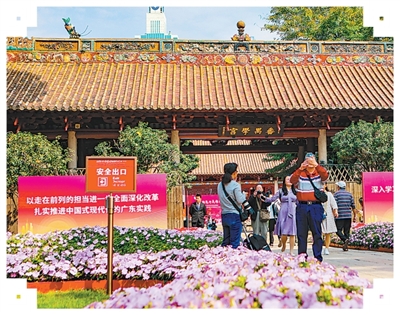
Red Tourism - The Mao Zedong Memorial Museum in Guangzhou attracts visitors interested in revolutionary history, with a focus on the training of over 800 students at the Peasant Movement Training Institute from 1924 to 1926 [6][7] - The museum features original layouts of historical rooms and artifacts, enhancing the educational experience for visitors [6][7] - Young visitors express appreciation for the sacrifices made by past revolutionaries, recognizing the contrast between their current comfortable lives and the hardships faced by earlier generations [7][8] Rural Tourism - Fish Mountain Village in Beijing's Pinggu District has become a popular destination during the Spring Festival, showcasing local culture and art [9][10] - The village has transformed a former power station into an art gallery, generating over 100,000 yuan annually for the community [9][10] - Local agricultural practices, including the cultivation of strawberries and organic vegetables, attract visitors for experiential activities like fruit picking [10] Ice and Snow Tourism - The Jinshanling Galaxy Ski Resort in Hebei has improved its snow quality and facilities, becoming a national-level ski tourism destination [11][12] - The resort offers various snow activities and is focused on enhancing visitor experiences through service upgrades [12] - The "North Polar Village" in Chengde integrates cultural experiences with winter sports, attracting tourists with immersive activities that highlight local history [13] Self-Driving Tourism - Self-driving tourism is gaining popularity, allowing families to explore scenic areas like the Three Gorges and enjoy local culinary specialties [14][15] - The flexibility of self-driving trips enables families to create personalized itineraries, enhancing their travel experiences [15]

百年洋楼秒变“谍战剧本杀场地”,在天津数字艺术博物馆,用一场《邮轮谜案》致敬抗战英雄
Xin Lang Cai Jing· 2026-02-09 17:12
Core Viewpoint - The article highlights the transformation of the former French Public Bureau in Tianjin into a digital art museum that hosts a themed escape game titled "The Cruise Mystery," paying tribute to the heroes of the Anti-Japanese War [1] Group 1: Venue and Experience - The venue is the historical French Public Bureau, now known as the Tianjin Digital Art Museum, which features a design reminiscent of the Republic of China era [1] - Participants engage in an immersive experience where they take on roles to search for evidence and interact with NPCs, simulating a spy narrative set during the Anti-Japanese War [1] Group 2: Cultural Significance - The escape game "The Cruise Mystery" serves as a homage to the wisdom and struggles of ancestors who fought for national integrity during a tumultuous period in history [1] - The initiative reflects a blend of entertainment and education, aiming to instill a sense of historical awareness and appreciation among participants [1]
特色文旅体验活动亮相西山八大处
Ren Min Ri Bao Hai Wai Ban· 2025-10-09 01:11
Core Points - The 12th Xishan Badachu Cultural Week was held in Beijing's Badachu Park during the National Day holiday, transforming the historical site into an open-air cultural experience venue that combines red memory, intangible cultural heritage, international exchange, and health activities [1] - The event featured various activities such as artistic performances, mountain climbing, charity sales, and flash mobs, providing a rich cultural and interactive experience for citizens and tourists [1] Group 1 - The red experience attracted significant attention, allowing visitors to engage with historical narratives through hands-on activities like decoding Morse code and sending messages of goodwill to the country [1] - International students participated in the "Little Docent" program, learning about the stories behind the red radio waves and experiencing the process of sending messages, which deepened their understanding of Chinese history [1][3] Group 2 - The "Intangible Cultural Heritage Eight Collections" showcased eight representative projects unique to Shijingshan District, highlighting traditional crafts such as Beijing-style qipao buttons and the intricate art of flower making [2] - International students joined local citizens in activities that allowed them to express their blessings for China and their homesickness, fostering a sense of community and connection during the Mid-Autumn Festival [2]