
纵向垄断协议

Search documents
纵向垄断协议的安全区:“安全港”制度的新适用
Xin Lang Cai Jing· 2025-12-20 04:40
Group 1 - The "safe harbor" rule in China's Anti-Monopoly Law allows operators with a market share below a certain threshold to avoid prohibition on vertical monopoly agreements, provided they meet other conditions set by the State Council's anti-monopoly enforcement agency [1][2] - The rule is designed to provide legal protection for certain behaviors, reducing legal compliance costs for businesses and enhancing operational stability [2][3] - The "safe harbor" rule is not unique to anti-monopoly law and has parallels in various legal fields, such as intellectual property and securities law, indicating a broader legislative practice [2][3] Group 2 - The "safe harbor" rule applies specifically to vertical monopoly agreements, excluding horizontal agreements, and can cover both price and non-price agreements [4] - The rule incorporates a dual standard of market share and revenue, reflecting the need for a comprehensive assessment of market power [5][6] - The thresholds for market share are set at 5% for price-related agreements and 15% for non-price agreements, indicating a stricter approach to price-related agreements due to their higher risk of anti-competitive effects [6] Group 3 - The assessment of whether an agreement meets the "safe harbor" criteria is based on data from the duration of the monopoly agreement, rather than a single point in time [7] - The application of the "safe harbor" rule follows an "application-review" logic, where operators must provide supporting materials for their claims, and enforcement agencies will verify compliance [7][8] - The "safe harbor" rule is distinct from other exemption rules in the Anti-Monopoly Law, serving as a mechanism to filter out agreements with minimal competitive harm [9][10] Group 4 - The establishment of the "safe harbor" rule creates a predictable legal environment for vertical monopoly agreements, enhancing business flexibility and stability [10][11] - This rule aligns with the broader goals of promoting market economic vitality and supporting the development of the private economy in China [11]
反垄断“安全港”制度落地:在宽严之间 寻找纵向协议规制的“中国方案”
Xin Lang Cai Jing· 2025-12-20 04:40
Group 1 - The core viewpoint of the article is the revision of the "safe harbor" provisions in the Anti-Monopoly Law, which clarifies the market share standards and other conditions for vertical monopoly agreements [1][2] Group 2 Background of the Revision - Vertical monopoly agreements have been one of the most controversial areas since the implementation of the Anti-Monopoly Law in 2008, with differing interpretations regarding the competitive effects of resale price maintenance agreements [2] - The revision in June 2022 introduced a "safe harbor" system to identify vertical monopoly agreements that are unlikely to harm competition, thus presuming them to be legal [2] Role of the "Safe Harbor" System - The "safe harbor" system is designed to categorize vertical agreements based on their potential to restrict competition, allowing for a more nuanced analysis of their effects [3] - It aims to focus enforcement resources on agreements that are more likely to harm competition while providing clearer expectations for businesses [3] Key Analysis of the "Safe Harbor" System 1. The "safe harbor" standards are the result of weighing multiple factors, including the potential competitive effects of different types of agreements and the costs of enforcement [4] 2. The system incorporates revenue standards alongside market share to address the limitations of using market share alone, especially in new economic forms [5] 3. There are exceptions to the "safe harbor" provisions, allowing for the possibility of proving that an agreement does indeed restrict competition [6] 4. The standards set for the "safe harbor" are considered appropriate, with stricter conditions for agreements that severely limit competition [7] 5. The regulations leave room for special provisions for specific industries or agreements, indicating potential future targeted regulatory measures [8] Outlook - The revision enhances the clarity of compliance paths for businesses and strengthens the enforcement of anti-monopoly laws, promoting a fairer market environment [9]
涉反垄断执法“新规”为经营主体提供清晰行为指引 激发市场创新活力
Yang Shi Wang· 2025-12-20 02:27
Core Viewpoint - The revised "Regulations on Prohibiting Monopoly Agreements" will take effect on February 1 next year, providing clear behavioral guidelines for businesses regarding vertical monopoly agreements [1][5]. Group 1: Regulatory Changes - The new regulations clarify the applicable standards and conditions under which vertical monopoly agreements are not prohibited, helping businesses understand the boundaries of lawful competition [5]. - For agreements that fix or limit resale prices, businesses with a market share below 5% and a turnover below 100 million yuan during the agreement period will not face prohibition [5]. - For non-price-related vertical restrictions, businesses with a market share below 15% can apply the "safe harbor" rule without turnover restrictions [5][7]. Group 2: Impact on Businesses - The introduction of the "safe harbor" rule allows businesses greater operational autonomy and more choices in setting their business models [4]. - If a case is determined to meet the "safe harbor" criteria, ongoing investigations will be terminated, and cases not yet filed will not be initiated [9]. - The revised regulations are expected to enhance compliance development among businesses, stimulate market innovation, and reduce legal compliance costs, particularly benefiting small and micro enterprises [9][11].

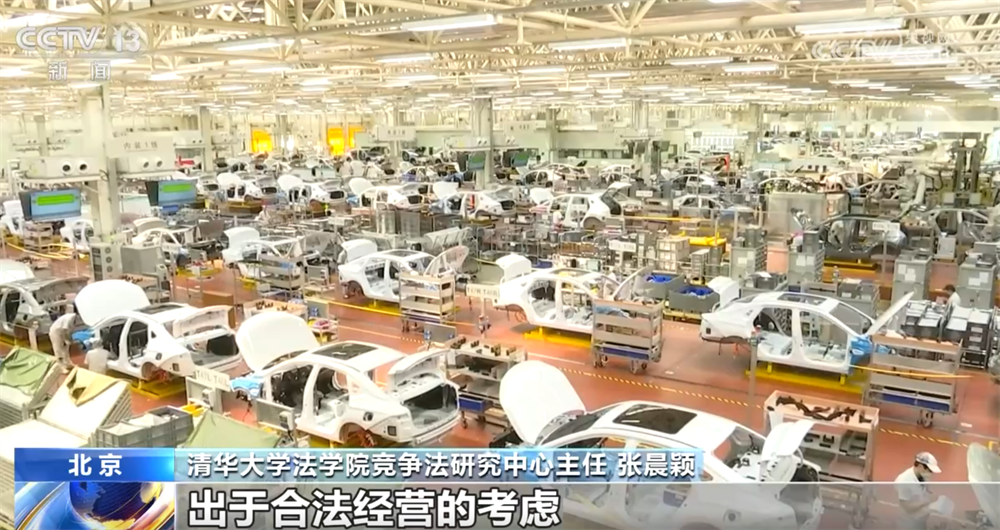
明确依法竞争边界 涉反垄断执法新规发布
Yang Shi Xin Wen· 2025-12-20 00:45
Core Viewpoint - The revised "Regulations on Prohibiting Monopoly Agreements" will take effect on February 1 next year, providing clear behavioral guidelines for businesses regarding vertical monopoly agreements [1]. Group 1: Clarification of Legal Competition Boundaries - The revised regulations clarify the applicable standards and conditions under which vertical monopoly agreements are not prohibited, helping businesses understand the legal boundaries of competition [3]. - For agreements that fix or limit resale prices, if the market share is below 5% and the sales revenue of the involved products is below 100 million yuan during the agreement period, such agreements will not be prohibited [3]. - For non-price-related vertical restrictions, businesses can apply the "safe harbor" rule if their market share is below 15% during the agreement period, without a revenue condition [3]. Group 2: Support for Compliance and Market Innovation - The new regulations help businesses assess the legality and safety of their marketing behaviors, further stimulating market innovation [5]. - The "safe harbor" rule encourages businesses to enhance antitrust compliance, maintaining fair competition in the market, and providing more flexible development space for small and micro enterprises [5]. - The rules are expected to significantly reduce compliance costs and increase operational flexibility for small and micro enterprises, as they often fall within the protected range of the "safe harbor" [5].
厘清依法竞争边界
Xin Lang Cai Jing· 2025-12-19 16:22
Core Viewpoint - The State Administration for Market Regulation has amended the "Provisions on Prohibiting Monopoly Agreements," which will take effect on February 1, 2026, clarifying the market share standards and other conditions under which vertical monopoly agreements are not prohibited [1] Summary by Relevant Categories Market Share Standards - The new regulations specify that vertical monopoly agreements will not be prohibited if the market share of the operators involved is below certain thresholds: for agreements that fix or limit resale prices, the market share must be below 5% and the related sales revenue must be under 100 million yuan; for other vertical agreements, the market share must be below 15% without any sales revenue condition [1][1] Impact on Market Competition - The establishment of these standards aims to clarify the criteria for identifying non-prohibited vertical monopoly agreements, unify enforcement standards, and help operators understand the boundaries of lawful competition, thereby providing more flexible development space for small and medium-sized enterprises [1][1][1]
新修改的《禁止垄断协议规定》 将于明年施行
Yang Shi Xin Wen Ke Hu Duan· 2025-12-19 12:32
Core Points - The State Administration for Market Regulation has amended the "Regulations on Prohibiting Monopoly Agreements," clarifying the market share standards and other conditions for vertical monopoly agreements that are not prohibited, effective from February 1, 2026 [1] - Following the 2022 amendment of the Anti-Monopoly Law, a new system was established to exempt operators from prohibition on vertical monopoly agreements if their market share is below certain thresholds and meets relevant conditions [1] - The new rules specify that for vertical agreements that fix or limit resale prices, operators with a market share below 5% and a turnover below 100 million yuan are not prohibited; for other vertical agreements, a market share below 15% is sufficient for exemption without turnover conditions [1] Industry Impact - The establishment of clear standards for non-prohibited vertical monopoly agreements helps operators clarify the boundaries of lawful competition and strengthens antitrust compliance [2] - The new regulations particularly benefit small and medium-sized enterprises by providing more flexibility for development, which is expected to further stimulate market innovation and enhance the internal driving force for high-quality development [2]
电商平台应在竞争中保持冷静,避免“二选一”
Qi Lu Wan Bao· 2025-10-27 02:05
Core Viewpoint - JD.com has implemented new operational requirements for brands during the "Double 11" shopping festival, restricting them from offering discounts or promotions on other platforms, which raises concerns about consumer rights and merchant autonomy [1][2][3] Group 1: JD.com's New Policies - JD.com has prohibited brands from issuing coupons, conducting lotteries, or using terms like "discount" during live broadcasts on platforms like Douyin, with severe penalties for non-compliance [1] - The company has established a monitoring team to oversee pricing on other e-commerce platforms, imposing fines that can reach millions or even tens of millions if prices are lower than those on JD.com [1][3] Group 2: Impact on Merchants and Consumers - Industry experts argue that JD.com's actions effectively limit merchants' ability to operate freely on other platforms, undermining their rights and potentially harming consumer interests [1][2] - The enforcement of high penalties for pricing discrepancies may resemble a form of "choose one" behavior, similar to past accusations against Alibaba for unfair competition [2] Group 3: Regulatory Environment - The Chinese government has intensified scrutiny of platform economies, urging compliance with e-commerce laws and promoting fair competition among platforms [3] - The recent regulatory discussions emphasize the need for platforms to engage in rational competition and create a win-win ecosystem for consumers, merchants, and delivery personnel [3]
