线上线下一体化监管

Search documents
市场监管总局等十部门:推动线上线下产品同标同质
Zhong Guo Xin Wen Wang· 2025-12-12 13:47
Core Viewpoint - The article discusses the joint efforts of ten government departments in China to enhance the quality of products and services in the online marketplace, aiming for significant improvements by 2030 [1] Group 1: Development Initiatives - The "Guiding Opinions" focus on "activating vitality and optimizing supply," proposing innovative measures such as promoting supply chain quality collaboration and ensuring uniform standards for online and offline products [2] - It encourages platforms to leverage data advantages to develop new manufacturing models like demand-driven production and sales-based production [2] - The establishment of a Chief Quality Officer system is encouraged to systematically build quality management frameworks and guide algorithm logic towards quality enhancement [2] Group 2: Governance Measures - The introduction of a "Product Digital Passport" plan aims to implement quality safety verification through coding in key product areas, creating a traceability mechanism from production to consumer [3] - A national industrial product quality safety monitoring and early warning platform will be established, utilizing big data and AI for proactive regulation [3] - The governance framework will enhance cross-regional law enforcement collaboration to address regulatory challenges in online transactions [3]

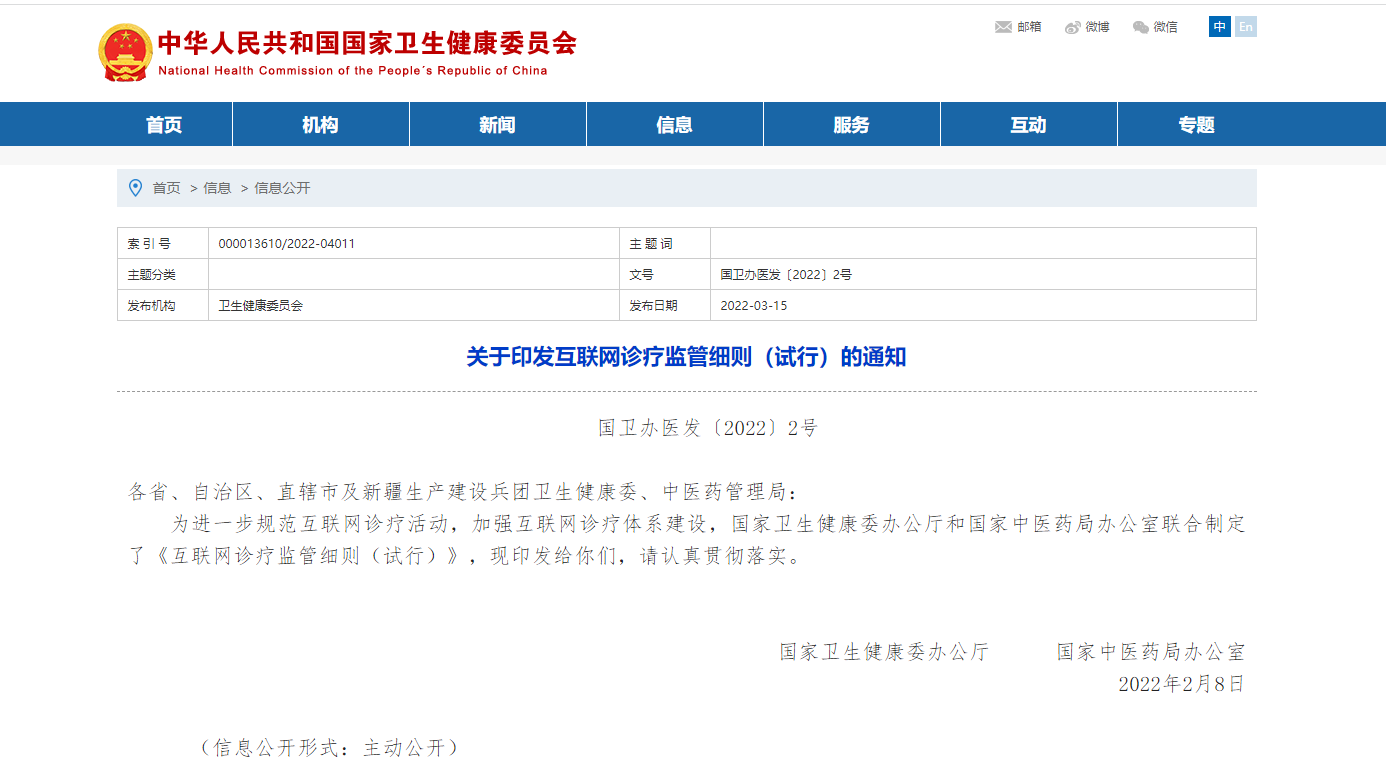
《互联网诊疗监管细则(试行)》发布,数字化HMO等新业态迎良机
Xin Hua Wang· 2025-08-12 06:26
Core Points - The newly released "Internet Diagnosis and Treatment Regulatory Guidelines (Trial)" emphasizes the need for integrated online and offline regulation in internet healthcare, ensuring that online medical services are equivalent to traditional in-person services [1][5][6] - The guidelines are expected to benefit established internet healthcare platforms like WeDoctor, which focus on serious medical services, while promoting the standardization of internet diagnosis and treatment services [1][10] - The regulations aim to raise industry standards and address issues such as the phenomenon of "internet hospitals being built but not used," thereby increasing operational costs and ensuring compliance [7][9] Group 1: Regulatory Framework - The guidelines require that all internet diagnosis and treatment activities must rely on physical medical institutions, ensuring a unified regulatory approach [5][6] - New requirements include that electronic medical records for internet diagnosis must match those of the physical institutions, and healthcare professionals must provide additional information about their practice [5][7] - The guidelines also mandate that provincial health authorities incorporate internet diagnosis into local medical quality control systems [5] Group 2: Industry Impact - The regulations are designed to eliminate unprofessional practices in the industry, such as the use of AI for diagnosis and prescription without a licensed physician's involvement [8][9] - The focus on high-quality medical services will become a core competitive advantage for internet healthcare platforms, moving away from merely selling medications [9][10] - The guidelines are expected to foster a diverse and robust development of internet healthcare, supported by national policies and the integration of digital health systems [10][11] Group 3: Future Prospects - The standardization of regulations is anticipated to facilitate the scale of internet healthcare services, enabling them to gain broader acceptance in insurance reimbursement [11] - The emergence of regional internet hospitals in collaboration with public medical institutions is seen as a model for creating a digital health management system [11] - Overall, the guidelines are expected to create a healthier regulatory environment, leading to greater opportunities and growth in the digital health sector [10][11]