
互联网诊疗服务

Search documents
以“廉”护医心 以“清”惠民生
Xin Lang Cai Jing· 2026-01-14 23:51
Core Viewpoint - Nanning Fifth People's Hospital has successfully integrated clean governance into its psychiatric specialty services, achieving recognition as a Class III Grade A psychiatric hospital and a national civilized unit, thereby enhancing patient care and community trust [2][3]. Group 1: Clean Governance Initiatives - The hospital emphasizes that clean governance is essential for its development, implementing a three-year action plan (2024-2026) to integrate party discipline and clean governance into its operational framework [3]. - A structured responsibility system has been established, focusing on both the main responsibility and supervisory roles, ensuring comprehensive oversight of key decisions and operations [3][7]. - The hospital has developed a three-tiered supervision network to institutionalize and standardize the enforcement of clean governance practices [3][7]. Group 2: Educational and Preventive Measures - Innovative educational methods, such as "micro-courses" on discipline, have been introduced to enhance awareness among staff, utilizing brief video formats for effective learning [4]. - A closed-loop management system for staff training and reminders has been implemented to maintain adherence to clean governance principles [4]. - The hospital conducts regular discussions and educational sessions to address issues related to corruption and misconduct, particularly during festive seasons [4][5]. Group 3: Risk Management and Oversight - The hospital has established a comprehensive regulatory mechanism for procurement and construction projects to mitigate risks associated with corruption [7]. - Specific measures have been taken to enhance operational processes in critical areas such as antibiotic use and prescription audits, ensuring transparency and accountability [7]. - The hospital has implemented a rotation system for key personnel in sensitive departments to further prevent corruption risks [7]. Group 4: Community Engagement and Service Improvement - The hospital has launched online psychological consultation services, allowing the community to access quality healthcare resources conveniently [6]. - Various initiatives, such as volunteer patient assistance and extended service hours, have been introduced to improve patient experience and accessibility [9]. - The integration of smart healthcare solutions has enhanced service efficiency and transparency, supporting the hospital's clean governance objectives [9].


数字消费贡献持续攀升 “Z世代”、银发族用户占比近四成
Di Yi Cai Jing· 2026-01-08 12:59
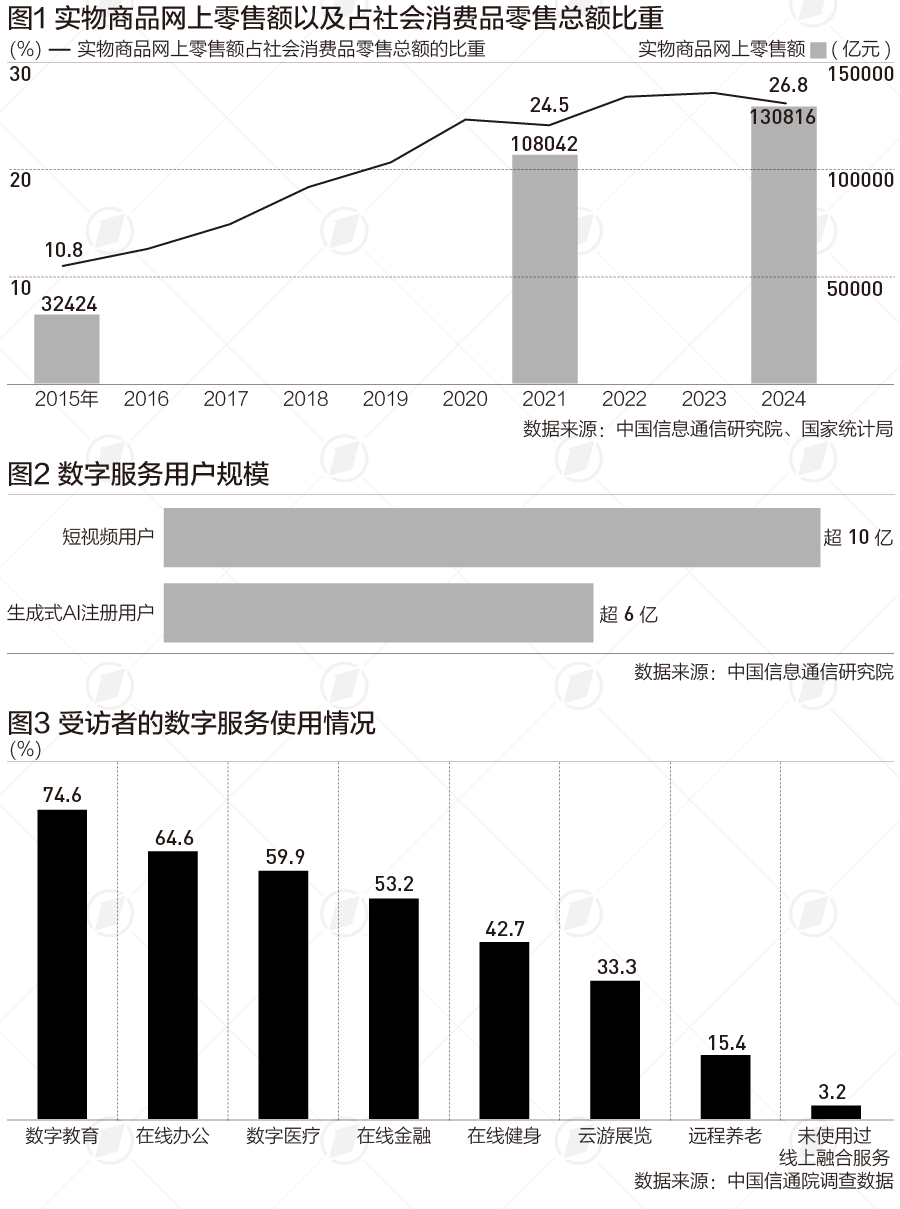
Core Insights - Digital consumption is increasingly contributing to overall consumption growth in China, driven by technological advancements, innovative product models, and changing consumer demands [1][2][4] Group 1: Digital Consumption Trends - The proportion of online retail sales of physical goods has risen from 10.8% a decade ago to an expected 26.8% in 2024 [1] - The digital consumer base is expanding across age, gender, and regional boundaries, with significant participation from the "Z generation" and the elderly [1][5] - By mid-2025, the digital consumption amount in China is projected to reach 9.37 trillion yuan, accounting for 46.5% of total household consumption expenditure [4] Group 2: User Demographics and Behavior - As of June 2025, the number of digital consumption users has surpassed 958 million, with the "Z generation" accounting for 27.2% of this group [5] - The "Z generation" shows a high engagement with digital services, with 71.4% using generative AI, significantly higher than the overall internet user rate [5] - The elderly demographic is also becoming a significant force in digital consumption, with 71.7% willing to pay for convenient online products and services [6] Group 3: Market Growth and Innovations - The digital economy's core industry value added reached 14.08 trillion yuan in 2024, growing by over 10% year-on-year [7] - The integration of AI in consumer products is expected to enhance market penetration, with AI smartphones and PCs projected to exceed 50% and 80% penetration rates, respectively, in the next three years [7] - The growth of digital services is evident in sectors like healthcare, with internet hospitals increasing from about 1,600 in 2021 to 3,340 by the end of 2024 [7] Group 4: Future Outlook - The digital consumption landscape is evolving with new consumption patterns, including online-offline integration and immersive experiences [1][2] - Emerging consumption trends such as digital and green consumption are expected to further stimulate overall consumption growth [8]
本市社区医疗机构已达1993个
Xin Lang Cai Jing· 2025-12-28 18:23
Core Viewpoint - The article highlights the establishment of a comprehensive and efficient elderly health service system in Beijing during the 14th Five-Year Plan period, focusing on the increasing elderly population and the city's efforts to meet their health needs through various healthcare initiatives [1][2]. Group 1: Elderly Population Statistics - By the end of 2024, the population aged 60 and above in Beijing is expected to reach 5.14 million, accounting for 23.5% of the total resident population, marking a significant milestone [2]. - The population aged 80 and above is approximately 687,000, representing 3.1% of the total population [2]. Group 2: Health Service Network - The elderly health service system is structured as "1+17+N," with Beijing Elderly Hospital as the city-level center, 17 district-level hospitals as guidance centers, and various medical institutions providing services [2]. - There are currently 1,993 community health service centers operating in the city, which provide basic medical and public health services to the elderly [2]. Group 3: Healthcare Utilization - In 2024, the family doctor signing rate exceeded 45%, with a continuous signing rate of 90% for key populations, including the elderly [2]. - Community health service institutions recorded a total of 92.81 million visits, with elderly patients accounting for 52.02 million visits, representing 56% of the total [2]. Group 4: Comprehensive and Continuous Care - The elderly health service system emphasizes comprehensive and continuous care across six key areas: health education, preventive care, disease diagnosis, rehabilitation, long-term care, and palliative care [3]. - Over 1 million elderly individuals received health assessments and guidance during the 14th Five-Year Plan period, with significant vaccination efforts resulting in 3.737 million flu vaccines and 341,000 pneumonia vaccines administered to eligible elderly residents [3]. Group 5: Integrated Medical and Elderly Care - The city has established 62 comprehensive medical alliances and 122 specialized medical alliances, along with 14 new tightly-knit urban medical groups to enhance the hierarchical medical service network [4]. - A total of 43 elderly care centers and 26 palliative care centers have been built, achieving district-level coverage [4]. Group 6: Accessibility and Quality of Care - The city has developed a service model that addresses the unique needs of elderly patients, ensuring convenient access to healthcare and improving service quality [5]. - 692 elderly-friendly medical institutions have been established, and 117 internet hospitals have been set up to facilitate online healthcare services [6]. Group 7: Integration of Medical and Elderly Services - The city promotes various models of integrated medical and elderly care, including partnerships between healthcare and elderly care institutions, with 203 integrated care institutions established [7]. - The Beijing-Tianjin-Hebei medical and elderly care alliance has been formed, with 97 institutions signing cooperation agreements to enhance service delivery [7].
《互联网诊疗监管细则(试行)》发布,数字化HMO等新业态迎良机
Xin Hua Wang· 2025-08-12 06:26
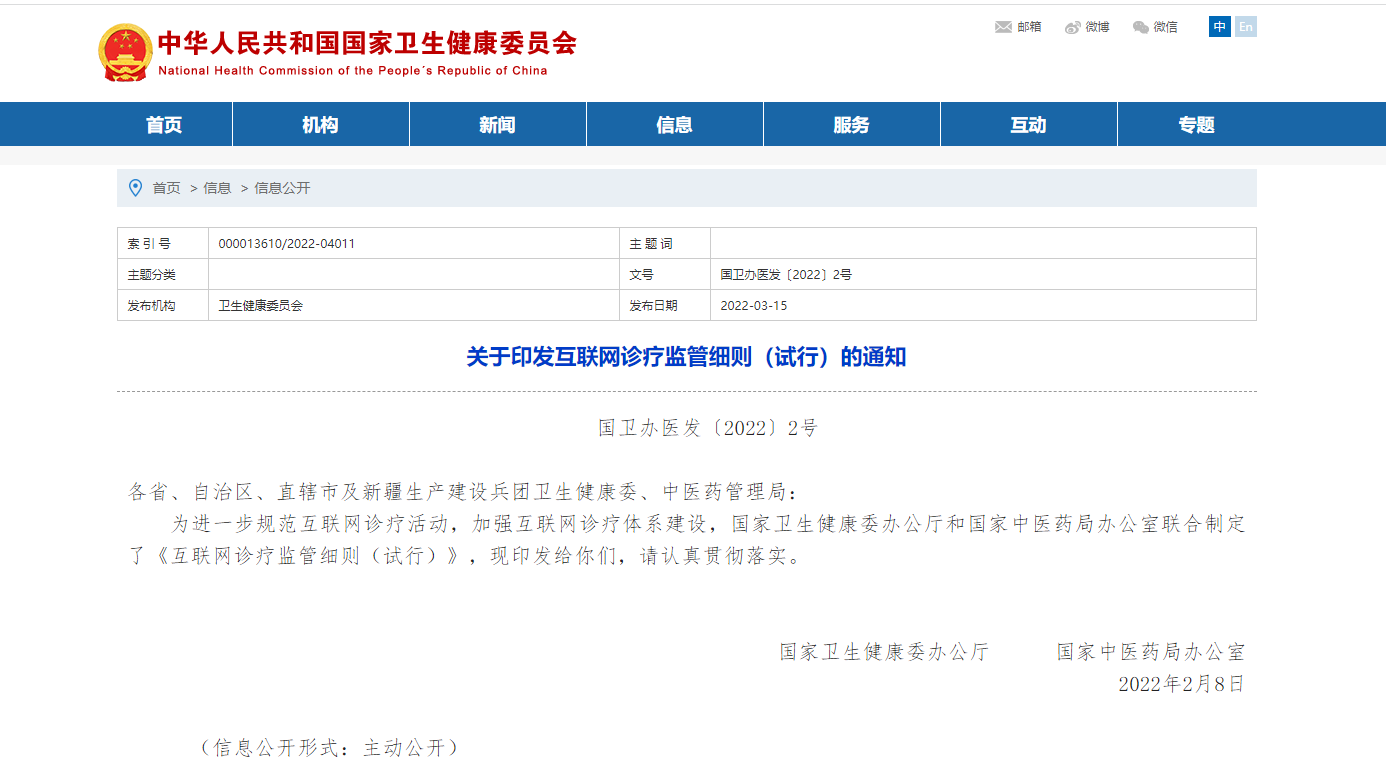
Core Points - The newly released "Internet Diagnosis and Treatment Regulatory Guidelines (Trial)" emphasizes the need for integrated online and offline regulation in internet healthcare, ensuring that online medical services are equivalent to traditional in-person services [1][5][6] - The guidelines are expected to benefit established internet healthcare platforms like WeDoctor, which focus on serious medical services, while promoting the standardization of internet diagnosis and treatment services [1][10] - The regulations aim to raise industry standards and address issues such as the phenomenon of "internet hospitals being built but not used," thereby increasing operational costs and ensuring compliance [7][9] Group 1: Regulatory Framework - The guidelines require that all internet diagnosis and treatment activities must rely on physical medical institutions, ensuring a unified regulatory approach [5][6] - New requirements include that electronic medical records for internet diagnosis must match those of the physical institutions, and healthcare professionals must provide additional information about their practice [5][7] - The guidelines also mandate that provincial health authorities incorporate internet diagnosis into local medical quality control systems [5] Group 2: Industry Impact - The regulations are designed to eliminate unprofessional practices in the industry, such as the use of AI for diagnosis and prescription without a licensed physician's involvement [8][9] - The focus on high-quality medical services will become a core competitive advantage for internet healthcare platforms, moving away from merely selling medications [9][10] - The guidelines are expected to foster a diverse and robust development of internet healthcare, supported by national policies and the integration of digital health systems [10][11] Group 3: Future Prospects - The standardization of regulations is anticipated to facilitate the scale of internet healthcare services, enabling them to gain broader acceptance in insurance reimbursement [11] - The emergence of regional internet hospitals in collaboration with public medical institutions is seen as a model for creating a digital health management system [11] - Overall, the guidelines are expected to create a healthier regulatory environment, leading to greater opportunities and growth in the digital health sector [10][11]
提振消费,北京最新发布!
券商中国· 2025-07-10 12:57
Core Viewpoint - The article discusses the "Beijing Action Plan for Deepening Reform and Boosting Consumption," which outlines 24 measures aimed at enhancing consumer spending and optimizing the consumption environment in Beijing, with a target of achieving an average annual growth of around 5% in total market consumption by 2030 [1][3]. Group 1: Housing Consumption Policies - The action plan optimizes housing consumption policies by supporting the dual withdrawal and loan mechanism for housing provident funds, which aims to lower the threshold for home purchases and alleviate financial pressure on buyers [2][6][7]. - A new "mortgage transfer" policy is proposed to simplify the second-hand housing transaction process, reducing transaction costs and risks, thereby enhancing market liquidity [8][9]. - The plan emphasizes the importance of optimizing land supply for residential use, particularly near transportation hubs and employment centers, to meet housing demand [6][9]. Group 2: Automotive Consumption Policies - The action plan includes measures to optimize small car license plate allocation to better serve family vehicle needs and expand the automotive aftermarket, including modifications, rentals, and camping [10]. - There is a consensus among industry experts on the need to lift car purchase restrictions, which have been seen as barriers to consumer spending [11][14]. - The plan addresses the long wait times for car purchase licenses, with a significant number of families competing for a limited number of licenses, indicating a strong demand for automotive consumption [13]. Group 3: Service Consumption Enhancement - The action plan aims to improve service consumption quality by leveraging cultural resources and supporting new business models in entertainment and online services [15][16]. - There is a focus on expanding quality service offerings in health and home services, with an emphasis on internet-based healthcare solutions, which have seen significant growth [17]. - The plan encourages the development of new service industries, such as health management and consultation, to meet evolving consumer needs [17]. Group 4: Income Growth Initiatives - The action plan emphasizes the importance of increasing residents' income, particularly through reasonable growth in wage income and adjustments to minimum wage standards [18][19]. - It aims to promote income growth for low- and middle-income groups, with initiatives to enhance financial services and investment opportunities [20][21]. - The plan encourages financial institutions to diversify financial products and improve access to retirement financial services for the elderly [21].

深化改革提振消费!北京发布专项行动方案
Bei Jing Ri Bao Ke Hu Duan· 2025-07-10 04:08
Core Viewpoint - The "Beijing Action Plan for Deepening Reform and Boosting Consumption" aims to achieve an average annual growth of around 5% in total market consumption by 2030, establishing 2 to 3 new consumption landmarks worth over 100 billion yuan, and enhancing Beijing's role as an international consumption center [1] Group 1: Economic Growth and Employment - The action plan emphasizes promoting reasonable growth in wage income and implementing a priority employment strategy to ensure sustainable income growth for urban and rural residents [1] - It proposes to improve the minimum wage adjustment mechanism and broaden channels for property income, encouraging listed companies to increase dividend rates and asset management institutions to diversify investment products [1] Group 2: Consumption Upgrade and New Business Models - The plan outlines measures to enrich the silver economy, expand domestic service supply, cultivate health-oriented consumption, establish digital consumption benchmarks, and promote green consumption [2] - It highlights the development of "Internet + Healthcare," with 307 medical institutions providing internet diagnosis services by June 2025, and a 44.98% year-on-year increase in internet diagnosis visits [2] Group 3: Urban Development and Infrastructure - Beijing has completed 10 river and lake enhancement projects, adding 70 kilometers of slow-moving systems, and aims to open more public spaces along water bodies for recreational use [3] - The city plans to open over 450 million square meters of new large commercial facilities from 2022 to 2024, with 75 million square meters opened in the first half of 2025 [3] Group 4: Consumer Convenience and Regulatory Measures - The action plan supports residents in using housing provident fund withdrawals for down payments while applying for housing loans, reducing the financial burden of large purchases [4] - It aims to streamline regulatory processes, enhance consumer experience, and facilitate efficient business operations through integrated supervision and reduced project approval times [4]