经济范式转换

Search documents
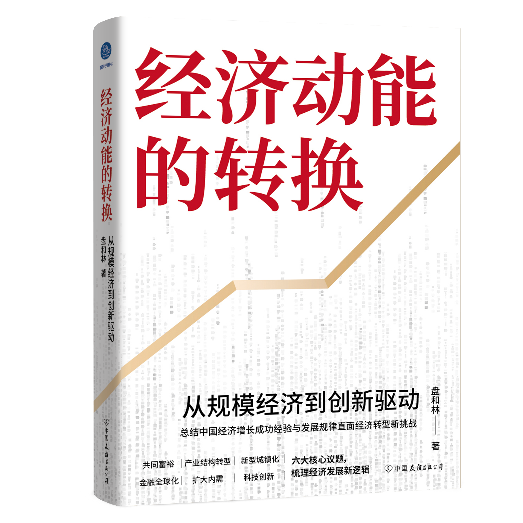
评《经济动能的转换:从规模经济到创新驱动》
Jing Ji Wang· 2026-01-26 03:18
Core Viewpoint - The narrative surrounding China's economy oscillates between two seemingly opposing yet interconnected perspectives: the "development miracle" and the "special exception," both of which suggest that the Chinese economy is fundamentally difficult to understand [1] Group 1: Economic Development Framework - The initial phase of China's economic rise was not based on a "standard market economy," but rather on addressing basic supply issues due to capital scarcity and technological lag, making scale economy a feasible choice at that time [1][2] - The development of the manufacturing sector exemplifies this logic, where China established a relatively complete industrial system through scale production and industrial clustering, leading to cost reduction and supply expansion [2] - The transition from scale advantages to systemic advantages is highlighted, indicating that scale not only implies production expansion but also the formation of stability and synergy within the industrial chain [2] Group 2: Growth Logic and Challenges - Any growth logic has its limits; once basic supply issues are resolved, continuing along the path of scale expansion leads to diminishing marginal returns, resulting in overcapacity and homogenized competition [2] - The issues of overcapacity and competition are not failures of the growth model but rather natural outcomes of the scale growth logic reaching maturity [2] Group 3: Real Estate Sector Analysis - The real estate sector is analyzed within the context of urbanization, land systems, and financial systems, where it played a crucial role in local economic development during rapid urban expansion [3] - As demographic structures change and urbanization slows, the previous model of real estate development enters an adjustment phase, which is a natural result of the old logic reaching its limits [3] Group 4: Innovation as a Growth Driver - The book emphasizes that innovation is not merely a technical aspect but a necessary transformation of the growth model, shifting from reliance on factor input to efficiency enhancement and structural optimization [4] - Innovation emerges as a natural choice when the old growth model becomes unsustainable, providing a coherent explanation for the transition from high-speed growth to high-quality development in China [4] Group 5: Historical Context and Future Outlook - Understanding China's economic development as a continuous adjustment of growth logic across different stages is crucial, rather than viewing it as an unreplicable miracle [4][6] - The book aims to place China's economic narrative back into historical and realistic coordinates, making it comprehensible and logical [6]

从科技革命到AI竞争:大国崛起的关键变量
Jing Ji Guan Cha Wang· 2025-07-12 00:12
Group 1: Historical Logic of Technological Evolution - The rise of global powers has historically been linked to technological revolutions, with a focus on the evolution of global scientific centers [3][4] - The "Takahashi phenomenon" indicates that global scientific centers have shifted approximately every 80 years, following a pattern from Italy to the US [3][4] - Technological innovation is a precursor to economic, political, and cultural dominance, serving as the first step in the rise of great powers [3][4] Group 2: Economic Logic of Paradigm Shifts - Technological revolutions do not automatically lead to industrial revolutions; a significant leap is required for commercialization and industrialization [5][6] - General Purpose Technologies (GPT) are crucial for achieving economic paradigm shifts, enabling the transition from technological to industrial revolutions [6][7] - Historical examples illustrate that the widespread application of GPT is key to economic transformation and societal advancement [6][7] Group 3: Political Logic of Power Dynamics - Economic and technological advancements lead to the concentration of international power, facilitating the rise of great powers [7][8] - The emergence of new paradigms can shift global power centers, with GPT playing a significant role in this transition [9][10] - Infrastructure development is essential for leveraging technological changes, as seen in historical examples of maritime and rail advancements [11][12] Group 4: Era of AI International Competition - The current global landscape features multiple technological and economic centers, complicating competitive dynamics [16][17] - The transition from platform economy to intelligent economy marks a significant shift, with countries like China seizing opportunities in emerging technologies [17][18] - The integration of new technologies is reshaping traditional industries and creating new economic ecosystems, emphasizing the importance of collaborative development [18]