维好协议

Search documents
PJT正联络万科美元债持有人:呼吁组建债权人小组,主动商讨开展债务管理等
Feng Huang Wang· 2025-12-11 05:38
Core Viewpoint - PJT Partners is urging Vanke's dollar bondholders to form an Ad Hoc Group (AHG) to engage with the company regarding debt management strategies [1] Group 1: Bondholder Information - Vanke has two outstanding dollar bonds: VNKRLE 3.975 11/09/27 with a balance of $300 million and VNKRLE 3.5 11/12/29 with a balance of $1 billion [1] - Both bonds are issued by Vanke's wholly-owned subsidiary, Vanke Real Estate (Hong Kong) Co., Ltd., with Vanke providing a maintenance agreement that includes a share buyback commitment [1] Group 2: Maintenance Agreement - The maintenance agreement is a unique credit enhancement measure for Chinese dollar bonds, typically involving commitments from the issuer's domestic parent company [2] - The agreement includes mechanisms for asset disposal and capital injection in the event of default, but its effectiveness is subject to various external conditions [2] - The obligations of the maintenance provider are not unlimited and are typically bound by a "best efforts" clause to support the issuer [2] Group 3: Recommendations for Bondholders - PJT Partners recommends that bondholders negotiate with Vanke to convert their bonds into Vanke's H-shares at a preset premium or to upgrade from unsecured to secured creditors, aiming for higher recovery certainty and priority [1]

“白武士”输血拯救未果 华南城“清盘”背后的困局
Xin Jing Bao· 2025-08-19 14:21
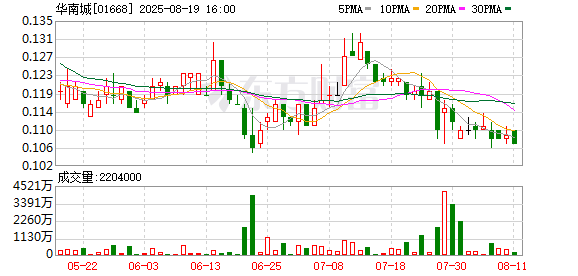
Core Viewpoint - The recent court-ordered liquidation of South China City Holdings Limited marks another significant event in the ongoing debt crisis affecting major developers in Hong Kong, following the case of Evergrande. Despite attempts at restructuring and support from a state-owned enterprise, the company was unable to avert liquidation due to insufficient creditor support and a lack of viable debt restructuring proposals [2][3][6]. Group 1: Company Background and Financial Status - South China City primarily engaged in the development and operation of large-scale logistics and trade centers, expanding rapidly across several cities in China after its successful IPO in 2009 [3]. - At its peak, the company's market capitalization reached 30 billion HKD, but by the time of its suspension, it had plummeted to just 1.22 billion HKD, representing a decline of over 90% [2]. - As of the end of 2024, South China City reported total interest-bearing debt of 30.22 billion HKD, with cash and bank deposits amounting to only 717.7 million HKD, indicating severe liquidity issues [4]. Group 2: Debt Crisis and Attempts at Restructuring - The debt crisis for South China City began in 2022, leading to the introduction of a state-owned major shareholder, Shenzhen Special Zone Construction Development Group, which attempted to provide financial support [6][7]. - Despite multiple capital injections and restructuring efforts, including a 60 billion HKD loan agreement with major banks, the company still faced a default announcement in February 2024 [7][8]. - The company failed to reach an agreement with bondholders regarding a restructuring plan, culminating in a court-ordered liquidation on August 11, 2024 [3][9]. Group 3: Implications for Stakeholders - The involvement of the state-owned enterprise, while initially seen as a lifeline, ultimately led to legal repercussions for the major shareholder, which faced a lawsuit for breach of obligations under a "standstill agreement" [9]. - The financial losses incurred by the major shareholder were significant, with reported losses of 1.09 billion HKD and a substantial impairment provision of 3.78 billion HKD, reflecting the broader impact of South China City's liquidation on its stakeholders [9].