绿色动力转型

Search documents
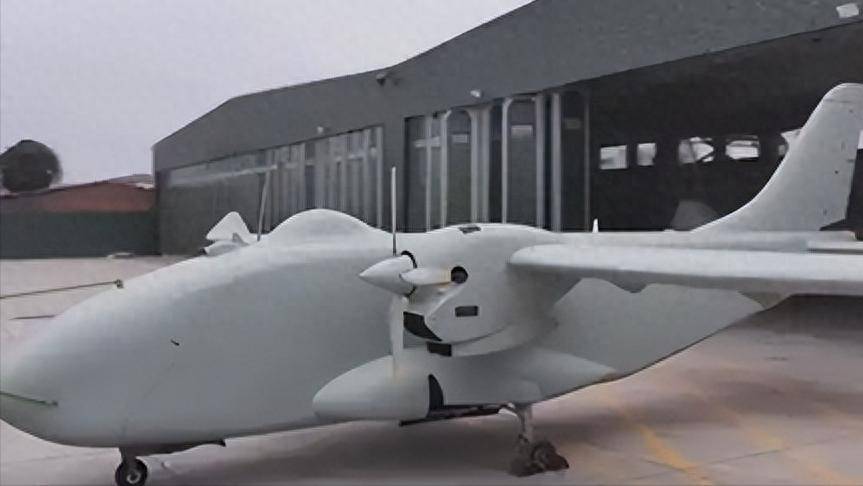
全球首架!中国新能源飞机成功首飞,空中物流要变天了!
Sou Hu Cai Jing· 2026-02-09 04:24
Core Insights - The YH-1000S is the world's first hybrid unmanned transport aircraft, showcasing advanced technology integration in unmanned transport and hybrid power systems [1][3] - The aircraft's hybrid system utilizes a smart closed-loop design combining electric and fuel power, significantly enhancing its operational capabilities [1][7] Group 1: Technological Advancements - The YH-1000S can take off and land on various surfaces, including ordinary secondary roads and even snow, demonstrating its versatility [5] - The aircraft has a maximum range of 1500 kilometers and a payload capacity of 1.2 tons, representing a performance improvement of approximately 30% over its predecessor [5] - The dual backup system ensures operational reliability, allowing one power system to take over if the other fails [5][7] Group 2: Industry Context - The development of the YH-1000S benefits from China's robust electric vehicle industry, leveraging existing technology and supply chains [7][9] - China's strategy focuses on transitioning to green power in multiple transportation sectors, aiming to establish dominance in future industry standards and regulations [9] - The hybrid unmanned transport aircraft represents a significant step in China's broader strategy to lead in green technology and break existing monopolies in the aviation sector [9]


全球铁路调车机车市场前10强生产商排名及市场占有率
QYResearch· 2025-05-13 09:05
Core Viewpoint - The railway shunting locomotives are essential for efficient train scheduling and management within railway systems, with a growing market driven by the need for automation and environmental compliance [2][3]. Market Overview - The demand for railway shunting locomotives is closely linked to the operational efficiency of railway networks, with a focus on energy-saving and automation due to increasing freight volumes and smart station upgrades [2]. - The market is experiencing a technological shift towards hybrid and fully electric drive systems to meet stringent environmental regulations, alongside the integration of autonomous driving and remote scheduling technologies [2][3]. Current Development Status - The market is in a critical phase of technological transformation, with traditional diesel shunting locomotives still significant but facing competition from hybrid and electric models due to their lower carbon emissions [3]. - The demand is characterized by the need to replace outdated locomotives and customized orders for new shunting stations, with international manufacturers dominating the high-end market while emerging economies enhance competitiveness through local production [3]. Future Trends - The transition to green power is accelerating, with hybrid and electric technologies expected to replace traditional diesel locomotives, aligning with global decarbonization goals [3][4]. - There is a notable increase in customized demands for different shunting station scenarios, including compact, high-power, and multi-mode compatible models to meet complex operational environments [3]. SWOT Analysis Strengths - Railway shunting locomotives play an irreplaceable role in train assembly and station scheduling, ensuring efficient railway network operations [5]. - Hybrid and electric models have achieved commercial viability, significantly outperforming traditional diesel locomotives in emissions reduction [6]. - The industry benefits from a mature manufacturing system and a comprehensive operational service network, leading to lower overall operating costs [7]. Weaknesses - Traditional diesel models face obsolescence risks, while the shift to electrification and automation requires substantial R&D investments, squeezing the survival space for small and medium enterprises [7][8]. - There is a disconnect between the update cycles of outdated equipment and the pace of new technology promotion, hindering overall energy efficiency improvements [8]. - Extreme climate conditions and complex operational environments pose higher reliability demands on equipment, with customized solutions being costly [9]. Opportunities - The expansion of global railway infrastructure in emerging economies and the renovation of outdated lines in developed countries are expected to create sustained market demand [10]. - The integration of new technologies such as autonomous driving and digital twins with shunting operations is likely to foster high-end applications like intelligent assembly systems [11]. - Ongoing policy incentives for new energy transportation and carbon emission regulations create a favorable environment for electric products [12]. Threats - Competition from alternative technologies, such as automated rail vehicles, may divert demand away from traditional shunting operations [13]. - Increasing discrepancies in safety standards and energy regulations across regions complicate global business operations [14]. - Supply chain risks, including fluctuations in key component trade and geopolitical factors, pose challenges to industry collaboration [15]. Market Size and Growth - According to QYResearch, the global railway shunting locomotive market is projected to reach $2,607.16 million by 2031, with a compound annual growth rate (CAGR) of 4.41% in the coming years [17]. - Diesel remains the dominant product type, accounting for approximately 43.95% of the market share, while freight is the largest downstream market, representing about 89.00% of demand [25][28]. Major Manufacturers - Key global manufacturers include CRRC, Siemens, Transmashholding, Alstom, and Wabtec, with the top five companies holding around 77.03% of the market share [22].