绿色时尚

Search documents
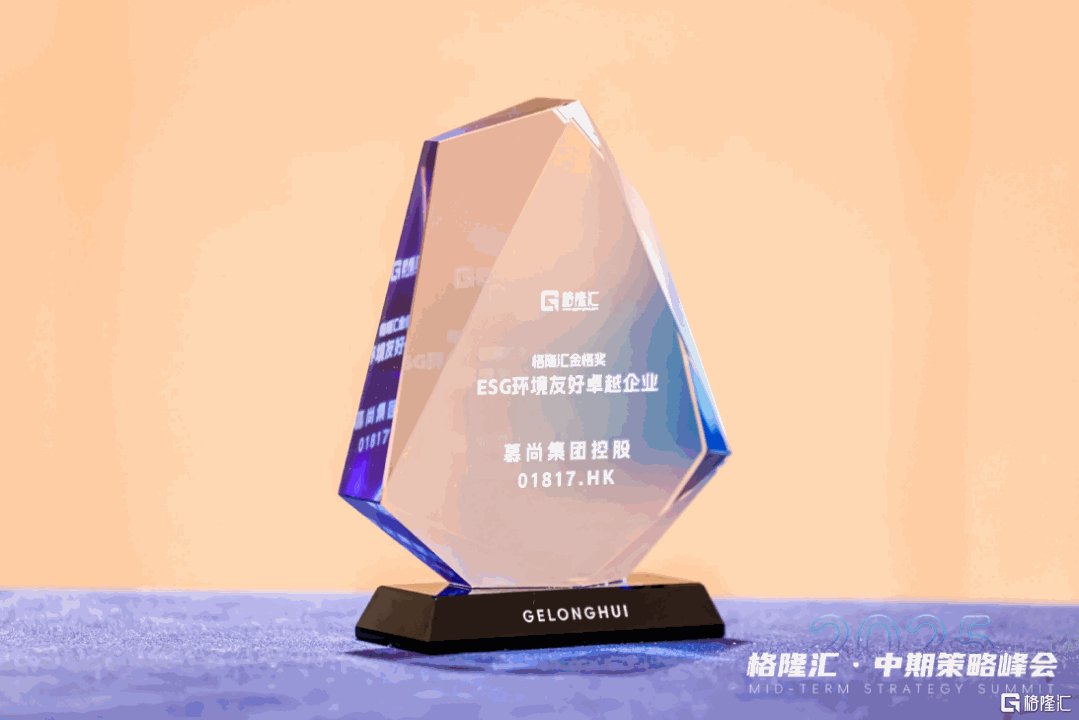
慕尚集团(01817.HK)荣获“ESG环境友好卓越企业”,以绿色时尚解锁新价值
Ge Long Hui· 2025-07-10 00:54
Core Insights - The importance of ESG (Environmental, Social, and Governance) is increasingly recognized as a core value dimension for companies, leading to enhanced disclosure standards and proactive integration of ESG principles into business operations [1][4][17] - The fashion industry, particularly companies like GXG's parent company, Moshang Group, is leveraging ESG practices to create competitive advantages and respond to consumer demand for sustainable products [4][18] Group 1: ESG as a Competitive Arena - ESG has become a critical focus for apparel companies, transcending traditional social responsibility to encompass deeper value creation [4] - The global sustainable apparel market is projected to reach $9.26 billion in 2024, with a compound annual growth rate (CAGR) of approximately 13.11% from 2024 to 2032, indicating a significant shift towards sustainability in consumer preferences [4] - Companies excelling in ESG practices are positioned to capture market opportunities and enhance their competitive edge [4][6] Group 2: Moshang Group's ESG Practices - Moshang Group's ESG initiatives span the entire product lifecycle and supply chain, with a clear strategy for short, medium, and long-term green development [7][15] - The company emphasizes product innovation that balances environmental sustainability, such as the use of SOLOTEX® fabric, which incorporates 37% recycled materials, reducing reliance on new petrochemical resources [8][9] - Moshang Group is adopting clean production methods, including the use of renewable energy and recycled materials, to enhance resource efficiency and minimize waste [9][10] Group 3: Service Quality and Efficiency - Moshang Group has introduced innovative service models, such as the "Zero Pressure Borrowing Station," which promotes a circular economy by addressing common business travel challenges [10][14] - The company is committed to improving service efficiency through technology, aiming for a customer satisfaction rate of over 95% and rapid resolution of complaints [14] - Moshang Group is also fostering green collaboration within its supply chain, encouraging suppliers to adopt sustainable practices and providing training on environmental and labor standards [14][15] Group 4: Future Outlook - Moshang Group plans to continue its focus on renewable energy, green materials, and employee training related to climate issues, aiming for carbon neutrality through various innovative strategies [15][16] - The company's approach to green fashion is structured and quantifiable, allowing for strategic consistency while maintaining flexibility in implementation [16] - Moshang Group's successful ESG practices position it as a valuable asset in the capital market, likely attracting long-term investment interest [18]

2025年杭州市“国际无废日”主题活动在滨江举行
Hang Zhou Ri Bao· 2025-03-31 02:14
Group 1 - The event in Hangzhou on March 30, 2025, focused on the theme of achieving zero waste in the fashion and textile industry, highlighting its role in addressing global waste pollution [4] - The event featured various activities such as educational presentations, performances, and interactive experiences to promote the "zero waste" concept and sustainable production and consumption patterns [4][5] - The integration of technology in the textile industry is leading to a new trend in green fashion, with companies like Dingyuan Textile utilizing advanced equipment for efficient recycling of old textiles, significantly reducing carbon emissions and water usage [5][6] Group 2 - Digital transformation is aiding "zero waste" production, with technologies like digital printing reducing water consumption by 85%-95% and wastewater discharge by over 90%, thus supporting sustainable development [6] - Traditional craftsmanship combined with modern technology is creating "zero waste" models, as seen in the Bamboo Museum's development of biodegradable bamboo products using advanced techniques [6] - Hangzhou is recognized as a pioneer in the "zero waste city" initiative, showcasing successful practices in traditional industries like footwear and textiles, which have led to economic and environmental benefits [7][8] Group 3 - The event highlighted the involvement of youth and students in promoting "zero waste" practices, with innovative projects that repurpose waste materials, contributing to the city's sustainability efforts [8] - The "zero waste" market attracted many visitors, showcasing creative applications of the concept in daily life, such as transforming old clothes into new items [9] - Hangzhou has achieved significant milestones in its "zero waste city" initiative, including the establishment of over 2,900 "zero waste cells" and high recycling rates for industrial and construction waste [10][11]