网络中心战

Search documents
培养科创人才 服务强国强军
Xin Lang Cai Jing· 2025-12-27 18:41
Core Viewpoint - The article emphasizes the importance of cultivating military technology innovation talents to achieve high-quality modernization of national defense and the military, aligning with the goals set by the 20th National Congress of the Communist Party of China [1]. Group 1: Importance of Military Technology Innovation Talents - Military technology innovation talents are characterized by their ability to integrate technology with combat, crucial for modern warfare where "technology wins" [1]. - The complex international security environment necessitates a rapid response mechanism for talent cultivation that aligns with the evolving nature of warfare, particularly in artificial intelligence [1]. Group 2: Transformation of Talent Requirements - The logic of modern warfare demands a shift from "single experts" to "cross-domain composite leaders," requiring a comprehensive upgrade in thinking and values [2]. - Talents must break down "professional silos" and establish system thinking to ensure technology aligns with practical combat needs [2]. Group 3: Educational System for Talent Development - A deep coupling of military education and combat needs is essential, with military academies serving as incubators for combat effectiveness [3]. - The curriculum should include courses on artificial intelligence, network architecture design, and precision strike principles to address the disconnect between learning and application [3]. Group 4: Practical Training Models - The "talent + practical platform" model is promoted, where talents gain experience through major tasks and key platforms [4]. - This includes integrating talent development with significant technological projects and military training exercises to accumulate practical experience [4]. Group 5: Collaboration Between Military and Civilian Sectors - Expanding collaboration channels between military and civilian sectors is crucial for enhancing talent utilization [5]. - Initiatives include mentorship programs with leading experts and joint training with top civilian universities to tackle challenges in precision strike navigation and data integration [5].
重塑现代空战新格局 解码受阅空中梯队“正确打开方式”
Yang Shi Wang· 2025-09-06 04:54
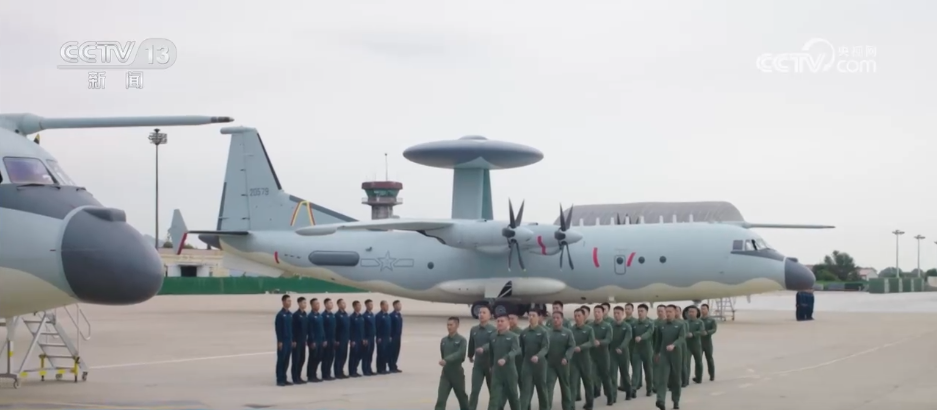
Group 1: Military Capabilities and Developments - The 80th anniversary of the victory in the Chinese People's Anti-Japanese War and the World Anti-Fascist War was marked by a grand parade showcasing advanced military capabilities, including the Airborne Early Warning and Control (AEW&C) aircraft such as the KJ-500A and KJ-600, leading fighter jets like the J-16 and J-15T [1][3] - The integration of various military branches and platforms in aerial operations signifies a shift towards a more collaborative and efficient combat structure, with the AEW&C aircraft serving as the command center for battlefield management [5][7] - The KJ-600, a smaller carrier-based AEW&C aircraft, enhances the operational capabilities of naval forces, allowing for improved situational awareness and command over maritime operations [13][17] Group 2: Fighter Aircraft and Naval Aviation - The J-15T and J-16 fighter jets, showcased in a mixed formation, highlight the growing synergy between naval and air force capabilities, demonstrating the evolution of a comprehensive combat system [7][9] - The J-35, a new stealth carrier-based fighter, represents a significant advancement in naval aviation, designed for multi-role operations including air superiority and ground attack, marking a transition from coastal defense to blue-water operations [22][24] - The introduction of electronic warfare variants like the J-15DT enhances the overall combat effectiveness of carrier strike groups, allowing for improved electronic countermeasures and support roles [19][21] Group 3: Transport and Support Aircraft - The Y-20 transport aircraft, including the Y-20A and Y-20B variants, were prominently featured, showcasing China's advancements in strategic airlift capabilities, essential for modern military logistics [26][30] - The Y-20B, equipped with four domestically produced engines, demonstrates enhanced fuel efficiency and operational range, solidifying its role in various mission profiles including humanitarian assistance and military logistics [28][30] - The Y-20's participation in significant missions, such as repatriating remains of soldiers and disaster relief operations, underscores its strategic importance in enhancing China's air mobility and operational readiness [26][30] Group 4: Training and Future Readiness - The air force's training aircraft, including the JL-10, were showcased to emphasize the importance of pilot training and operational readiness in maintaining a capable air force [32][34] - The presence of advanced training aircraft reflects the commitment to developing skilled pilots who can operate complex military systems effectively, ensuring future combat readiness [32][34] - The performance of the "August 1st" aerobatic team during the parade symbolizes the air force's dedication to showcasing its capabilities and fostering national pride [34]