
羌文化

Search documents
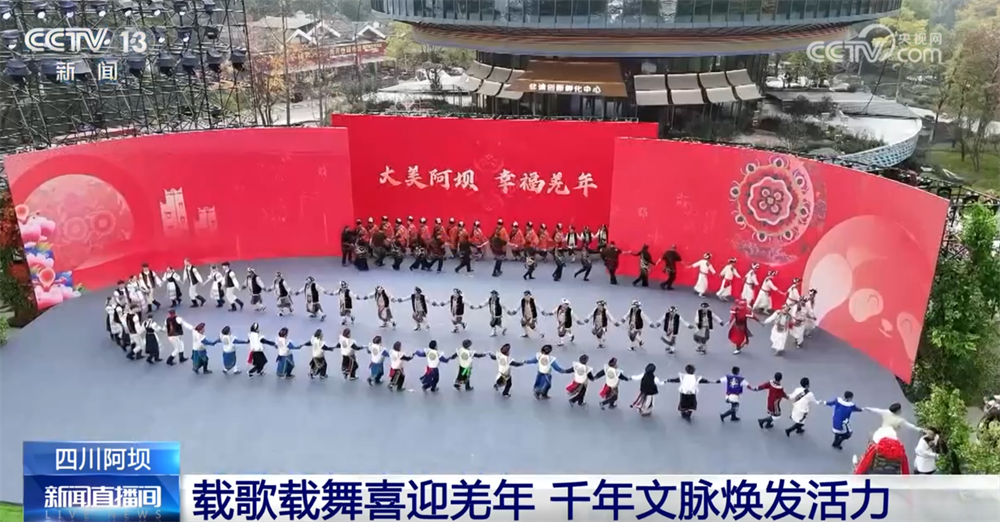
载歌载舞共话丰收、喜迎羌年 古老民族文化持续焕发“新”活力
Yang Shi Wang· 2025-11-21 07:09
Group 1 - The core event is the celebration of the Qiang New Year, which falls on the first day of the tenth lunar month, this year on November 20, featuring traditional attire and cultural performances [1] - The celebration includes a communal feast called "Qiang Year Ba Ba Banquet," where local delicacies such as cured meat and soup are served, fostering a sense of unity among attendees [3] - The event showcases intangible cultural heritage through live demonstrations of Qiang embroidery, flute playing, and paper-cutting, allowing visitors to engage and create their own crafts [5] Group 2 - Liu Xia, the head of the Wenchuan County Publicity Department, emphasized the successful display of intangible cultural heritage and the attraction of numerous tourists, indicating plans to further develop Qiang cultural resources [7] - An immersive night tour experience highlights the integration of light and shadow with Qiang architectural elements, vividly presenting aspects of Qiang culture [9]

情怀丨银发丹心系羌寨
Zhong Yang Ji Wei Guo Jia Jian Wei Wang Zhan· 2025-07-21 00:24
Core Viewpoint - The revitalization of Qiang culture in Maoxian County is significantly driven by local cultural tourism development, with efforts to preserve and promote the unique heritage of the Qiang people [1][2]. Group 1: Cultural Heritage and Preservation - Maoxian County is recognized as the largest settlement of the Qiang ethnic group and serves as a core protection area for Qiang culture [2]. - The 2008 Wenchuan earthquake caused substantial damage to ancient buildings and cultural relics, prompting local efforts to rebuild and preserve Qiang cultural elements [2]. - Wu Tianming, a local cultural expert, has played a crucial role in the reconstruction of "China Ancient Qiang City," integrating traditional Qiang cultural elements into modern architecture [2]. Group 2: Cultural Promotion and Education - Wu Tianming actively participates in cultural promotion, including leading documentary projects to showcase Maoxian's history and culture [3]. - He established the "Grandpa Wu Studio" to support youth moral education, utilizing his expertise in traditional culture to engage over 4,000 children in learning about revolutionary history [3][4]. - Through his artwork and storytelling, Wu Tianming educates children about Qiang history and culture, fostering a deeper appreciation for their heritage [4].