美国政府“停摆”

Search documents
不是“停摆”就是在“停摆”路上,美国政治运作恶性循环 | 国际识局
Zhong Guo Xin Wen Wang· 2026-02-05 08:38
Group 1 - The U.S. federal government experienced a brief "shutdown" due to funding issues, which lasted for three days before Congress passed a funding bill to resolve the deadlock [1] - The shutdown affected multiple departments, including the Department of Homeland Security, Department of Defense, Department of Education, Department of Health and Human Services, Department of Housing and Urban Development, Department of Transportation, Department of State, Department of Labor, and Department of the Treasury, which collectively account for over three-quarters of discretionary spending [4] - The Federal Emergency Management Agency (FEMA) has approximately $7 to $8 billion in disaster response and recovery funds to pay staff salaries, but a prolonged shutdown could increase pressure on FEMA, especially during new disaster responses [4] Group 2 - The Department of Homeland Security became a focal point of controversy due to its enforcement actions, which have intensified public opposition and political tensions [6] - A recent incident involving the shooting of two U.S. citizens by enforcement personnel further escalated tensions surrounding the Department of Homeland Security [7] - The controversy surrounding the Department of Homeland Security delayed the progress of the federal funding bill, leading to tense negotiations between both parties and the White House to avoid a government shutdown [8] Group 3 - The recurring government shutdowns reflect a deeper issue of political polarization and dysfunction within the U.S. political system, with 15 shutdowns recorded since 1980, most lasting only 1 to 3 days [9] - Notable shutdowns include a 16-day shutdown in October 2013 over disagreements on the Affordable Care Act and a 35-day shutdown in December 2018 due to funding for the U.S.-Mexico border wall [10] - The longest shutdown in history lasted 43 days in late 2025, severely impacting essential services such as food assistance, healthcare benefits, and air travel, highlighting the significant societal costs of these political impasses [12]

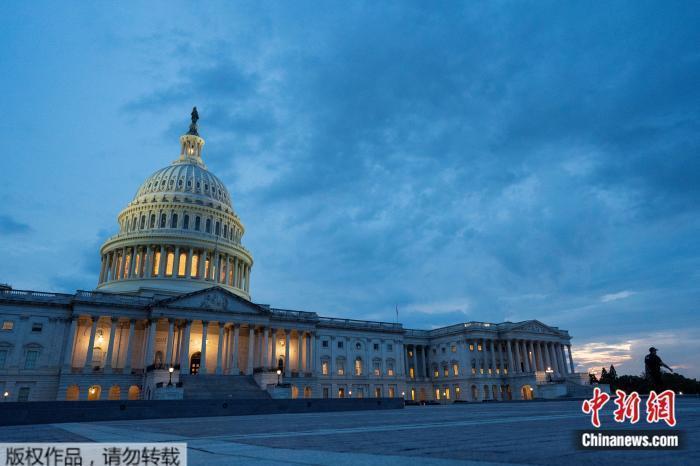
美参议院通过拨款法案
Xin Lang Cai Jing· 2026-01-31 07:07
Group 1 - The U.S. Senate passed a funding bill for several federal departments on January 30, just hours before their funding was set to expire, leading to a "technical shutdown" due to the House's delayed approval process [1] - The Senate approved the funding bill with a vote of 71 in favor and 29 against, sending it to the House for consideration, but funding for several departments ran out on January 30, resulting in an unavoidable partial shutdown starting at midnight on January 31 [1] - The passed funding bill includes five budget items that will finance most federal departments until September 30, the end of the fiscal year, but excludes funding for the Department of Homeland Security, which will be extended for two weeks to allow for further negotiations [1] Group 2 - Disagreements between Republicans and Democrats over immigration enforcement have intensified following the shooting of two American citizens by federal law enforcement in Minnesota [2] - The Senate failed to advance the government funding bill that had been passed by the House, leading to tense negotiations between both parties and the White House to avoid a government shutdown [2] - The increasing political polarization between the two parties has led to multiple shutdown crises in recent years, with the longest shutdown in U.S. history lasting 43 days and ending on November 12, 2025 [2]
美国政府重新“开门”首日
Xin Hua She· 2025-11-14 08:24
Core Points - The U.S. government shutdown lasted for 43 days and has now ended, with the first day of reopening seeing an influx of tourists in Washington D.C. [1] - The shutdown had significant impacts on various sectors, particularly aviation, with over 1.3 million air traffic controllers and 50,000 TSA workers working without pay during this period [2] - The effects of the shutdown are expected to linger, with federal employees awaiting back pay and low-income individuals facing delays in receiving full benefits from programs like the Supplemental Nutrition Assistance Program [3][4] Aviation Industry - The shutdown led to a surge in absenteeism among air traffic controllers, prompting the U.S. Department of Transportation and the FAA to reduce flights at 40 major airports to mitigate safety risks [2] - As of the reopening day, over 3,600 domestic and international flights were delayed, and more than 1,000 flights were canceled, indicating a slow recovery in air travel [2] - The full return of air traffic controllers to their positions may take several days to a week, prolonging the normalization of air travel operations [2] Federal Employment and Assistance Programs - Approximately 1.4 million federal employees are set to receive back pay, but the timing of these payments varies by agency [3] - The shutdown caused disruptions in the Supplemental Nutrition Assistance Program, affecting over 40 million low-income individuals, with some receiving partial payments or none at all [3] - The backlog in services, such as tax refunds from the IRS, is expected to extend the impact of the shutdown beyond the initial 43 days [4]
记者手记丨美国政府重新“开门”首日
Xin Hua Wang· 2025-11-14 08:07
Group 1 - The U.S. government shutdown lasted for 43 days and has now ended, leading to an influx of tourists in Washington, D.C. [1] - The Smithsonian museums will gradually reopen starting from November 14, with full operations expected by November 17, which may still affect some visitors' plans [1] - The shutdown caused significant distress for many citizens, particularly those reliant on government assistance programs [1] Group 2 - Over 13,000 air traffic controllers and 50,000 TSA workers worked without pay during the shutdown, leading to increased absenteeism and overtime for those who remained [2] - As of the reopening day, over 3,600 domestic and international flights were delayed, and more than 1,000 flights were canceled, indicating ongoing disruptions in air travel [2] - The full return of air traffic controllers to their positions may take several days to a week, prolonging the recovery of normal air travel operations [2] Group 3 - Approximately 1.4 million federal employees will receive back pay, but the timing of these payments will vary by agency [3] - The Supplemental Nutrition Assistance Program faced interruptions, affecting over 40 million low-income individuals, with full benefits restoration expected to take time [3] - The impact of the shutdown may extend beyond the 43 days, affecting national parks' revenue and delaying tax refunds for taxpayers due to backlog at the IRS [4]
【环球财经】创纪录的美国联邦政府“停摆”闹剧落幕
Xin Hua She· 2025-11-13 13:53
Core Points - The U.S. government shutdown, lasting 43 days, has ended with the passage of a temporary funding bill by the House of Representatives and its signing by President Trump [1][2] - This shutdown has had a significant impact on the economy and public welfare, breaking the previous record of a 35-day shutdown from late 2018 to early 2019 [1] - Over one million federal employees faced financial pressure due to unpaid wages, and the shutdown caused widespread flight delays and cancellations, affecting approximately 5.2 million air travelers [1] - The suspension of the 60-year-old Supplemental Nutrition Assistance Program (SNAP) has directly impacted around 42 million low-income individuals, highlighting the shutdown's severe implications for vulnerable populations [1] Political Implications - Political leaders from both parties have engaged in mutual blame, focusing on advancing their political agendas rather than resolving the shutdown [2] - Public sentiment has shifted negatively, with 65% of respondents expressing disappointment in the Trump administration's performance, particularly regarding economic management and inflation [2] - A significant portion of the population perceives increasing political polarization, with 66% expressing distrust in the government and 59% believing that political division has worsened over the past five years [2] Economic Impact - The Congressional Budget Office estimates that the six-week shutdown will result in an economic loss of approximately $11 billion [2] - The shutdown has not only harmed American voters and the economy but has also sent a concerning message to the global community about the reliability of the U.S. as a partner [2]
美众议院通过临时拨款法案 美政府结束“停摆”还差一步
Zhong Guo Xin Wen Wang· 2025-11-13 02:20
Core Points - The U.S. House of Representatives passed a temporary funding bill, which will end the record 43-day government shutdown once signed by President Trump [1][4] - The government shutdown began on October 1 and was caused by political disputes between the two parties, significantly impacting various sectors including food assistance, healthcare benefits, and air travel [4] Group 1 - The temporary funding bill was approved by the House on November 12, and is awaiting the President's signature to take effect [1][4] - The shutdown has been described as a governance crisis resulting from bipartisan political conflicts [4]
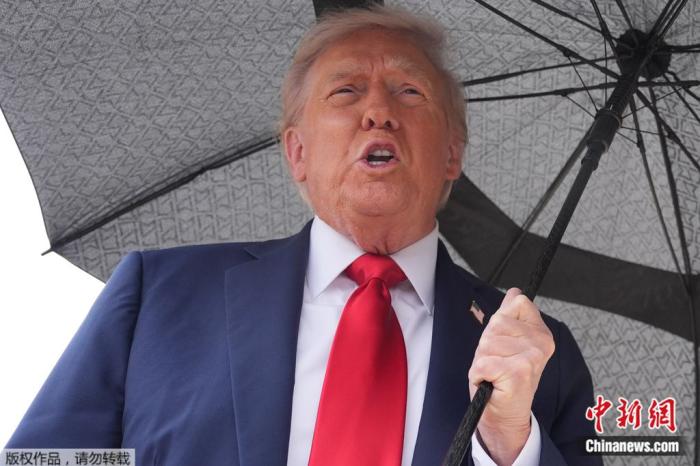
美国参院通过临时拨款法案 特朗普:离结束“停摆”很近了
Xin Jing Bao· 2025-11-10 05:23
Core Points - The U.S. federal government shutdown, which lasted for 40 days, is nearing an end as President Trump indicated [1] - The Senate has reached an agreement to end the government shutdown, passing a temporary funding bill [1] - The temporary funding bill will provide government funding until January 30, 2026 [1]
美参议院通过临时拨款法案 旨在结束政府“停摆”
Zhong Guo Ji Jin Bao· 2025-11-10 05:10
Core Points - The U.S. Senate passed a temporary funding bill on November 9, aimed at ending the government shutdown, which will provide funding until January 30, 2026 [1] - The government shutdown had lasted for 40 days since October 1 [1] - Following the Senate's approval of the funding bill, U.S. stock index futures saw a rapid increase, with Nasdaq futures rising over 1.2% and S&P 500 futures expanding by 0.7% [1]
政府“停摆”40天 美国会参议院通过临时拨款法案
Yang Shi Xin Wen Ke Hu Duan· 2025-11-10 03:57
Group 1 - The U.S. Senate passed a temporary funding bill aimed at ending the government shutdown [1] - The bill will provide funding for the government until January 30, 2026 [1] - The government shutdown has lasted for 40 days since October 1 [1]
白宫开始拆墙
第一财经· 2025-10-21 06:38
Core Viewpoint - The article discusses the ongoing construction of a new banquet hall at the White House, which is part of President Trump's promise to enhance the venue for hosting events, despite the ongoing government shutdown [3][4]. Group 1: Construction Details - The construction team has begun demolishing parts of the White House to create a new banquet hall, confirmed by anonymous White House officials [3]. - The new banquet hall is designed to accommodate approximately 650 guests and will nearly double the base area of the White House's main building and east and west wings [5]. - The project is estimated to cost $250 million, funded by Trump and other undisclosed donors [4]. Group 2: Controversy and Response - The construction has sparked controversy as it continues during a government shutdown, with the White House attributing the shutdown to the Democrats [7]. - White House spokesperson Kush DeSai criticized Democrats for allegedly diverting attention from their responsibility in the government shutdown, which he claims is linked to providing more benefits to illegal immigrants [7].