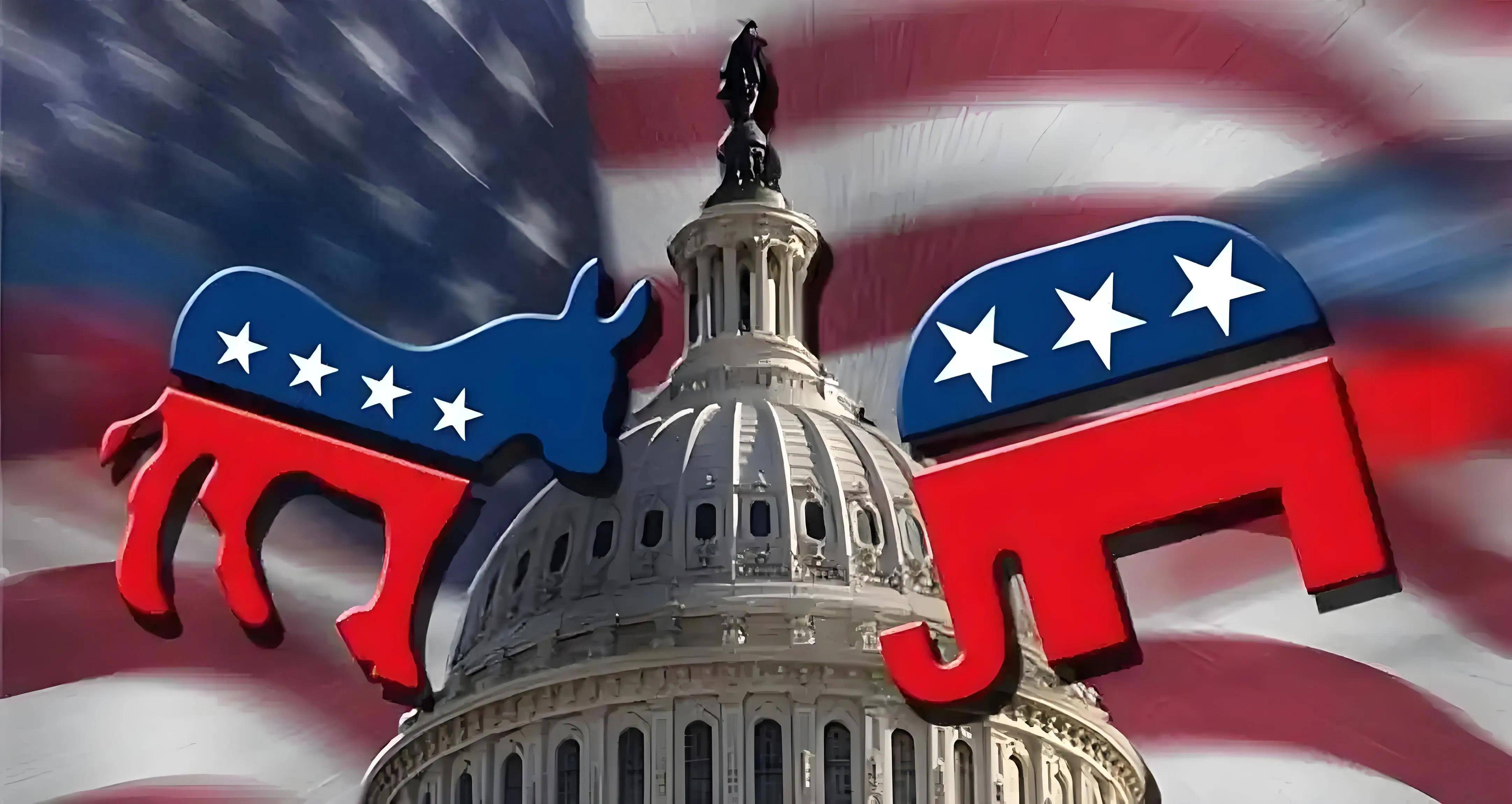
美国政治两极分化

Search documents
综述丨创纪录的美国联邦政府“停摆”闹剧落幕
Xin Hua She· 2025-11-14 01:49
Core Points - The U.S. federal government shutdown lasted for 43 days, breaking the previous record of 35 days from late 2018 to early 2019, and ended with the passage of a temporary funding bill by Congress and its signing by President Trump [1][2] - The shutdown had significant economic and social impacts, affecting over one million federal employees who faced financial stress due to unpaid wages, and causing widespread flight delays and cancellations, impacting approximately 5.2 million air travelers [1] - The Supplemental Nutrition Assistance Program (SNAP), a crucial part of the U.S. social safety net covering about 42 million people, was suspended for the first time in its 60-year history, directly affecting low-income households [1] Economic Impact - The Congressional Budget Office estimated that the six-week shutdown would result in an economic loss of approximately $11 billion [2] - The shutdown sent a dangerous signal to the world about the reliability of the U.S. as a partner, as stated by Senator Jerry Moran [2] Public Sentiment - A significant portion of the public expressed disappointment with the Trump administration, with 65% of respondents feeling let down by the government's performance in managing the economy and inflation [2] - There is a growing sense of distrust in the government, with 66% of respondents indicating a lack of trust, reflecting widespread anxiety about the future and the direction of the country [2] - The political polarization in the U.S. is perceived to be worsening, with 59% of respondents believing it has intensified compared to five years ago [2]
【环球财经】创纪录的美国联邦政府“停摆”闹剧落幕
Xin Hua She· 2025-11-13 13:53
Core Points - The U.S. government shutdown, lasting 43 days, has ended with the passage of a temporary funding bill by the House of Representatives and its signing by President Trump [1][2] - This shutdown has had a significant impact on the economy and public welfare, breaking the previous record of a 35-day shutdown from late 2018 to early 2019 [1] - Over one million federal employees faced financial pressure due to unpaid wages, and the shutdown caused widespread flight delays and cancellations, affecting approximately 5.2 million air travelers [1] - The suspension of the 60-year-old Supplemental Nutrition Assistance Program (SNAP) has directly impacted around 42 million low-income individuals, highlighting the shutdown's severe implications for vulnerable populations [1] Political Implications - Political leaders from both parties have engaged in mutual blame, focusing on advancing their political agendas rather than resolving the shutdown [2] - Public sentiment has shifted negatively, with 65% of respondents expressing disappointment in the Trump administration's performance, particularly regarding economic management and inflation [2] - A significant portion of the population perceives increasing political polarization, with 66% expressing distrust in the government and 59% believing that political division has worsened over the past five years [2] Economic Impact - The Congressional Budget Office estimates that the six-week shutdown will result in an economic loss of approximately $11 billion [2] - The shutdown has not only harmed American voters and the economy but has also sent a concerning message to the global community about the reliability of the U.S. as a partner [2]
综述|创纪录的美国联邦政府“停摆”闹剧落幕
Shang Hai Zheng Quan Bao· 2025-11-13 10:53
Core Points - The recent U.S. federal government shutdown lasted for 43 days, breaking the previous record of 35 days from late 2018 to early 2019, and was resolved when Congress passed a temporary funding bill that was signed by President Trump [1][2] - The shutdown had significant economic and social impacts, affecting over one million federal employees who faced financial pressure due to unpaid wages, and causing widespread disruptions in air travel, with approximately 5.2 million passengers affected by delays or cancellations [1] - The shutdown also marked the first suspension of the 60-year-old Supplemental Nutrition Assistance Program, impacting around 42 million low-income individuals, many of whom live below the poverty line [1] Political Implications - Both parties in Congress engaged in mutual blame, focusing on advancing their political agendas rather than resolving the shutdown to alleviate public suffering [2] - Public sentiment has shifted negatively, with 65% of respondents expressing disappointment in the Trump administration's performance, particularly regarding economic management and inflation [2] - A significant portion of the population perceives increasing political polarization, with 66% expressing distrust in the government and 59% believing that political divisions have worsened over the past five years [2] Economic Impact - The Congressional Budget Office estimated that the six-week shutdown would result in an economic loss of approximately $11 billion for the U.S. economy [2] - The shutdown has been characterized as sending a dangerous signal to the world about the U.S.'s reliability as a partner, as stated by Kansas Republican Senator Jerry Moran [2]
美国两党内斗不止,美政府停摆21天后,特朗普也是彻底没招了
Sou Hu Cai Jing· 2025-10-16 08:49
Core Points - The U.S. government shutdown has entered its third week, causing significant disruptions including approximately 750,000 federal employees being forced to take unpaid leave or work without pay, and the closure of national parks and museums [1] - JPMorgan analysis indicates that each week of the shutdown reduces U.S. GDP growth by about 0.1%, with potential ripple effects across the economy if the situation persists [1] - The political deadlock is fundamentally a clash over the future direction of the U.S., with the Republican MAGA faction advocating for a reduction in government size, while Democrats aim to protect social safety nets including healthcare subsidies [1] - The current political environment may provide an opportunity for the Trump administration to push for its agenda of federal government downsizing [1] Economic Impact - The Federal Reserve's measures, such as interest rate cuts and maintaining liquidity, are seen as temporary solutions that do not address the underlying issues caused by the government shutdown [4][6] - The ongoing shutdown is leading to decreased business orders and consumer hesitance, which are critical issues that remain unresolved [6] - The U.S. Treasury Secretary's blame on China's rare earth policies is viewed as an attempt to deflect attention from domestic problems, highlighting the U.S.'s "hegemonic anxiety" [6][8] Political Dynamics - The political polarization in the U.S. is leading to ineffective governance, with the Federal Reserve's actions being likened to a "painkiller" that only alleviates short-term market pain without addressing root causes [8] - There is a call for political collaboration and consensus to resolve the shutdown and restore the U.S. economy to a stable path [8]