
联动共治

Search documents
“大交通”下好交通综治“一盘棋” 首都交通高质量发展开创新局面
Xin Lang Cai Jing· 2026-01-26 00:26
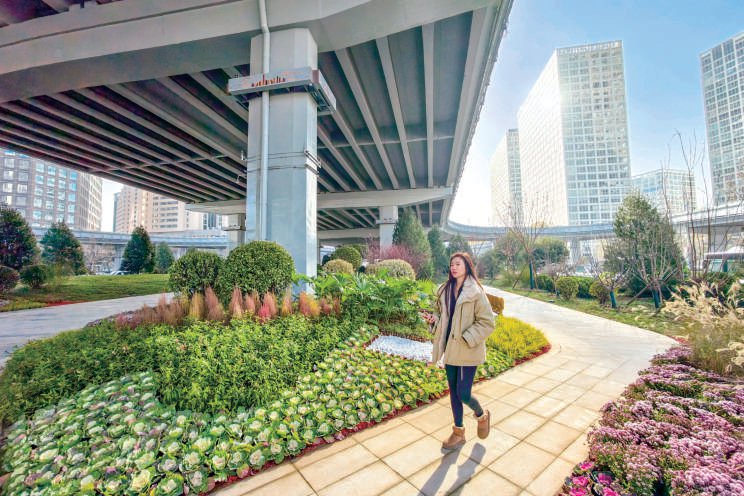
Core Viewpoint - Beijing is advancing its transportation infrastructure through comprehensive governance, aiming for a high-quality development of its transportation system by 2025, with a focus on integration, efficiency, and addressing public needs. Group 1: Transportation Network Expansion - By 2025, the total operational mileage of urban rail transit in Beijing will reach 909 kilometers, with 91% of rail stations allowing bus transfers within 50 meters [1][18] - The opening of new subway lines, including the 8th line's Dahuamen Station and the 17th line's Panjiayuan West Station, will enhance connectivity and increase the number of transfer stations to 106 [1][17] Group 2: Addressing Public Needs - The city plans to open 53 "dead-end roads" and implement 30 major traffic improvement projects by 2025, significantly reducing congestion and improving access [1][26] - Over 50,000 new parking spaces will be created to alleviate parking difficulties in central urban areas [1][26] Group 3: Systematic Governance and Collaboration - A collaborative governance model is being established, involving city, district, and community levels to enhance transportation management and address complex urban mobility challenges [1][27][28] - The city is implementing a "one street, one policy" approach to traffic governance, promoting tailored solutions for local issues [1][28][29] Group 4: Infrastructure and Space Utilization - The city is transforming underutilized bridge spaces into public areas, with 251 bridges set for renovation by 2025, enhancing urban aesthetics and functionality [1][20][21] - The renovation of bridges like Guomao Bridge and Yansha Bridge aims to improve urban vitality and connectivity [1][22] Group 5: Future Outlook - The "14th Five-Year Plan" has seen the addition of 118 kilometers of highways and 182 kilometers of new subway lines, with a focus on sustainable and efficient transportation solutions [1][32] - The upcoming "15th Five-Year Plan" will continue to prioritize convenience, smoothness, and green initiatives in the transportation sector [1][32]

锲而不舍落实中央八项规定精神|南京浦口:沉疴旧疾下猛药 百名干部破百题
Xin Hua She· 2025-05-15 02:52
Core Viewpoint - The rapid resolution of a security incident in the border area between Anhui and Jiangsu provinces highlights the effectiveness of collaborative governance and law enforcement efforts, significantly reducing crime rates in the region [1][2]. Group 1: Collaborative Governance - The establishment of the "Joint Governance Station" between the police of Nanjing and Ma'anshan has facilitated efficient crime resolution, with the suspect apprehended within half an hour [1]. - The integration of data networks and administrative resources has enabled joint patrols and crime investigations, leading to a 61% decrease in criminal cases and a 43.7% reduction in administrative security incidents in the border area [1]. Group 2: Community Services - The "Joint Governance Station" also serves as a convenience service center, featuring five cross-province service windows and providing 86 self-service government services, enhancing accessibility for residents [1]. Group 3: Special Action Initiatives - The "Hundred Cadres Breaking Hundred Issues" initiative in the Pukou District focuses on addressing deep-rooted challenges and urgent public concerns, with a problem-oriented approach [2]. - The initiative has led to the development of a streamlined "completion and immediate use" process for construction projects, reducing the time from several months to one or two months [2]. Group 4: Capacity Building and Reform - The initiative has also served as a platform for training and evaluating officials, enhancing their capabilities and work ethic, with a focus on practical results [3]. - The implementation of a positive incentive mechanism has encouraged active participation from party members and officials in reform efforts [3].