多网融合

Search documents
顺丰控股20260125
2026-01-26 02:49
Summary of SF Holding Conference Call Company Overview - SF Holding is the largest integrated logistics service provider in China and Asia, and the fourth largest globally. Its direct operation model and comprehensive logistics capabilities are its core competitive advantages, allowing it to lead in the express delivery and mid-to-high-end economic express markets and adapt quickly to market changes [2][3]. Core Business Insights - Express delivery remains the core business, but its revenue share has decreased from 66% in 2017 to 43% in the first half of 2025. Despite this, SF Holding maintains a leading position with a 64% market share in the highly concentrated express delivery market [5]. - Future growth drivers include increased online sales and return demands for mid-to-high-end products, logistics needs from high-end manufacturing, and international business growth driven by global supply chain restructuring and cross-border e-commerce [2][5]. Financial Performance - From 2016 to 2020, the net profit attributable to shareholders grew consistently. However, in 2021, net profit declined due to increased investments and rising labor costs. From 2022 to 2024, profitability is expected to recover through business structure adjustments and cost reduction measures, with a 9.07% year-on-year increase in net profit for the first three quarters of 2025 [7][8]. - The company plans to steadily increase cash dividend ratios, projecting a rise to 40% in 2024, and has repurchased approximately 5.16 billion yuan worth of shares from 2022 to October 2025 [8]. Cost Control Measures - Since 2021, SF Holding has implemented a cost control strategy through the integration of its logistics networks, achieving cumulative cost reductions exceeding 3.8 billion yuan from 2021 to 2024. The company has optimized transportation routes and reduced the number of network nodes to enhance efficiency [6]. Strategic Partnerships - SF Holding has entered a strategic partnership with J&T Express, involving mutual shareholding worth 8.3 billion HKD. This collaboration aims to leverage each other's strengths in cross-border logistics and enhance global network coverage and operational efficiency [11][13]. Market Position and Future Outlook - The company has opened 59 domestic and 19 international routes, with over 1.4 million flights operated in the first half of 2025, marking a 14% year-on-year increase. The partnership with J&T is expected to enhance local delivery capabilities and optimize logistics operations [13]. - Investors are advised to consider the company's long-term investment value, with a projected net profit of 100.2 billion yuan for 2026, translating to a price-to-earnings ratio of approximately 16 times. The company is expected to show improved performance in the fourth quarter and the first quarter of the following year [14].
“大交通”下好交通综治“一盘棋” 首都交通高质量发展开创新局面
Xin Lang Cai Jing· 2026-01-26 00:26
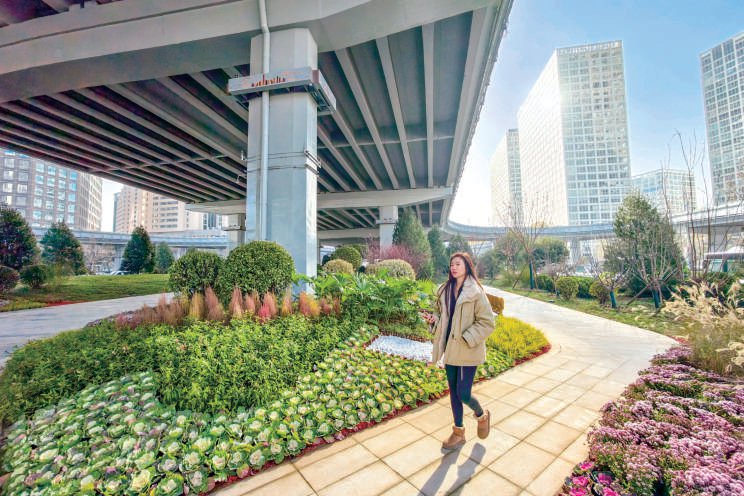
Core Viewpoint - Beijing is advancing its transportation infrastructure through comprehensive governance, aiming for a high-quality development of its transportation system by 2025, with a focus on integration, efficiency, and addressing public needs. Group 1: Transportation Network Expansion - By 2025, the total operational mileage of urban rail transit in Beijing will reach 909 kilometers, with 91% of rail stations allowing bus transfers within 50 meters [1][18] - The opening of new subway lines, including the 8th line's Dahuamen Station and the 17th line's Panjiayuan West Station, will enhance connectivity and increase the number of transfer stations to 106 [1][17] Group 2: Addressing Public Needs - The city plans to open 53 "dead-end roads" and implement 30 major traffic improvement projects by 2025, significantly reducing congestion and improving access [1][26] - Over 50,000 new parking spaces will be created to alleviate parking difficulties in central urban areas [1][26] Group 3: Systematic Governance and Collaboration - A collaborative governance model is being established, involving city, district, and community levels to enhance transportation management and address complex urban mobility challenges [1][27][28] - The city is implementing a "one street, one policy" approach to traffic governance, promoting tailored solutions for local issues [1][28][29] Group 4: Infrastructure and Space Utilization - The city is transforming underutilized bridge spaces into public areas, with 251 bridges set for renovation by 2025, enhancing urban aesthetics and functionality [1][20][21] - The renovation of bridges like Guomao Bridge and Yansha Bridge aims to improve urban vitality and connectivity [1][22] Group 5: Future Outlook - The "14th Five-Year Plan" has seen the addition of 118 kilometers of highways and 182 kilometers of new subway lines, with a focus on sustainable and efficient transportation solutions [1][32] - The upcoming "15th Five-Year Plan" will continue to prioritize convenience, smoothness, and green initiatives in the transportation sector [1][32]

京津冀跨省地铁22号线拟今年开通
Bei Jing Qing Nian Bao· 2026-01-21 18:59
Core Insights - The 2026 Beijing Transportation Work Conference emphasized the goal of achieving a 76.8% green travel ratio in the central urban area this year, aiming to alleviate traffic congestion [1] Group 1: Key Projects - The opening of Metro Line 22, which spans approximately 81.82 kilometers and includes 22 stations, is a significant focus, enhancing connectivity between key functional areas such as CBD, Tongzhou, and Pinggu [2][3] - The construction of Metro Line 22 is progressing steadily, with innovative features like dual-use for passenger and freight transport, aimed at reducing logistics costs and improving delivery efficiency for agricultural products [3] Group 2: Infrastructure Improvements - The renovation of the Apple Garden Station on Line 1 is part of a broader initiative to enhance transportation efficiency and integrate various transport modes [4] - The addition of 35,000 new parking spaces aims to address parking difficulties in the central urban area, alongside the implementation of 30 traffic decongestion projects [4] - Ongoing improvements to transportation infrastructure include the construction of new roads and enhancements to existing ones, focusing on better connectivity between the central urban area and key functional zones [5]
地铁新线、增加车位、拥堵治理,今年北京交通将干这些“大事”
Xin Jing Bao· 2026-01-21 06:17
Core Viewpoint - Beijing's transportation development plan for 2026 aims to enhance public transport, improve traffic conditions, and increase green travel options, with specific projects and targets outlined for the year [1][2][3]. Group 1: Transportation Infrastructure Development - The city plans to open the 22nd subway line (Hongmiao to Pinggu) and advance the construction of several other lines, including the 1st line branch and the connection between Yizhuang Line and Lines 5 and 10 [1][4]. - A total of 3.5 million new car parking spaces and 100,000 non-motorized vehicle parking spaces will be added to address parking challenges in urban areas [6]. - The construction of major road projects, including the Liangma River North Road and the new National Exhibition connection line, will be accelerated [5]. Group 2: Public Transport Enhancements - The goal is to increase the proportion of green travel in the central urban area to 76.8% in 2026, building on a 76.5% rate in 2025 [2][3]. - The public transport network will be expanded with the addition of new subway lines and stations, aiming for a total operational mileage of 909 kilometers [2]. - Integration of ground public transport with rail systems will be enhanced, with 91% of subway stations achieving bus connections within 50 meters [2][5]. Group 3: Traffic Management and Improvement - A total of 53 key congestion points will be addressed, with 30 traffic alleviation projects and 24 congestion point improvements planned [3][6]. - The average travel time for vehicles during peak hours at the Doujiakan area has been reduced by 19 minutes following improvements [3]. - The city aims to implement 30 traffic alleviation projects and improve over 50 congestion points to enhance overall road network efficiency [6]. Group 4: Safety and Smart Transportation - The plan includes enhancing traffic safety measures and emergency response capabilities, particularly for mountainous roads [7]. - Smart traffic systems will be upgraded, with 8,000 traffic lights connected for coordinated control and the establishment of 500 dynamic green wave roads [7]. - The goal is to create a closed-loop management system for traffic operations, improving the overall intelligence of the road network [7].
津轨道交通Z4线一期北段开通 打造串起滨海新区南北“大动脉”
Xin Hua She· 2026-01-18 12:16
Core Points - The opening of the northern section of the Z4 line in Tianjin marks a significant milestone in enhancing the city's transportation infrastructure and regional integration [1] - The Z4 line is a key project in Tianjin's "14th Five-Year Plan," aimed at improving the modern rail transit system in the Binhai New Area [1] Summary by Sections Project Overview - The Z4 line's northern section spans 23.738 kilometers and includes 10 stations, significantly reducing travel time from Zhaizhang Station to Beitang Station to 27 minutes [1] - The line is expected to transform the transportation dynamics between the old urban area of Hangu, the China-Singapore Tianjin Eco-City, and the Tianjin Economic Development Area [1] Technical Achievements - The construction faced multiple technical challenges, including the use of a 160-meter main span continuous beam structure over the Yongding River and the first domestic use of a wave-shaped steel web in a rail transit bridge [1] - The trains can operate at a maximum speed of 120 kilometers per hour, featuring high airtightness car bodies and noise reduction technologies for enhanced passenger comfort [1] Future Developments - The Z4 line will eventually connect with other lines such as B1 and Z2, facilitating seamless integration with intercity railways and other metro lines, thereby improving overall transportation efficiency [2] - The line will also link to the Beijing-Tianjin Intercity Railway and the Tianjin-Weifang High-Speed Railway, creating a more efficient comprehensive transportation system [2]
韦方政老师 《轨道交通基建项目:新政策解读与行业趋势》
Sou Hu Cai Jing· 2025-08-02 09:36
Core Insights - The article emphasizes the importance of urban rail transit as a key infrastructure for enhancing urban competitiveness and optimizing residents' travel experiences, particularly in the context of evolving government policies in the construction sector [12][15]. Group 1: Policy Environment - Recent government policies have significantly influenced the planning, construction, and operation of urban rail transit projects, with a focus on budget management and investment models [15][16]. - The article discusses the implications of fiscal and monetary policies on urban rail transit investments, highlighting the role of special bonds and interest rate adjustments [15][16]. Group 2: Industry Development - The current scale and achievements of urban rail transit in China are presented, showcasing the total operational mileage, number of stations, and ongoing projects, along with a comparison to the past five years [17]. - Challenges such as construction cost control and operational efficiency are analyzed, identifying factors like material price fluctuations and service quality issues [18]. Group 3: Government Guidance - New planning strategies for urban rail transit are discussed, focusing on the integration of various transport networks and optimizing rail lines based on urban development strategies [19][20]. - The article highlights the shift towards green and intelligent construction practices, emphasizing the importance of quality and safety in engineering projects [20]. Group 4: Opportunities and Challenges - The article outlines opportunities for companies that leverage new rail transit technologies and emphasizes the need for collaboration across the industry chain to achieve mutual benefits [22]. - Strategies for addressing policy risks and market competition are suggested, including the establishment of mechanisms for policy tracking and enhancing core competitiveness through innovation and talent development [23]. Group 5: Case Studies - Successful case studies of urban rail transit projects under new policies are analyzed, providing insights into effective planning, investment models, and operational management [24]. - The article also reflects on failed projects, identifying reasons for setbacks and offering lessons learned to prevent future issues [25]. Group 6: Recommendations for Practitioners - Recommendations for construction companies include expanding from traditional engineering to comprehensive service models, while operational firms are encouraged to adopt digital transformation strategies [26]. - Emphasis is placed on talent development and technological innovation, advocating for partnerships with educational institutions and increased R&D investment [27].