
大交通

Search documents
“大交通”下好交通综治“一盘棋” 首都交通高质量发展开创新局面
Xin Lang Cai Jing· 2026-01-26 00:26
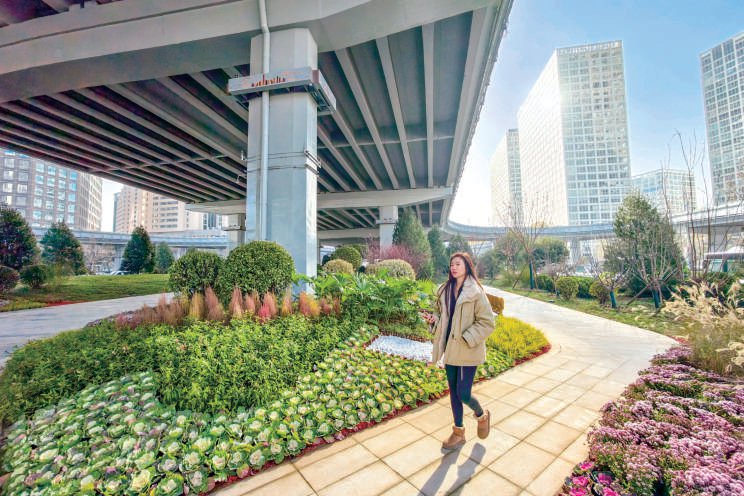
Core Viewpoint - Beijing is advancing its transportation infrastructure through comprehensive governance, aiming for a high-quality development of its transportation system by 2025, with a focus on integration, efficiency, and addressing public needs. Group 1: Transportation Network Expansion - By 2025, the total operational mileage of urban rail transit in Beijing will reach 909 kilometers, with 91% of rail stations allowing bus transfers within 50 meters [1][18] - The opening of new subway lines, including the 8th line's Dahuamen Station and the 17th line's Panjiayuan West Station, will enhance connectivity and increase the number of transfer stations to 106 [1][17] Group 2: Addressing Public Needs - The city plans to open 53 "dead-end roads" and implement 30 major traffic improvement projects by 2025, significantly reducing congestion and improving access [1][26] - Over 50,000 new parking spaces will be created to alleviate parking difficulties in central urban areas [1][26] Group 3: Systematic Governance and Collaboration - A collaborative governance model is being established, involving city, district, and community levels to enhance transportation management and address complex urban mobility challenges [1][27][28] - The city is implementing a "one street, one policy" approach to traffic governance, promoting tailored solutions for local issues [1][28][29] Group 4: Infrastructure and Space Utilization - The city is transforming underutilized bridge spaces into public areas, with 251 bridges set for renovation by 2025, enhancing urban aesthetics and functionality [1][20][21] - The renovation of bridges like Guomao Bridge and Yansha Bridge aims to improve urban vitality and connectivity [1][22] Group 5: Future Outlook - The "14th Five-Year Plan" has seen the addition of 118 kilometers of highways and 182 kilometers of new subway lines, with a focus on sustainable and efficient transportation solutions [1][32] - The upcoming "15th Five-Year Plan" will continue to prioritize convenience, smoothness, and green initiatives in the transportation sector [1][32]

【好评中国】年终回望:交通强国书写流动中国新答卷
Xin Lang Cai Jing· 2025-12-25 09:09
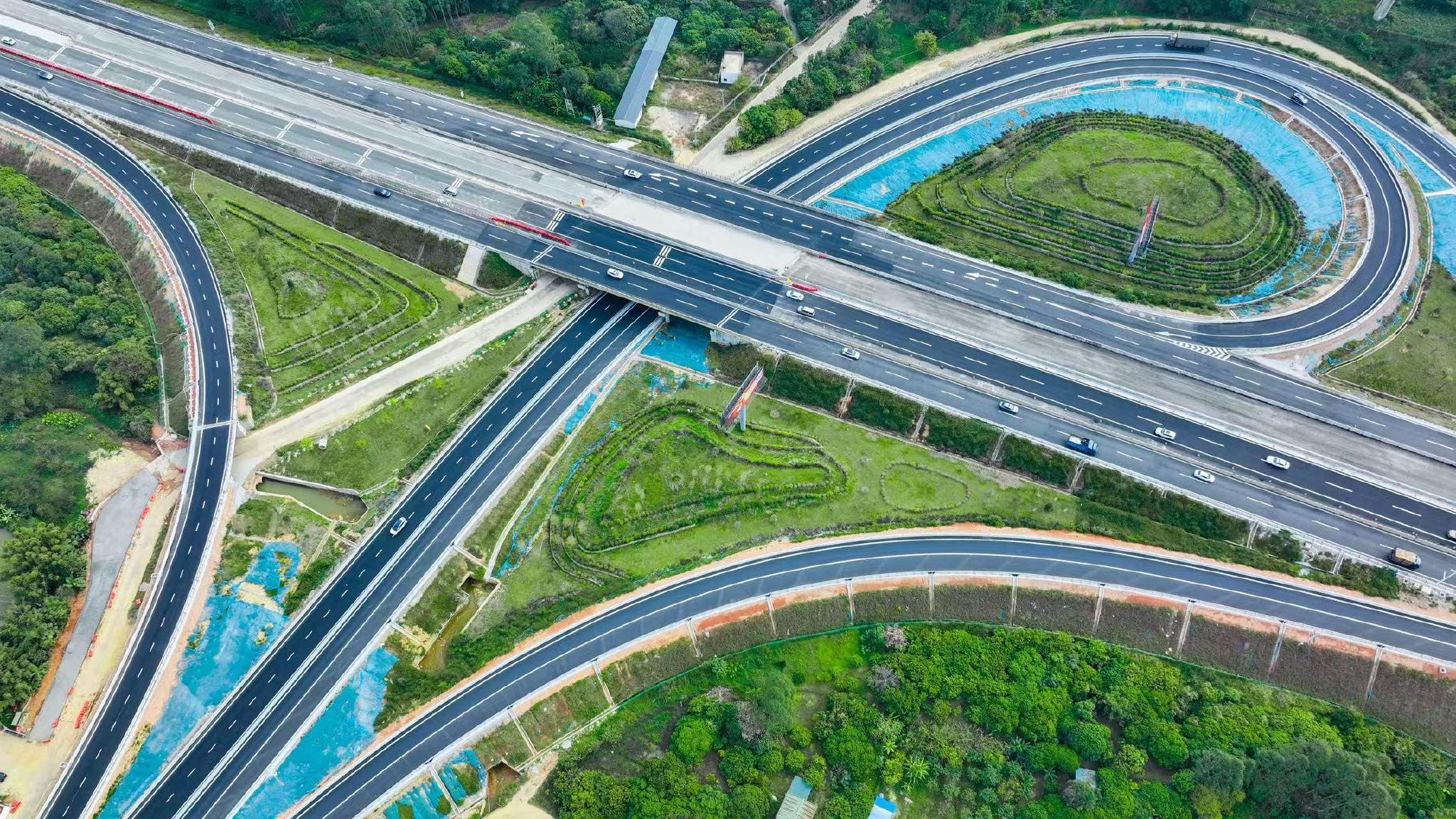
Core Insights - China's transportation development is evolving into a comprehensive network that integrates road, air, water, and rail, reflecting resilience and governance capabilities [2] - The evaluation criteria for transportation construction are shifting from quantity to accessibility, systematization, and operational efficiency, indicating a proactive role in shaping development space [2] - The construction of rural roads is focusing on completing the network and enhancing connectivity, which is crucial for urban-rural factor flow [2] Group 1: Road Development - The emphasis in rural road construction is on network completion rather than merely extending mileage, highlighting the importance of the "last mile" [2] - The overall network improvement approach exemplifies the logic of "big transportation" [2] Group 2: Air and Water Transport - The enhancement of the air transport system and port capabilities supports the overall transportation network, facilitating efficient cross-regional movement [3] - These developments are interlinked, contributing to the overall operational capacity of the transportation system [3] Group 3: Rail Transport - Railways are now viewed as part of a comprehensive transportation system, complementing other modes rather than being solely focused on speed [3] - The opening of the Guangzhan High-Speed Railway illustrates this shift, serving as a key component in the regional transportation network [3] Group 4: Systemic Transformation - The changes observed during the Spring Festival travel season reflect the maturity of the "big transportation" concept, with multiple transport modes working together [4] - The focus is shifting from fragmented construction to systematic advancement, integrating various transport modes into a unified development blueprint [4] - Future trends will emphasize smart transportation, green transformation, and multimodal transport, reinforcing collaboration among different transport methods [4]
佳都科技: 佳都科技关于2025年第一季度业绩说明会召开情况的公告
Zheng Quan Zhi Xing· 2025-05-26 11:17
Meeting Overview - The company held a Q1 2025 earnings presentation on May 26, 2025, from 16:00 to 17:00 at the Shanghai Stock Exchange Roadshow Center [1][2] - Key executives including the Chairman and CEO Liu Wei, CFO Mo Xiuchun, and independent director Lai Jianhuang participated in the meeting [2] Financial Performance - The company reported a revenue of 2.254 billion yuan, a year-on-year increase of 106.26% [2] - The net profit attributable to shareholders was 120 million yuan, marking a return to profitability [2] - The net profit excluding non-recurring gains and losses was 10.34 million yuan, also indicating a return to profitability [2] New Product Launches - The company introduced several new products, including the AI Traffic Control Intelligent Agent Platform and the Cloud Hub Intelligent Connected Data Empowerment Platform [2][3] - The AI Traffic Control Intelligent Agent Platform enhances urban traffic signal control through precise traffic indicator predictions [3] - The Cloud Hub platform integrates various traffic data sources to support comprehensive traffic operation metrics [3] Collaboration with Deepseek - The company has integrated its products with Deepseek, enhancing its AI capabilities in the transportation sector [4] - The training efficiency of the Zhixing large model has improved by over 150% compared to early 2024 [4] - The company plans to further strengthen its core competitiveness in the AI and transportation sectors [4] Progress in Rail Transit - The company’s smart rail transit product line includes core products for network command centers and smart stations [5] - The company has participated in the construction of smart subway lines and stations across 46 cities globally, covering over 2,200 subway stations [5] - The revenue growth in the rail transit sector is attributed to the successful completion of smart transportation projects in cities like Guangzhou and Chengdu [5]
