股市监管

Search documents
韩国将取消股市操纵行为举报者的奖金上限
Xin Lang Cai Jing· 2026-02-25 07:36
Core Viewpoint - South Korea's financial regulatory authority is set to revise regulations to eliminate the cap on rewards for individuals who assist in exposing stock manipulation and accounting fraud [1][3]. Group 1: Regulatory Changes - The Financial Services Commission (FSC) of South Korea aims to provide adequate rewards to whistleblowers to track and penalize such misconduct [2][4]. - Currently, the reward cap for reporting unfair stock trading is set at 3 billion KRW (approximately 2.1 million USD), while the cap for reporting fraudulent accounting is 1 billion KRW [2][4]. - With the amendments to the Capital Markets Act and the External Audit Act, whistleblowers will be eligible for rewards up to 30% of the profits gained from unfair stock trading, as well as a portion of the fines imposed for such illegal activities [2][4]. Group 2: Government Stance - This initiative follows a recent warning from President Yoon Suk-yeol against stock price manipulation, emphasizing the government's commitment to combat illegal activities that undermine the financial market [2][4].
中央财经大学贺强:股市越热越需要加强监管
Xin Lang Cai Jing· 2026-01-15 04:07
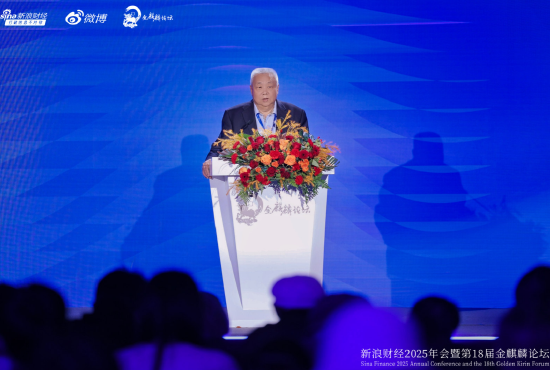
Group 1 - The "Sina Finance 2025 Annual Conference and the 18th Golden Unicorn Forum" will be held on January 15, 2026, in Beijing, focusing on the theme "Starting the 14th Five-Year Plan, New Economic Journey - Reshaping Growth Paradigms, Creating Future Prosperity" [1][4] Group 2 - Professor He Qiang from Central University of Finance and Economics expressed a positive outlook for the stock market in 2026, expecting it to continue to rise by the end of the year [3][6] - He noted that the stock market started the year with a high trading volume approaching 4 trillion, raising concerns about potential overheating and a "crazy bull" market leading to a subsequent crash [3][6] - He highlighted the emergence of excessive speculation, with some stocks experiencing rapid increases in value without significant changes in performance, indicating a risk of market instability [3][6] - He emphasized the need for regulatory oversight to manage excessive speculation and ensure healthy market development, which is crucial for sustained growth and profitability for investors [3][6]

企业扎堆赴港IPO不是什么好事
Sou Hu Cai Jing· 2025-07-20 12:48
Core Viewpoint - The article discusses the current state of IPOs in China, highlighting the increasing number of domestic companies planning to list abroad, particularly in Hong Kong, and the regulatory challenges faced in the domestic market [2][4]. Group 1: IPO Trends - As of July 18, 211 domestic companies are preparing to issue securities and list abroad, with 165 planning to list on the Hong Kong Stock Exchange, accounting for nearly 80% of the total [2]. - By mid-2023, the phenomenon of "IPO backlog" in China's domestic market has reached a historic peak, prompting regulatory changes [4]. Group 2: Regulatory Environment - The article criticizes the current regulatory environment, stating that there is a significant lack of oversight in the IPO process, leading to imbalances between new and old shareholders and between public holding costs and dividend amounts [4]. - In February 2024, the China Securities Regulatory Commission (CSRC) adjusted its leadership, marking the beginning of substantial changes in IPO regulations, including a slowdown in IPO pace and an increase in listing thresholds [4]. Group 3: Market Dynamics - The influx of mainland companies to Hong Kong is attributed to two main factors: ample liquidity in Hong Kong and the continuous relaxation of listing requirements by the Hong Kong Stock Exchange [5]. - The article warns that the relaxation of listing requirements may lead to reduced regulation, which could harm the market, suggesting that strict oversight is essential for a healthy capital market [5].