
过度投机

Search documents
读懂“严监管”背后的逻辑
Sou Hu Cai Jing· 2026-02-08 23:53
Core Viewpoint - The recent fluctuations in lithium carbonate prices are attributed to a cooling market sentiment, with the Guangxi Futures Exchange's stringent regulatory measures being a focal point of attention [1][2]. Group 1: Regulatory Measures - Guangxi Futures Exchange emphasizes strict regulation to curb excessive speculation while not interfering with reasonable pricing, aiming to protect the futures market's service to the real economy [1][2]. - Specific measures include raising transaction fees, increasing the minimum opening order quantity from 1 to 5 contracts, and adjusting margin requirements for speculative and hedging trades to 13% and 12% respectively, targeting excessive speculative behavior [1][2]. - The exchange's approach is characterized by a focus on maintaining order rather than price intervention, ensuring that the market returns to a rational state following a period of excessive optimism [2][3]. Group 2: Market Dynamics - The recent price decline in lithium carbonate is seen as a correction of previous overly optimistic sentiments, with the market returning to fundamentals after curbing speculative tendencies [2]. - The rapid price increase was driven by unrealistic expectations regarding storage demand and supply constraints, which lacked sustainability, highlighting the importance of regulatory measures in stabilizing market emotions [2][3]. - The exchange's regulatory actions have allowed the market to realign with supply and demand dynamics, reinforcing the core functions of the futures market [2][3]. Group 3: Future Outlook - The Guangxi Futures Exchange will maintain a strict regulatory stance against violations such as exceeding position limits and failing to report actual control relationships, ensuring a fair and transparent trading environment [3]. - The exchange's role is to act as a "gatekeeper" for the market, balancing the need to prevent excessive speculation while facilitating risk management for real entities [3][4]. - The future of the futures market is expected to be robust under careful regulatory oversight, contributing significantly to the high-quality development of the real economy [4].
商品日报(1月21日):金属闪耀 黄金加速上涨 碳酸锂涨停之后再涨超7%
Xin Hua Cai Jing· 2026-01-21 08:47
Group 1: Market Performance - The domestic commodity futures market showed strong recovery on January 21, with lithium carbonate and tin rising over 7% and 5% respectively, leading the gains [1] - The comprehensive China Securities commodity futures price index closed at 1685.53 points, up 10.20 points or 0.61% from the previous trading day [1] - The China Securities commodity futures index closed at 2324.89 points, also up 14.06 points or 0.61% from the previous trading day [1] Group 2: Lithium Carbonate - Lithium carbonate futures surged again on January 21, with an intraday increase of over 8% and a closing rise of over 7% [2] - The price volatility of lithium carbonate is attributed to low short-term recovery probabilities from the Ningde Times mine and increased short-term demand from downstream battery exports [2] - The China Battery Industry Association warned of speculative trading distorting price signals and suggested regulatory measures to stabilize prices [2] Group 3: Gold Market - International gold prices accelerated recently, with spot gold and Shanghai gold reaching historical highs of $4888 per ounce and 1101.9 yuan per gram respectively [3] - The surge in gold prices is driven by increased distrust in the US dollar and US Treasury bonds, leading to higher demand for gold [3] - Poland's central bank announced plans to purchase up to 150 tons of gold, increasing its reserves to 700 tons, further supporting gold prices [3] Group 4: Chemical Sector Weakness - The chemical sector showed weakness, with multiple products like glass, caustic soda, and coke declining over 1% to 2%, with glass hitting a three-week low [4] - The glass market faces supply-demand imbalances due to weak demand from the real estate sector and expectations of increased supply before the Spring Festival [4] - Caustic soda prices hit a new low since listing, with high domestic supply and limited demand growth constraining price recovery [5]


有色金属周度报告-20260116
Xin Ji Yuan Qi Huo· 2026-01-16 12:59
Group 1: Industry Investment Rating - No information provided Group 2: Core Views - The recent sharp decline in the lithium carbonate market is a rapid correction of the previous irrational rise, and the short - term sharp rise driven by policy expectations and capital sentiment has ended. In the short term, the price may need time to find a new balance, and attention should be paid to the spot price and social inventory. In the long term, focus on the actual demand fulfillment [34][35]. - The sharp rise in the Shanghai tin market is due to its fragile and concentrated global supply chain. In the short term, there is a risk of a high - level decline, and in the long term, attention should be paid to downstream demand and policy guidance [36][37][38]. Group 3: Summary by Directory 1. Domestic Main Metal Spot Price Trends - Copper: The futures price of the CU2603 contract rose from 92,780 to 100,770, a weekly increase of 8.61%. The spot price increased from 100,590 to 101,780, a weekly increase of 1.18% [4]. - Aluminum: The futures price of the AL2603 contract decreased from 24,385 to 23,925, a weekly decrease of 1.89%. The spot price decreased from 24,020 to 24,010, a weekly decrease of 0.04% [4]. - Zinc: The futures price of the ZN2603 contract rose from 24,015 to 24,750, a weekly increase of 3.06%. The spot price increased from 24,040 to 24,840, a weekly increase of 3.33% [4]. - Lead: The futures price of the PB2603 contract rose from 17,395 to 17,475, a weekly increase of 0.46%. The spot price increased from 17,175 to 17,300, a weekly increase of 0.73% [4]. - Nickel: The futures price of the NI2603 contract rose from 139,220 to 141,590, a weekly increase of 1.70%. The spot price increased from 141,900 to 149,350, a weekly increase of 5.25% [4]. - Alumina: The futures price of the AO2605 contract decreased from 2,843 to 2,751, a weekly decrease of 3.24%. The spot price decreased from 2,710 to 2,690, a weekly decrease of 0.74% [4]. - Industrial Silicon: The futures price of the SI2605 contract decreased from 8,715 to 8,605, a weekly decrease of 1.26%. The spot price remained unchanged at 9,550 [4]. - Lithium Carbonate: The futures price of the LC2605 contract rose from 143,420 to 146,200, a weekly increase of 1.94%. The spot price increased from 139,100 to 156,250, a weekly increase of 12.33% [4]. - Polysilicon: The futures price of the PS2605 contract rose from 53,150 to 57,190, a weekly increase of 7.60%. The spot price increased from 52,300 to 52,400, a weekly increase of 0.19% [4]. 2. Copper Inventory - LME copper inventory increased from 141,000 tons to 141,100 tons, a weekly increase of 0.07%. - COMEX copper inventory increased from 515,000 tons to 538,700 tons, a weekly increase of 4.60%. - SHEF copper inventory increased from 180,500 tons to 213,500 tons, a weekly increase of 18.28% [21]. 3. Copper Concentrate Processing Fee - As of January 16, 2026, the spot TC of copper concentrate was - 46.00 US dollars/ton, remaining unchanged weekly and at a historical low. The spot RC was - 4.6 cents/pound, and the tight supply expectation at the mine end still exists [24]. 4. Lithium Spodumene Concentrate Index - As of January 16, 2026, the latest quote was 1,980 US dollars/ton, a weekly increase of 100 US dollars/ton [27]. 5. Tin Ore Import Data - In November 2025, China's imports of tin ore and concentrates were 15,099.34 tons, a year - on - year increase of 24.40% and a month - on - month increase of 29.81%. Imports from Myanmar were 7,190.21 tons, a month - on - month increase of 203.77% and a year - on - year increase of 133.38%. Imports from Congo (Kinshasa) were 3,225.34 tons, a month - on - month increase of 19.45% and a year - on - year decrease of 21.46% [30]. 6. Non - ferrous Metal Demand - In December 2025, automobile production and sales were 3.296 million and 3.272 million respectively, a month - on - month decrease of 6.7% and 4.6%, and a year - on - year decrease of 2.1% and 6.2%. In 2025, cumulative automobile production and sales were 34.531 million and 34.4 million respectively, a year - on - year increase of 10.4% and 9.4% [32]. - In December 2025, new energy vehicle production and sales were 1.718 million and 1.71 million respectively, a month - on - month decrease of 8.6% and 6.2%, and a year - on - year increase of 12.3% and 7.2%. New energy vehicle sales accounted for 52.3% of total vehicle sales [32]. - From January to November, the housing construction area was 6.56066 billion square meters, a year - on - year decrease of 9.6%. Residential construction area decreased by 10.0%. New housing starts decreased by 20.5%, and residential new starts decreased by 19.9%. Housing completion area decreased by 18.0%, and residential completion area decreased by 20.1% [33]. - As of the end of November, the cumulative installed power generation capacity was 3.79 billion kilowatts, a year - on - year increase of 17.1%. Solar power generation installed capacity was 1.16 billion kilowatts, a year - on - year increase of 41.9%. Wind power installed capacity was 600 million kilowatts, a year - on - year increase of 22.4%. The average utilization hours of power generation equipment from January to November were 2,858 hours, 289 hours lower than the same period last year [33]. 7. Strategy Recommendation Lithium Carbonate - Short - term: After the sharp decline, the price may need time to find a new balance, and attention should be paid to the spot price and social inventory [34][35]. - Long - term: Focus on the actual demand fulfillment [35]. Tin - Short - term: Be vigilant against the risk of a high - level decline [37]. - Long - term: Pay attention to the actual downstream demand and new policy guidance [38].
喜娜AI速递:今日财经热点要闻回顾|2026年1月16日
Xin Lang Cai Jing· 2026-01-16 11:52
Group 1 - Xibei's Vice President has resigned, and 102 stores will close nationwide, affecting approximately 4,000 employees, due to previous losses exceeding 500 million [2][7] - Central University of Finance and Economics' He Qiang warns of excessive speculation in the stock market, suggesting regulatory measures to prevent a "crazy bull" market [2][7] - Muyuan Foods expects a net profit of 15.1 to 16.1 billion yuan for 2025, with a significant reduction in production costs and plans for international expansion [2][7] Group 2 - Some brokerage firms face a shortage of margin trading quotas, leading to a potential slowdown in leveraged investments as the financing balance exceeds 2.6 trillion yuan [3][8] - Nvidia has lowered its copper demand forecast from 500,000 tons to 200 tons, causing a nearly 3% drop in copper prices, indicating a shift in market expectations [3][8] - A-shares show three signals indicating a cooling market, with a focus on maintaining a "slow bull" market through regulatory actions [3][8] Group 3 - Brain-computer interface company NaoHu Technology has begun construction of a "super factory," indicating a move towards large-scale production in the sector, with related stocks seeing increased investment [4][9] - The China Securities Regulatory Commission has outlined tasks for 2026, focusing on market stability, regulatory enforcement, and promoting company development [4][10] - CITIC Securities predicts an influx of 1.5 trillion yuan in new capital for A-shares in 2026, supporting a slow bull market [4][10] Group 4 - Multiple A-share companies have reported positive earnings forecasts for 2025, with SAIC Motor expected to see a profit increase of 438% to 558%, reflecting a recovery in industry conditions [5][10]

喜娜AI速递:今日财经热点要闻回顾|2026年1月15日
Xin Lang Cai Jing· 2026-01-15 11:31
Group 1: U.S. Semiconductor Tariffs - The U.S. White House announced a 25% import tariff on certain semiconductors and related products starting January 15, aimed at encouraging domestic production and reducing reliance on foreign supply chains [2][7] - This policy has led to a significant market reaction, with U.S. stocks, particularly in the tech sector, experiencing declines on January 14 [2][7] - The tariff is expected to increase costs for related companies and disrupt the global semiconductor supply chain [2][7] Group 2: A-Share Market Regulations - The Shanghai and Shenzhen Stock Exchanges have raised the minimum margin requirement for financing purchases from 80% to 100% for new contracts, a move approved by the China Securities Regulatory Commission [2][7] - This adjustment is seen as a measure to reduce leverage and protect investor interests, promoting long-term stability in the A-share market [2][7] - Historical adjustments to this margin requirement indicate a pattern of regulatory intervention aimed at maintaining market health [2][7] Group 3: Housing Tax Policy - The Ministry of Finance, State Taxation Administration, and Ministry of Housing and Urban-Rural Development announced an extension of the individual income tax refund policy for home sales, effective from January 1, 2026, to December 31, 2027 [2][7] - This policy provides tax refunds for individuals selling their homes and purchasing new ones within a year, aimed at supporting housing improvements and reducing transaction costs [2][7] - The continuation of this policy is expected to facilitate housing circulation and promote a healthy market environment [2][7] Group 4: Ctrip Investigation - Ctrip Group is under investigation by the State Administration for Market Regulation for alleged monopolistic practices, leading to a sharp decline in its stock price by 18.8% in the U.S. and 6.49% in Hong Kong [4][8] - The investigation focuses on issues such as price transparency and profit margins for merchants, which may lead to regulatory changes in Ctrip's operations [4][8] Group 5: Xibei Restaurant Closures - Xibei is reportedly planning to close 102 stores, approximately 30% of its total, affecting around 4,000 employees, primarily in first- and second-tier cities [10] - The closures are attributed to high rental and labor costs, as well as insufficient recovery in dining consumption over the past year [10] - The challenges faced by Xibei reflect broader pressures within the Chinese restaurant industry, particularly for traditional Chinese dining establishments [10] Group 6: Central Bank Policies - The People's Bank of China announced several financial policies, including a 0.25 percentage point reduction in the re-lending and rediscount rates, and an increase in various loan quotas to support small enterprises and technological innovation [5][10] - These measures aim to guide financial institutions in supporting the real economy and facilitating structural economic transformation [5][10] Group 7: U.S. Stock Market Trends - U.S. stock markets experienced declines for the second consecutive day, influenced by geopolitical risks and the digestion of bank earnings reports [5][10] - Major indices, including the Dow Jones, NASDAQ, and S&P 500, saw downturns, particularly in technology and banking sectors [5][10] - Concerns over credit card interest rate reforms and criticisms of the Federal Reserve have contributed to market apprehension [5][10]

中央财经大学贺强:股市越热越需要加强监管
Xin Lang Cai Jing· 2026-01-15 04:07
Group 1 - The "Sina Finance 2025 Annual Conference and the 18th Golden Unicorn Forum" will be held on January 15, 2026, in Beijing, focusing on the theme "Starting the 14th Five-Year Plan, New Economic Journey - Reshaping Growth Paradigms, Creating Future Prosperity" [1][4] Group 2 - Professor He Qiang from Central University of Finance and Economics expressed a positive outlook for the stock market in 2026, expecting it to continue to rise by the end of the year [3][6] - He noted that the stock market started the year with a high trading volume approaching 4 trillion, raising concerns about potential overheating and a "crazy bull" market leading to a subsequent crash [3][6] - He highlighted the emergence of excessive speculation, with some stocks experiencing rapid increases in value without significant changes in performance, indicating a risk of market instability [3][6] - He emphasized the need for regulatory oversight to manage excessive speculation and ensure healthy market development, which is crucial for sustained growth and profitability for investors [3][6]
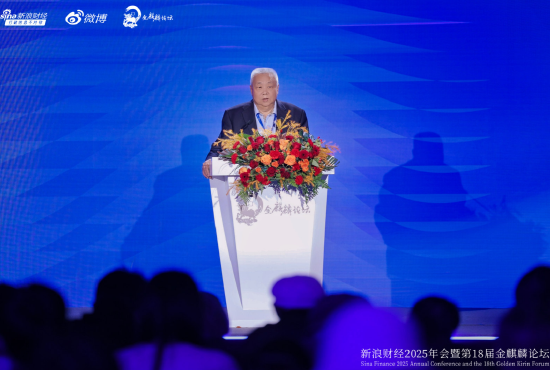
中央财经大学贺强谈股市走势:年初走得有点急,很多专家担心又变成“疯牛”
Xin Lang Cai Jing· 2026-01-15 04:07
Group 1 - The "Sina Finance 2025 Annual Conference and the 18th Golden Unicorn Forum" will be held on January 15, 2026, in Beijing, focusing on the theme "Starting the 14th Five-Year Plan, New Economic Journey - Reshaping Growth Paradigms, Creating Future Prosperity" [1][4] Group 2 - Professor He Qiang from the Central University of Finance and Economics expressed a positive outlook for the stock market in 2026, expecting it to continue on an upward trend by the end of the year [3][6] - He noted that the stock market started the year with a high trading volume approaching 4 trillion, raising concerns among experts about potential overheating and a "crazy bull" market leading to a subsequent crash [3][6] - He highlighted the emergence of excessive speculation in the market, with some stocks experiencing rapid increases in value without significant changes in performance, including some stocks rising 20 times in a short period [3][6] - He emphasized the need for regulatory oversight to manage these speculative behaviors, warning that excessive speculation could lead to significant market losses and risks for investors [3][6]
你敢上车吗?黄金暴涨60%!年内50次新高,2026牛市还能疯多久?
Sou Hu Cai Jing· 2025-12-24 11:25
Core Insights - The article discusses the significant rise in gold prices, which have increased by 60% and reached new highs over 50 times in 2025, prompting questions about whether to invest or remain cautious in 2026 [2][4]. Group 1: Factors Driving Gold Prices - The first driving force behind the gold price surge is the substantial purchasing by central banks, with countries like China and Poland increasing their gold reserves significantly. Poland alone bought 83 tons in the first ten months of the year, making it the largest gold buyer globally [5][7]. - The second factor is the shift in global investment funds seeking better returns due to lower interest rates from the Federal Reserve, which has led to a net inflow of over 700 tons into gold ETFs in recent months, particularly from North America [9]. - The third factor is the rising geopolitical risks, including ongoing conflicts and trade tensions, which have increased the demand for gold as a safe-haven asset, contributing to a 12% increase in gold prices due to this heightened risk environment [11]. Group 2: Market Predictions and Cautions - Financial institutions are making bold predictions for gold prices in 2026, with Goldman Sachs targeting $4,900 per ounce, citing continued central bank purchases and potential further interest rate cuts [13][14]. - UBS has a more conservative target of $4,200, emphasizing the increasing allure of gold as a "risk-free asset" due to high U.S. debt levels, while the World Gold Council has refrained from providing specific price targets [14]. - Despite these optimistic forecasts, there are concerns about the sustainability of central bank purchases and the potential for a shift in U.S. monetary policy that could negatively impact gold prices [16][18]. Group 3: Investment Strategies for Individuals - For individuals considering gold jewelry, the article suggests that price fluctuations should not be a major concern, as jewelry is primarily for personal use rather than investment [20]. - However, for those looking to invest in gold, it is advised to avoid chasing high prices, as the market is expected to experience high volatility and potential corrections in 2026 [20][22]. - The article emphasizes treating gold as a form of insurance rather than a quick profit-making tool, recommending that investments in gold should not exceed 10% of total assets to maintain a balanced approach [22][24].

Vitalik:预测市场比社媒更理性,可作为缓解情绪化舆论的“真相工具”
Xin Lang Cai Jing· 2025-12-21 02:54
Core Viewpoint - Vitalik Buterin, co-founder of Ethereum, argues that prediction markets serve as a "rational tool" for addressing emotional issues, despite theoretical concerns about negative incentives [1] Group 1: Prediction Markets vs. Traditional Markets - Prediction markets, according to Buterin, are less likely to cause large-scale harm compared to traditional markets, which also carry similar risks [1] - Unlike social media, which can incite emotions and lacks accountability, prediction markets utilize real funds to constrain opinions, leading to a closer approximation of truth over time [1] Group 2: Market Characteristics - The fixed price range of 0-1 in prediction markets reduces the influence of "hot potato" dynamics and excessive speculation compared to traditional markets [1]