股市风险溢价

Search documents
印尼突发黑天鹅、泰国领导层动荡!东南亚两大新兴股市政治风险被推高
Zhong Guo Ji Jin Bao· 2025-08-31 22:44
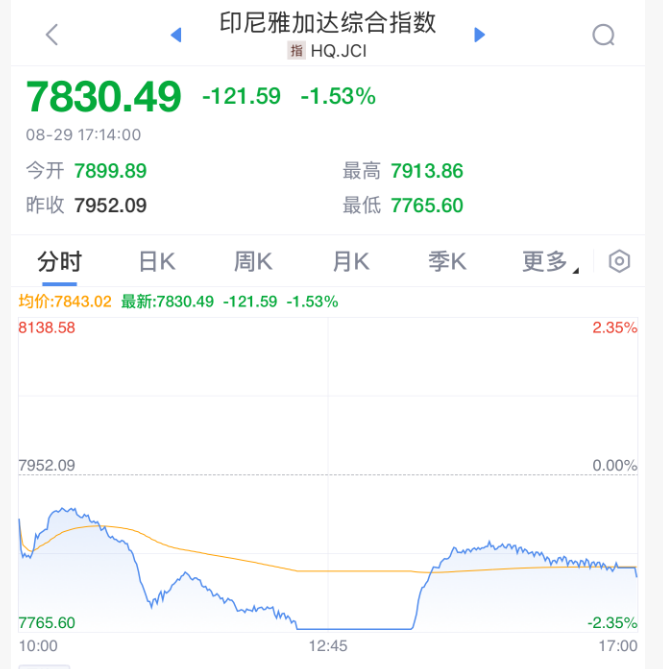
Group 1: Political Risks in Southeast Asia - Recent protests in Indonesia and political turmoil in Thailand have heightened political risks in two major emerging markets in Southeast Asia [2][3] - Indonesia's stock index fell by 1.5%, the largest drop among global indices, while Thailand's market declined by 1.1% on the same day [2] - Protests in Indonesia were triggered by rising living costs and inequality, leading President Joko Widodo to cancel a trip to China [2][3] Group 2: Economic Implications - Analysts express a cautious outlook on Indonesia, citing rising political risks and a potential increase in market risk premiums [3] - The protests were sparked by outrage over lawmakers receiving housing allowances nearly ten times the minimum wage in Jakarta, exacerbated by tax increases and layoffs [3][5] - In contrast, analysts are more optimistic about Thailand, noting its cheaper valuations and potential economic stimulation from a new prime minister [4] Group 3: Market Reactions - In August, Indonesia attracted a net foreign capital inflow of $676 million, while Thailand experienced an outflow of $670 million [4] - Year-to-date, Thailand's stock market has declined by approximately 10%, while Indonesia's market has risen by about 11% prior to the unrest [4] - The protests have led to significant unrest, with at least four reported deaths and widespread property damage across major cities in Indonesia [5][6] Group 4: Social and Economic Context - Over the past decade, Indonesia has maintained a stable economic growth rate of around 5%, but layoffs in manufacturing have hurt the shrinking middle class [6] - Official data indicates that over 42,000 workers were laid off in the first half of the year, a 32% increase from the previous year [6] - A report highlighted that the wealth of Indonesia's 50 richest individuals equals the total wealth of 50 million Indonesians, illustrating stark economic inequality [6]
突发黑天鹅!
Zhong Guo Ji Jin Bao· 2025-08-31 16:21
Core Viewpoint - The political risks in Southeast Asia are rising due to escalating protests in Indonesia and leadership turmoil in Thailand, impacting the stock markets in both countries [2][5]. Group 1: Indonesia's Political and Economic Situation - Protests in Indonesia were triggered by outrage over lawmakers receiving housing allowances of 50 million Indonesian rupiah per month, which is nearly ten times the minimum wage in Jakarta [10]. - President Prabowo canceled his trip to China due to the protests, which have resulted in at least four deaths and widespread unrest across major cities [5][12]. - The protests reflect broader discontent over rising living costs, tax increases, and layoffs, with over 42,000 workers laid off in the first half of the year, a 32% increase from the previous year [12]. - The wealth disparity is stark, with the wealth of Indonesia's 50 richest individuals equating to that of 50 million citizens [12]. Group 2: Market Reactions and Analyst Perspectives - Indonesia's stock index fell by 1.5%, the largest drop among regional markets, while Thailand's index decreased by 1.1% [2]. - Analysts express a cautious outlook on Indonesia, suggesting that the political risks will increase and the risk premium for the stock market will rise, leading to a low allocation stance due to unreflective valuations of economic issues [6][7]. - In contrast, analysts are more optimistic about Thailand, citing cheaper valuations and potential economic stimulation from a new prime minister [7]. - In August, Indonesia attracted a net foreign capital inflow of $676 million, while Thailand experienced an outflow of $670 million [7]. Group 3: Long-term Outlook - Despite the current turmoil, some analysts believe that the long-term outlook remains unchanged due to potential monetary policy easing and market valuation advantages [8].

突发黑天鹅!
中国基金报· 2025-08-31 16:09
Core Viewpoint - The article highlights the political unrest in Indonesia and Thailand, which has led to significant declines in their stock markets, raising concerns about investment risks in Southeast Asia [3][5][6]. Group 1: Indonesia's Political Unrest - Indonesia's stock index fell by 1.5%, the largest drop among global markets, due to escalating protests against rising living costs and inequality [3]. - Protests were triggered by the revelation that members of parliament receive housing allowances of 50 million Indonesian Rupiah, nearly ten times the minimum wage in Jakarta [10]. - The protests have resulted in at least four deaths and widespread violence, with government buildings and properties being attacked [12]. Group 2: Economic Implications - Analysts express concerns that the political risks in Indonesia will increase, leading to a higher risk premium in the stock market [6]. - Despite the turmoil, Indonesia attracted a net foreign capital inflow of $676 million in August, while Thailand experienced an outflow of $670 million [8]. - Indonesia's stock market has seen an 11% increase this year prior to the unrest, while Thailand's market has declined by approximately 10% [8]. Group 3: Comparison with Thailand - Analysts are more optimistic about Thailand's market, citing cheaper valuations and potential economic stimulation from a new prime minister [7]. - Thailand has been plagued by political infighting for decades, which has hindered its economic growth compared to neighboring countries [5].

突然涌入!中国股市,传来大消息!
券商中国· 2025-08-06 13:13
Core Viewpoint - The Chinese stock market is experiencing a significant influx of capital, with A-shares rising for three consecutive days and foreign capital accelerating its net inflow into the market in July [1][2]. Group 1: Capital Inflow - Foreign capital accelerated its net inflow into the Chinese stock market in July, with passive funds inflowing $3.9 billion and active funds outflowing $1.2 billion, resulting in a total net inflow of $2.7 billion for July, up from $1.2 billion in June [2]. - As of August 5, the financing balance in the A-share market reached 1.9863 trillion yuan, an increase of 8.706 billion yuan from the previous trading day, marking a recovery to levels not seen in July for the past decade [1][3]. Group 2: Market Activity - The number of new A-share accounts opened in July approached 2 million, reaching 1.9636 million, a year-on-year increase of 71% and a month-on-month increase of over 19% [5]. - The Baidu search index for stocks surged from 1,709 on August 3 to 14,868 on August 4, indicating a significant increase in public interest in the stock market [5]. Group 3: Market Dynamics - Analysts suggest that the current market is primarily driven by capital, with major stock indices' risk premiums falling below historical averages, indicating a potential for continued valuation expansion [6][8]. - Historical patterns show that periods when stock market risk premiums fall below "mean -1 standard deviation" are not uncommon, often lasting several months, suggesting that the current market dynamics may follow a similar trajectory [8].