胃癌筛查

Search documents
全球40%的胃癌,发生在中国
36氪· 2026-02-09 00:10
Core Viewpoint - The article highlights the significant burden of gastric cancer in China, attributing nearly 70% of cases to Helicobacter pylori infection, which is prevalent in about 40-50% of the Chinese population [4][24][27]. Group 1: Gastric Cancer Statistics - China accounts for approximately 40% of the world's gastric cancer cases, with about 360,000 new cases and 260,000 deaths reported in 2022 [6][11]. - Gastric cancer ranks fifth globally in terms of incidence and mortality, with 970,000 new cases and 660,000 deaths in 2022 [7][9]. - The northwest region of China shows the highest incidence and mortality rates for gastric cancer, with men being 2.5 times more likely to develop the disease than women [11][13]. Group 2: Role of Helicobacter pylori - Helicobacter pylori is identified as a major contributor to gastric cancer, with studies indicating it is responsible for 78.5% of non-cardia gastric cancer cases and 62.1% of cardia gastric cancer cases in China [24]. - The infection rate of Helicobacter pylori in China is around 40-50%, with some regions exceeding 60% [24][26]. - The bacterium's virulence is heightened in East Asian populations, with a high prevalence of the cagA+ strain, which is more likely to cause gastric cancer [29][30]. Group 3: Treatment and Prevention - Eradication therapy for Helicobacter pylori is crucial, as it can significantly reduce the risk of gastric cancer by 52-53% in certain studies [33]. - Current clinical guidelines recommend eradication therapy for adults with Helicobacter pylori infection unless contraindicated by severe comorbidities [33]. - The success of eradication therapy is challenged by antibiotic resistance, with resistance rates for commonly used antibiotics like clarithromycin and metronidazole reaching as high as 34% and 50-75% respectively in China [36][37]. Group 4: Lifestyle Factors - Lifestyle choices, such as high salt intake, smoking, and obesity, are also linked to increased gastric cancer risk [41][42]. - The average salt intake in China exceeds the World Health Organization's recommendation, contributing to higher gastric cancer rates [41]. - The article emphasizes the importance of lifestyle modifications alongside medical interventions to mitigate gastric cancer risk [42].


胃癌关爱日|全方位守护,保“胃”健康
Ren Min Wang· 2025-11-29 03:12
Core Viewpoint - The article emphasizes the importance of awareness and early detection of gastric cancer, highlighting its common causes and the need for preventive measures and regular screenings to improve public health. Summary by Sections Gastric Cancer Evolution - Gastric cancer progresses through five stages: chronic superficial gastritis, chronic atrophic gastritis, intestinal metaplasia, dysplasia, and finally gastric cancer [4][5]. Early Symptoms and Warning Signs - Early symptoms of gastric cancer are often subtle and can be confused with common gastric issues, but may include persistent upper abdominal pain, appetite loss, unexplained weight loss, and gastrointestinal bleeding [7][8]. High-Risk Groups for Gastric Cancer - Individuals aged 45 and above, especially those with a history of chronic gastritis, gastric ulcers, or family history of gastric cancer, are considered high-risk and should undergo regular screenings [8][9]. Early Screening Methods - Recommended screening methods include blood tests for anemia, stool tests for occult blood, tumor marker tests, and gastroscopy for individuals over 40 every two years [10]. Preventive Measures - Key preventive strategies include eradicating Helicobacter pylori, improving dietary habits, avoiding high-salt foods, and maintaining a healthy lifestyle to reduce the risk of gastric cancer [11][13][14].

MIRXES-B(02629.HK):GASTROClear™获批中国国家药监局胃癌筛查IVD注册证
Ge Long Hui· 2025-10-08 22:51
Core Viewpoint - MIRXES-B (02629.HK) has received approval from the National Medical Products Administration of China for its core product GASTROClear™, marking it as the first blood test approved for non-invasive gastric cancer screening in China [1] Product Approval - GASTROClear™ is the world's first microRNA blood test approved for early detection of gastric cancer, assessing cancer risk by detecting 12 gastric cancer-related miRNA biomarkers [1] - The product was previously approved in Singapore in 2019 and received "breakthrough device" designation from the FDA in 2023 [1] Significance of Approval - The approval in China represents a significant milestone for the company, indicating a successful transition from research and development to commercialization [1] - This achievement reflects the company's long-term commitment and investment in technological innovation and large-scale clinical trials [1]
MIRXES-B(02629):GASTROClear?获批中国国家药监局胃癌筛查IVD注册证
Zhi Tong Cai Jing· 2025-10-08 22:34
Core Insights - MIRXES-B's core product GASTROClear has received approval from the National Medical Products Administration of China for use as a non-invasive gastric cancer screening IVD product, marking a significant milestone in the company's journey from research and development to commercialization [1] - GASTROClear is the first blood test approved for gastric cancer screening in China, utilizing a microRNA-based method to assess gastric cancer risk by detecting 12 gastric cancer-related miRNA biomarkers [1] Group 1 - GASTROClear is designated for screening high-risk adults aged 45-74 as defined by the "Guidelines for Screening and Early Diagnosis and Treatment of Gastric Cancer in China (2024 Edition)," potentially covering over 500 million individuals [2] - The product will be implemented in both public and private medical institutions in China as an IVD testing project, significantly expanding the company's business space in the gastric cancer screening market [2] Group 2 - The company plans to continue increasing its commercialization efforts in China, including expanding the sales team and upgrading local production capabilities [2] - There will be a focus on strengthening business development and collaboration in mainland China to promote broader adoption of the product [2]
MIRXES-B:GASTROClear 获批中国国家药监局胃癌筛查IVD注册证
Zhi Tong Cai Jing· 2025-10-08 22:30
Core Insights - MIRXES-B (02629) has received approval from the National Medical Products Administration of China for its core product GASTROClear, marking it as the first blood test approved for non-invasive gastric cancer screening in China [1] - GASTROClear is the world's first microRNA blood test approved for early detection of gastric cancer, assessing cancer risk by detecting 12 gastric cancer-related miRNA biomarkers [1] - The product is expected to cover a potential population of over 500 million high-risk adults aged 45-74, as defined by the "Guidelines for Gastric Cancer Screening and Early Diagnosis and Treatment (2024 Edition)" [1] Company Strategy - The company plans to continue expanding its commercialization efforts in China, including increasing the size of its sales team and upgrading local production capabilities [2] - The company aims to strengthen its business development and collaboration efforts in mainland China to promote wider adoption of its products [2]
MIRXES-B(02629):GASTROClear™获批中国国家药监局胃癌筛查IVD注册证
智通财经网· 2025-10-08 22:28
Core Insights - MIRXES-B's core product GASTROClear™ has received approval from the National Medical Products Administration of China for Class III medical device registration, marking it as the first blood test approved for non-invasive gastric cancer screening in China [1] - GASTROClear™ is the world's first microRNA blood test approved for early detection of gastric cancer, assessing cancer risk by detecting 12 gastric cancer-related miRNA biomarkers [1] - The approval allows GASTROClear™ to be used for screening high-risk adults aged 45-74, potentially covering over 500 million people in China [1] Company Strategy - The company plans to continue expanding its commercialization efforts in China, including increasing the size of its sales team and upgrading local production capabilities [2] - The company aims to strengthen its business development and collaboration efforts in mainland China to promote wider adoption of its products [2]
一发现就是中晚期,胃癌筛查到底难在哪?
Hu Xiu· 2025-08-14 04:06
Core Insights - Gastric cancer is often diagnosed at an advanced stage, with early symptoms resembling common stomach ailments, leading to a significant drop in the five-year survival rate to 30% [1] - Early diagnosis is challenging due to the discomfort associated with gastroscopy, which is often perceived as a daunting procedure, and long waiting times discourage many individuals from pursuing screening [1] Industry Challenges - The difficulty in early detection of gastric cancer is primarily attributed to the similarity of early symptoms to less severe stomach issues, resulting in delayed diagnosis [1] - The perception of gastroscopy as a "sword-swallowing" level challenge contributes to the reluctance of individuals to undergo necessary screening [1] - Long waiting times for screening procedures further exacerbate the issue, leading to a high rate of abandonment among potential patients [1]
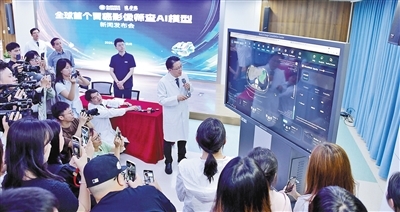
浙江发布胃癌影像筛查AI模型 用“平扫CT+AI”识别早期胃癌
Hang Zhou Ri Bao· 2025-06-26 02:47
Core Viewpoint - The introduction of the world's first AI model for gastric cancer screening, DAMO GRAPE, represents a significant advancement in early detection and intervention, potentially increasing the five-year survival rate from 35% to over 90% if cancer is detected early [3][5]. Group 1: AI Model Development and Application - The DAMO GRAPE model utilizes plain CT imaging to identify early gastric cancer lesions and has undergone large-scale clinical research involving nearly 100,000 individuals across 20 centers [3]. - The model's initial screening significantly reduces the high-risk population for gastric cancer, achieving detection rates of 24.5% and 17.7% in two regional hospitals, with approximately 40% of detected cases being asymptomatic [4]. - The AI model demonstrates a sensitivity of 85.1% and specificity of 96.8%, surpassing radiologist diagnoses by 21.8% and 14.0%, respectively, making early detection of gastric cancer via plain CT feasible [4]. Group 2: Clinical Impact and Future Plans - The AI model has shown the ability to detect gastric cancer 2 to 10 months earlier than traditional methods, as evidenced by a case where a patient was diagnosed with advanced gastric cancer that could have been identified earlier with AI monitoring [4]. - The model is being deployed in high-incidence areas for gastric cancer across the country, with plans for large-scale promotion both domestically and internationally [5].