
自主供应链

Search documents
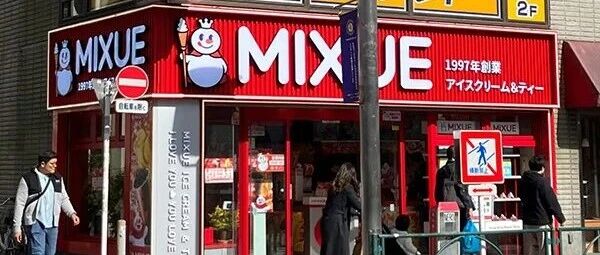
蜜雪冰城在日本展开攻势
日经中文网· 2025-12-14 00:33
Core Viewpoint - MIXUE is rapidly expanding its presence in Japan while maintaining a focus on quality and customer satisfaction, aiming to adapt its offerings to local preferences [2][11]. Group 1: Expansion Strategy - MIXUE operates over 46,000 stores globally, surpassing Starbucks, and is strategically increasing its store count in Japan, with a focus on major cities like Tokyo, Osaka, and Yokohama [2][9]. - The company has opened seven stores in Japan as of November, including the newly launched MIXUE Shin-Okubo Station store [9][12]. - Future expansion will prioritize locations that attract both tourists and local customers, particularly in high foot traffic areas [12]. Group 2: Product Offering and Pricing - MIXUE's pricing strategy is centered around affordability, with most products priced below 500 yen (approximately 22.6 yuan), including popular items like soft serve ice cream at 150 yen (about 6.8 yuan) and drinks starting at 130 yen (about 5.9 yuan) [9][11]. - The company emphasizes a self-managed supply chain to keep costs low while ensuring quality, sourcing fresh ingredients locally in Japan [11]. Group 3: Customer Demographics and Marketing - The primary customer demographic consists of women aged 10 to 29, with a notable presence of foreign tourists, who make up 20-50% of customers depending on the location [11]. - MIXUE plans to enhance brand awareness through social media marketing and promotional activities, particularly targeting younger audiences [11][12].


中美激烈交锋,全世界安静得有点可怕
Xin Lang Cai Jing· 2025-11-15 10:23
Group 1 - The article discusses the current state of the US-China rivalry, highlighting that while both nations engage in intense competition, other countries remain silent and passive, indicating a lack of influence in the ongoing conflict [1][4][7] - It notes that the US has raised tariffs on China to over 50%, but both sides have shown restraint, maintaining tariffs around 10% to avoid severe economic repercussions [5][6] - The article emphasizes that the competition revolves around trade rules, technological dominance, and resource control, with both nations carefully managing the crisis to avoid total breakdown [6][10] Group 2 - The impact of the US-China rivalry on third-party countries is significant, as they suffer from reduced competitiveness and market access due to the tariffs imposed by both superpowers [9][12] - South Korea is highlighted as a case study, attempting to align with the US while still needing to maintain ties with China, resulting in a precarious position that has led to a decline in its semiconductor exports [12][13] - The article concludes that the silence of other nations stems from their realization of their limited power in the geopolitical landscape, with many caught between the competing interests of the US and China [15][17]