自主快速交会对接技术

Search documents
焦点访谈丨中国航天奏响新乐章 神二十一有接力更有突破!
Huan Qiu Wang Zi Xun· 2025-11-02 04:29
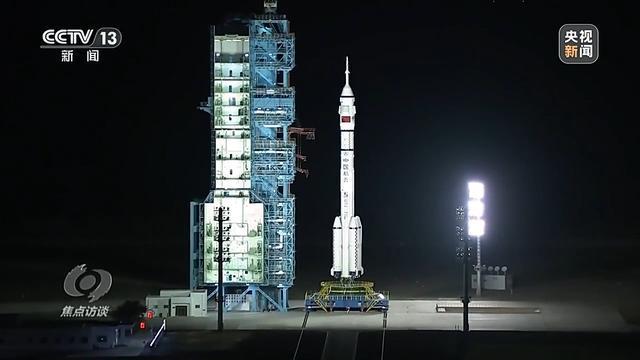
Core Points - The successful docking of Shenzhou 21 with the Chinese space station marks the 7th "space meeting" in China's space history, utilizing a new 3.5-hour autonomous rapid docking technology [1][4][14] - The docking process was divided into two phases: remote guidance and close guidance, with significant improvements in speed and precision [3][6][8] - The Shenzhou 21 mission involved three astronauts from different specialties, highlighting the collaborative nature of the crew [16] Group 1 - The Shenzhou 21 mission achieved a significant reduction in docking time from the previous 6.5 hours to 3.5 hours, enhancing operational efficiency [4][6][14] - The mission's success is attributed to nearly 20 technical improvements in the Long March 2F rocket, which increased the accuracy of launch and orbit insertion [8][11] - The new docking time allows for greater flexibility in mission planning and emergency response, addressing previous constraints related to solar angles [14][11] Group 2 - The Shenzhou 21 mission included the first-ever space experiment with mice, aimed at studying the effects of microgravity on biological systems [18][29] - The mission will conduct 27 scientific and application projects, including research on lithium-ion batteries for future space missions [29][31] - The advancements in China's manned space program reflect a significant increase in technological self-reliance and innovation, with plans for future missions including the new Dream Boat spacecraft [33][31]