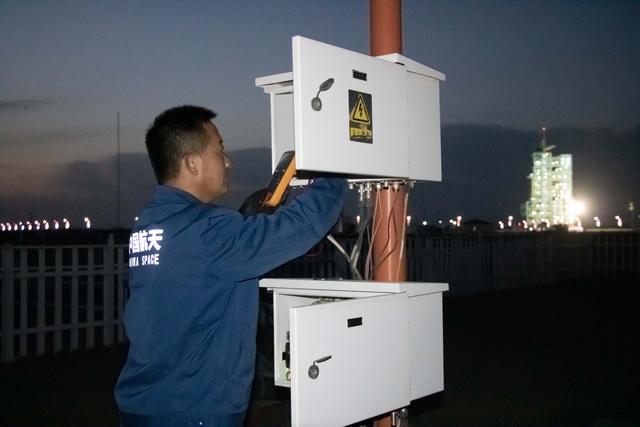
长二F火箭

Search documents
【人民日报】逐梦九霄 再赴天宫
Ren Min Ri Bao· 2025-11-03 03:16
Core Viewpoint - The successful launch of the Shenzhou-21 manned spacecraft marks a significant advancement in China's space technology, particularly with the implementation of a 3.5-hour autonomous rapid rendezvous and docking process, showcasing innovation in space mission capabilities [1][2]. Group 1: Technological Innovations - The Shenzhou-21 mission challenges the previous docking time of 6.5 hours, aiming for a new record of 3.5 hours, which represents a major leap in space technology innovation [2]. - Key technological optimizations include reducing the number of orbits from three to two during the remote guidance phase, shortening the initial distance for close-range guidance, and unifying the optimization of the final stages of remote and close-range guidance [2]. - The GNC (Guidance, Navigation, and Control) system can switch between 3.5-hour and 6.5-hour docking modes, enhancing flexibility and safety during the mission [2][3]. Group 2: Mission Support Systems - The Long March 2F rocket underwent nearly 20 technical improvements to ensure precise orbital insertion, which is critical for the success of the 3.5-hour docking challenge [4]. - A robust measurement and control system, including global ground stations and space-based data relay satellites, ensures the spacecraft remains on course and connected during its mission [4]. - The docking mechanism developed by the China Aerospace Science and Technology Corporation is designed to absorb collision energy and achieve precise capture and locking during the final docking phase [4]. Group 3: Scientific Research Initiatives - The Shenzhou-21 mission is notable for being the first to conduct experiments with rodents in space, specifically four mice, to study their adaptation to microgravity [5][6]. - The primary goal of studying mice in space is to establish a comprehensive experimental system for mammalian space research, focusing on physiological and developmental responses to microgravity [6]. - Additional research includes in-situ studies of lithium-ion batteries in space, which will provide critical insights for future missions [6].
焦点访谈丨中国航天奏响新乐章 神二十一有接力更有突破!
Huan Qiu Wang Zi Xun· 2025-11-02 04:29
Core Points - The successful docking of Shenzhou 21 with the Chinese space station marks the 7th "space meeting" in China's space history, utilizing a new 3.5-hour autonomous rapid docking technology [1][4][14] - The docking process was divided into two phases: remote guidance and close guidance, with significant improvements in speed and precision [3][6][8] - The Shenzhou 21 mission involved three astronauts from different specialties, highlighting the collaborative nature of the crew [16] Group 1 - The Shenzhou 21 mission achieved a significant reduction in docking time from the previous 6.5 hours to 3.5 hours, enhancing operational efficiency [4][6][14] - The mission's success is attributed to nearly 20 technical improvements in the Long March 2F rocket, which increased the accuracy of launch and orbit insertion [8][11] - The new docking time allows for greater flexibility in mission planning and emergency response, addressing previous constraints related to solar angles [14][11] Group 2 - The Shenzhou 21 mission included the first-ever space experiment with mice, aimed at studying the effects of microgravity on biological systems [18][29] - The mission will conduct 27 scientific and application projects, including research on lithium-ion batteries for future space missions [29][31] - The advancements in China's manned space program reflect a significant increase in technological self-reliance and innovation, with plans for future missions including the new Dream Boat spacecraft [33][31]

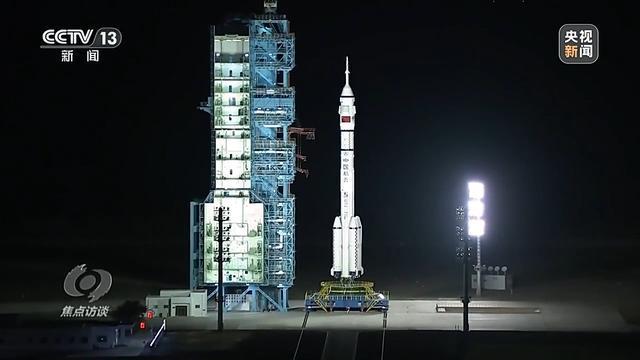
焦点访谈|中国航天第7次“太空会师” 揭秘首次实施的3.5小时交会对接
Yang Shi Wang· 2025-11-01 15:33
Core Points - The successful docking of the Shenzhou 21 spacecraft with the Chinese space station marks the 7th "space meeting" in China's space history, utilizing a new 3.5-hour autonomous rapid rendezvous and docking technology, showcasing a significant breakthrough in China's manned spaceflight capabilities [1][3][9] Group 1: Technological Advancements - The Shenzhou 21 mission implemented a 3.5-hour autonomous rapid rendezvous and docking for the first time, significantly reducing the time from the previous 6.5 hours [3][9] - The mission involved two phases: long-range guidance and close-range guidance, with improvements in both phases contributing to the reduced docking time [3][5] - The Long March 2F rocket underwent nearly 20 technical improvements to enhance launch and orbital precision, which were critical for the success of the rapid docking [5][9] Group 2: Mission Objectives and Outcomes - The 3.5-hour docking mode was chosen for its reliability and flexibility, ensuring the safety of astronauts and the successful completion of missions under various conditions [7][9] - The Shenzhou 21 crew consists of three astronauts from different specialties, enhancing teamwork and operational efficiency during their six-month mission [9][11] - The mission includes the first-ever transport of four selected mice to the space station for research on the effects of microgravity on biological systems, which could provide valuable insights for human health [13][15] Group 3: Future Implications - The successful implementation of the 3.5-hour docking procedure increases the flexibility and emergency response capabilities of China's space station missions, allowing for more frequent and timely launches [9][20] - The Shenzhou 21 mission is part of a broader strategy to establish China as a leading space power, with ongoing developments in manned spaceflight and future lunar missions planned [20]
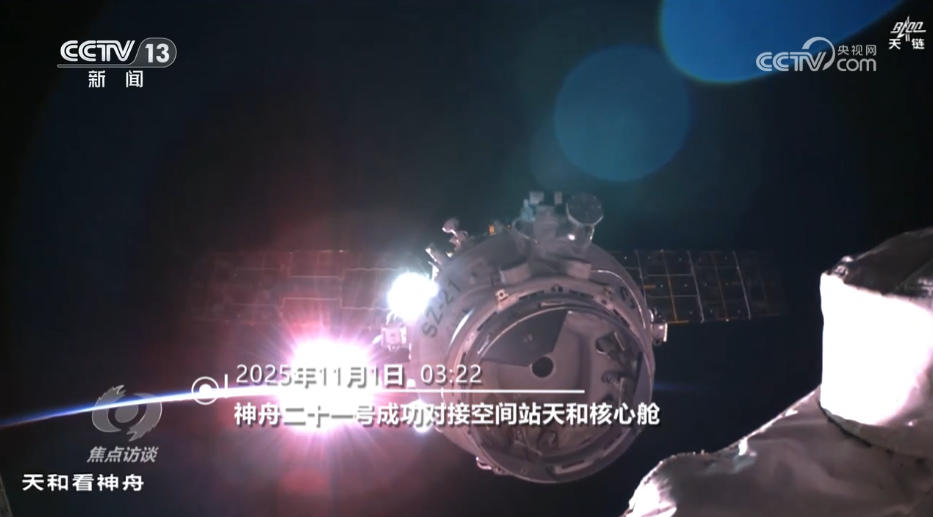
逐梦九霄 再赴天宫
Ren Min Ri Bao· 2025-10-31 22:06
Core Viewpoint - The successful launch of the Shenzhou-21 manned spacecraft marks a significant advancement in China's space technology, particularly with the implementation of a 3.5-hour autonomous rapid rendezvous and docking process, showcasing innovation in space mission capabilities [2][3]. Group 1: Technological Innovations - The Shenzhou-21 mission challenges the previous docking time of 6.5 hours, aiming for a new record of 3.5 hours, which is a major leap in space technology innovation [2]. - Key technological optimizations include reducing the number of orbits from three to two during the remote guidance phase, shortening the initial distance for close-range guidance, and unifying the optimization of both guidance phases to ensure trajectory safety [2]. - The GNC (Guidance, Navigation, and Control) system can switch between 3.5-hour and 6.5-hour docking modes, enhancing flexibility and emergency response capabilities during missions [3]. Group 2: System Integration and Support - The Shenzhou-21 mission relies on a highly integrated support network composed of various subsystems, including the rocket system, measurement and control, and communication systems [4]. - The Long March 2F rocket underwent nearly 20 technical improvements to ensure precise orbital insertion, which is critical for the success of the rapid docking process [4]. - The communication system, which includes ground stations and the "Tianlian" data relay satellites, ensures reliable tracking and communication, while the docking mechanism is designed to absorb collision energy for precise capture and locking [4]. Group 3: Scientific Research Initiatives - This mission marks the first time that rodents are being raised and studied in China's space station, with four mice selected for experiments to understand their physiological responses to microgravity [5][6]. - The primary goal of studying the mice is to establish a comprehensive experimental system for mammalian space research, focusing on their organ systems' responses to space conditions [6]. - Additional research includes in-situ studies on lithium-ion batteries in space, which will provide critical insights for future missions [6].
神21飞天背后的科技工作者
Bei Jing Ri Bao Ke Hu Duan· 2025-10-31 17:11
Core Viewpoint - The article highlights the meticulous efforts and collaboration of over 30 aerospace technology workers in preparing for the Shenzhou 21 mission, emphasizing the importance of precise meteorological data, fuel management, and sample handling for the success of the mission [1] Group 1: Meteorological Support - The launch requires high meteorological standards, with advanced monitoring equipment capturing real-time weather changes to identify the safest launch window [1] - Technicians have been maintaining nearly a hundred devices covering a 100-kilometer radius around the launch site for three months prior to the mission [1] Group 2: Fuel Management - Fuel management is critical, with personnel ensuring precise control over fuel injection pressure, flow, and total volume while monitoring numerous pipeline interfaces and valve statuses [1] - The technician has maintained a record of zero errors over hundreds of fuel injection tasks, demonstrating a commitment to safety and precision [1] Group 3: Communication and Monitoring - Communication teams are actively monitoring over 52 villages and towns, traveling extensive distances to ensure the integrity of communication lines [1] - The integration of artificial intelligence technology aids in identifying potential threats by analyzing image data along the communication routes [1] Group 4: Scientific Research and Sample Management - A team of researchers is collaborating to conduct physiological and behavioral experiments on mice, establishing a strict sample management system to ensure proper tracking and handling [1] - The team is tasked with dissecting some mice post-mission to obtain biological samples from various organs [1] Group 5: Astronaut Team and Mission Launch - The article mentions the return of astronaut Zhang Lu, who has grown into the role of mission commander, and the youngest astronaut Wu Fei, who will leverage his knowledge of vacuum environments and space station technology [1] - The launch countdown is described as a collective effort, culminating in the successful ignition of the rocket, symbolizing the hard work of thousands of aerospace workers [1]
神箭破秋风,乘舟赴天宫!神舟二十一号载人飞行任务侧记
Bei Jing Ri Bao Ke Hu Duan· 2025-10-31 16:23
Core Points - The Shenzhou-21 mission is in countdown mode, with aerospace technology workers preparing for the launch [1][6] - Meteorological conditions are critical for rocket launches, and advanced monitoring equipment is being utilized to ensure safety [3][5] - The launch team has been preparing for three months, maintaining nearly a hundred devices to provide accurate meteorological data [3] - The fuel injection team has a record of zero errors over hundreds of tasks, emphasizing the importance of precision in their work [3][5] - Communication teams are actively monitoring and maintaining the safety of communication lines, utilizing AI technology for threat detection [5] - The Shenzhou-21 crew includes experienced astronauts, with a focus on scientific experiments during the mission [6][8] Group 1 - The Shenzhou-21 spacecraft launch is set for October 31, with extensive preparations underway by aerospace workers [1][6] - Meteorological expert Li Zonggang highlights the need for precise weather monitoring to find the safest launch window [3] - Zhang Yue, a fuel injection technician, emphasizes the importance of meticulousness in ensuring rocket safety [3] Group 2 - The communication team has traveled over 80,000 kilometers to ensure the safety of communication lines, employing AI for enhanced monitoring [5] - The space life science experiment team is working on managing mouse samples for research during the mission [5] - The crew for Shenzhou-21 includes Zhang Lu, Wu Fei, and Zhang Hongzhang, who will conduct various scientific experiments in space [6][8]