自有IP生态

Search documents
潮玩行业争建自有IP生态
Di Yi Cai Jing Zi Xun· 2025-12-19 09:01
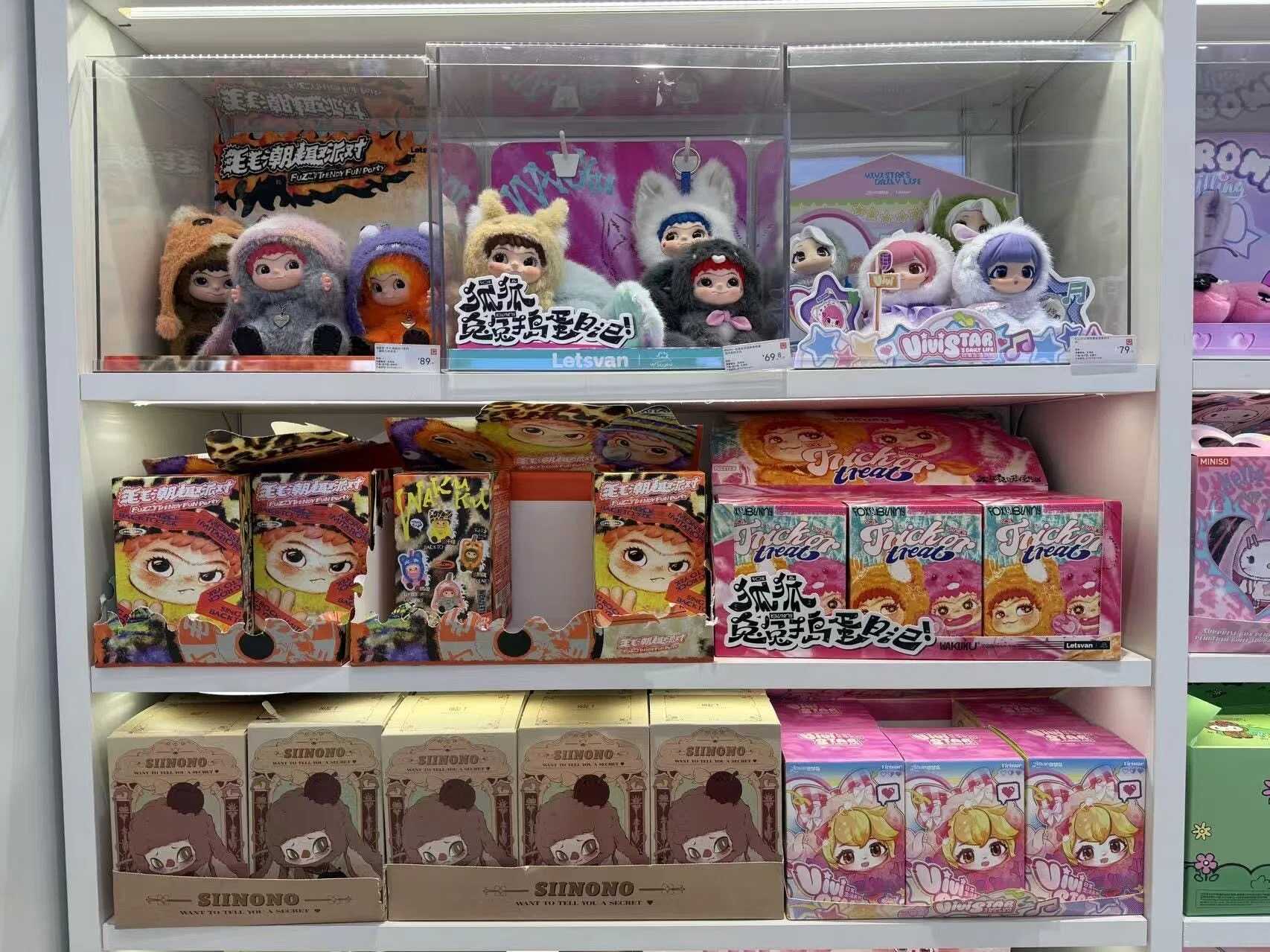
Core Insights - The article emphasizes the growing importance of proprietary IP ecosystems in the collectible toy industry, highlighting how top brands are enhancing their bargaining power through unique IP assets as market demand increases [2][3]. Group 1: Company Developments - Quantum Song Group has rebranded to Dream Island Group, shifting its strategic focus to the collectible toy ecosystem, reporting a 93.3% quarter-over-quarter revenue increase to 127.1 million yuan for its collectible toy business [3]. - Dream Island Group has acquired WAKUKU and now holds 11 proprietary IPs and several exclusive and non-exclusive licensed IPs, with WAKUKU contributing 70.6% of total revenue in the latest quarter [3]. - Pop Mart has been enhancing its IP development capabilities, with its original studio achieving a revenue of 730 million yuan, a 106.9% year-over-year increase [7]. - Miniso is actively building its proprietary IP portfolio, having signed 16 toy artist IPs and creating immersive IP spaces in its stores to attract collectible toy enthusiasts [7]. Group 2: Industry Trends - The demand for collectible toy derivatives is driving competition among companies to secure proprietary IP, with new registrations of collectible toy companies in China increasing from 418 to 8,543 between 2020 and 2024, marking a 20-fold increase [8]. - The industry is witnessing a shift where derivative products are becoming integral to IP creation, fostering deeper emotional connections with consumers and enhancing the IP ecosystem [9]. - Consumers are increasingly seeking high-quality original IPs and wish to participate in the design process, prompting companies to develop collaborative platforms [9]. Group 3: IP Ecosystem and Market Dynamics - The IP ecosystem consists of production and operation at the front end and derivative design, manufacturing, and sales at the back end, with rising sales of derivative products benefiting the competitive landscape [8]. - The success of event IPs, such as the "Bay Chicken" mascot, illustrates the potential for transforming temporary IPs into permanent cultural assets, which can drive local economic development through tourism and retail [11]. - The sustainability of an IP's value relies on its uniqueness, continuous operation, and user engagement, necessitating ongoing content iteration and cross-industry collaborations [12][14].


潮玩行业争建自有IP生态
第一财经· 2025-12-19 08:48
Core Viewpoint - The article emphasizes the strengthening of the IP ecosystem in the潮玩 (trendy toy) industry, highlighting the importance of proprietary IP for companies to enhance their market position and risk resilience as they seek to capitalize on the growing demand for unique and high-quality IP products [3]. Group 1: Development of Proprietary IP - Leading brands in the潮玩 industry are accelerating the construction of their proprietary IP ecosystems, with significant revenue growth reported. For instance, 奇梦岛集团 (formerly known as Quantum Song Group) reported a 93.3% quarter-on-quarter increase in潮玩 business revenue, reaching 127.1 million yuan for Q1 of FY2026 [5][6]. - 奇梦岛集团 has acquired 11 proprietary IPs and 6 exclusive licenses, with the WAKUKU IP contributing 70.6% of its total revenue in the latest quarter [6]. - Other companies like 泡泡玛特 (Pop Mart) and 名创优品 (Miniso) are also enhancing their proprietary IP capabilities, with 泡泡玛特's HIRONO IP generating 730 million yuan in revenue, a 106.9% year-on-year increase [10]. Group 2: Market Dynamics and Competition - The潮玩 industry has seen explosive growth in new registrations, with the number of new潮玩 companies increasing from 418 in 2020 to 8,543 in 2024, marking a 20-fold increase over five years [12]. - Despite a decline in growth rate from the peak of 287.32% in 2021, the industry is still expected to maintain a double-digit growth rate of 30.27% in 2024 [12]. - The demand for high-quality original IP is rapidly increasing, with consumers seeking to participate in design and express individuality, prompting companies to develop ecosystem platforms [13]. Group 3: IP Ecosystem and Consumer Engagement - The IP ecosystem consists of two main parts: production and operation at the front end, and design, manufacturing, and sales of derivative products at the back end. The sales of derivative products have significantly boosted the competition for proprietary IP reserves among潮玩 companies [11]. - The success of IPs like "大湾鸡" during events demonstrates the potential for IPs to evolve into permanent cultural assets, driving local economic development through tourism and retail [15]. - Continuous operation and user interaction are crucial for the longevity of an IP, requiring clear character design, visual symbols, and engaging narratives to maintain consumer interest [16][19].

年终盘点|“借别人的不如造自己的”,潮玩行业争建自有IP生态
Di Yi Cai Jing· 2025-12-19 05:39
Core Insights - Leading brands in the toy industry are seeking greater influence in the IP sector by developing their own IP ecosystems, enhancing their bargaining power due to the scarcity and market demand for quality IP [1][2] - The rapid growth of IP derivative product sales indicates a strong market potential for proprietary IP, with companies accelerating their efforts to build self-owned IP ecosystems [2][6] Group 1: Company Developments - Quantum Song Group has rebranded to Dream Island Group (NASDAQ: HERE) and shifted its strategic focus to the toy ecosystem, reporting a 93.3% quarter-on-quarter revenue increase to 127.1 million yuan for its toy business in Q1 FY2026 [2] - Dream Island owns 11 proprietary IPs, including WAKUKU, which generated 89.73 million yuan, accounting for 70.6% of total revenue [2] - Pop Mart (09992.HK) has been enhancing its IP development capabilities, with its original studio achieving 730 million yuan in revenue, a 106.9% year-on-year increase [6] - Miniso (09896.HK) is also focusing on self-owned IP, having signed contracts with 16 toy artists to build a diverse IP matrix [6] Group 2: Industry Trends - The number of newly registered toy companies in China has surged from 418 in 2020 to 8,543 in 2024, reflecting a 20-fold increase over five years, with a 30.27% year-on-year growth expected in 2024 [8] - The demand for high-quality original IP is rapidly increasing, with consumers seeking to participate in design and express individuality [9] - The success of derivative products is creating a positive feedback loop that enhances the IP ecosystem, allowing for deeper emotional connections between IP and audiences [7][9] Group 3: IP Ecosystem and Collaboration - The IP ecosystem consists of production and operation at the front end, and design, manufacturing, and sales of derivative products at the back end, driving competition for proprietary IP reserves [7] - The need for an open IP ecosystem platform is emphasized, as collaboration across various cultural scenes can amplify IP reach and market presence [4][12] - The establishment of permanent IP parks, such as the "Bay Chicken" in Guangzhou, can transform event-specific IP into lasting cultural assets, enhancing local tourism and economic development [11][14]