自甘风险原则

Search documents
救援者被起诉,当理清真相与责任
Xin Lang Cai Jing· 2026-01-13 00:13
Core Viewpoint - The case of the Qinling Cow Horse Rescue Team being sued by the family of a deceased hiker has garnered significant public attention, marking the first instance in China where a rescue team is taken to court for their actions during a rescue operation [1]. Group 1: Legal and Ethical Considerations - The Civil Code in China establishes the principle of self-assumed risk, indicating that individuals who voluntarily participate in risky activities must bear the consequences if harm occurs [2]. - The route in question, known as "Guanglu Pao Bing Ice," has been banned since 2020, highlighting the legal implications of engaging in such dangerous activities [2]. - The ethical perspective emphasizes that the intent of rescue operations is to save lives, and while perfection in rescue efforts is unattainable, the actions taken should be understood within the context of the situation [2]. Group 2: Challenges Facing Civilian Rescue Organizations - Civilian rescue organizations face significant challenges, including reliance on self-funding, inadequate insurance coverage, and a lack of social recognition and respect [3]. - The recent incident has led to the dissolution of the Qinling Cow Horse Team, reflecting the vulnerabilities of civilian rescue groups [2][3]. - There is a pressing need for improved insurance protections, clearer delineation of responsibilities between official and civilian rescue efforts, and enhanced training and certification for civilian rescue organizations to ensure their sustainable development [3]. Group 3: Regulatory and Safety Measures - The increasing number of accidents among outdoor enthusiasts has prompted the need for stricter regulations on hiking and trekking activities [3]. - The National Sports Administration has emphasized the importance of enhancing safety supervision for unauthorized trekking activities, indicating a commitment to addressing the risks associated with outdoor adventures [3].
女子滑冰场里被撞致十级伤残,法院判了
Xin Lang Cai Jing· 2025-12-20 10:53
Core Viewpoint - The case highlights the legal responsibilities and liabilities associated with sports activities, particularly in winter sports like ice skating, emphasizing the distinction between assumed risks and negligence [4][16]. Group 1: Incident Overview - Wang, the plaintiff, suffered a serious injury resulting in a ten-level disability after being struck by Du, who was skating backward [2][4]. - Wang sought medical attention and was diagnosed with a distal radius fracture, leading to a claim for over 210,000 yuan in damages against Du and the ice rink operators [3][4]. Group 2: Legal Principles and Arguments - The central legal question revolves around the applicability of the "assumed risk principle," with Du arguing that Wang should bear responsibility for participating in a risky activity [4][6]. - The court referenced Article 1176 of the Civil Code, which states that participants in risky activities cannot claim damages unless there is intent or gross negligence from other participants [6]. Group 3: Court Findings - The court determined that ice skating is inherently risky, but Du's actions constituted gross negligence, thus excluding the application of the "assumed risk principle" [8][12]. - The ice rink operators were found to have some responsibility due to inadequate safety measures and failure to provide timely assistance after the incident [10][12]. Group 4: Responsibility Allocation - The court ruled that Wang was 30% responsible for her injuries due to not wearing proper protective gear, while Du was held 70% responsible [14]. - The ice rink and sports company were assigned a supplementary responsibility of 15% on top of Du's liability [14]. Group 5: Final Judgment and Recommendations - The court ordered Du to compensate Wang with over 140,000 yuan, a decision that was upheld upon appeal [14]. - The case serves as a reminder for participants in sports activities to prioritize safety and wear appropriate protective gear to mitigate injury risks [15][16].


倒着滑冰撞伤人被判赔14万
Xin Lang Cai Jing· 2025-12-20 05:45
Group 1 - The case involves a collision at an indoor ice rink where a novice skater, Ms. Wang, was injured by another skater, Ms. Du, who was skating backward, resulting in a fracture and a determination of a level ten disability [1] - Ms. Wang sought compensation totaling over 210,000 yuan for medical expenses and disability compensation from both Ms. Du and the ice rink management [1] - The court found that Ms. Du had significant negligence by failing to exercise caution while skating backward, which excluded the application of the "assumption of risk" principle in this case [1] Group 2 - The ice rink and the sports company, as the operators of the skating venue, were found to lack appropriate safety management and timely assistance after the incident, thus bearing supplementary responsibility [1] - Ms. Wang was determined to have contributed to the accident by not wearing proper protective gear, leading to her being assigned 30% of the responsibility for the incident [1] - Ultimately, the court ruled that Ms. Du would compensate Ms. Wang for her losses totaling over 140,000 yuan, while the ice rink and sports company would bear an additional 15% of the responsibility on top of Ms. Du's 70% liability [1]
训练受伤,只能自担风险?(以案说法)
Ren Min Ri Bao· 2025-11-19 22:20
Group 1 - The court ruled that the "self-assumed risk" principle does not apply in this case, as the injury was not caused by the actions of other participants but rather due to the responsibilities of the activity organizer [2] - The sports company, as a profit-oriented educational training institution, has a higher duty of education and management towards minors, and failed to adequately assess and mitigate risks after being informed of the minor's leg pain [2] - The court determined that the sports company bears 80% of the liability for the injury, considering the guardian's awareness of the minor's condition and their consent for training [3] Group 2 - The court emphasized that educational institutions cannot claim exemption from liability solely based on the inherent risks of the activities they teach, and must fulfill their educational and management responsibilities [2] - The absence of sufficient safety measures and proper response to the injury incident indicates a failure in the company's duty of care towards the minor [2] - The case highlights the legal obligations of educational institutions in ensuring the safety and well-being of their students during training activities [2][3]
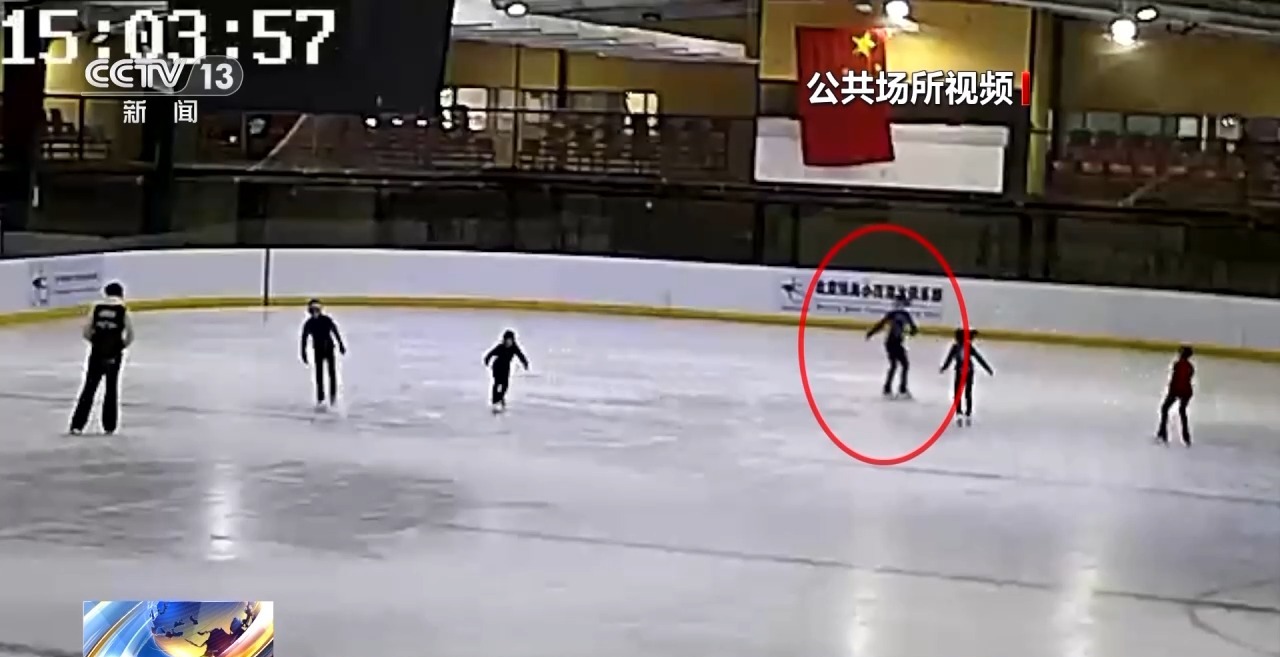
孩子花滑课上摔骨折 机构甩锅“自甘风险”?法院判赔→
Yang Shi Xin Wen· 2025-05-09 09:42
Core Viewpoint - The case highlights the legal responsibilities of training institutions in sports-related injuries, particularly focusing on the application of the "voluntary risk" principle and its limitations in protecting institutions from liability [17][22][30]. Group 1: Incident Overview - An 11-year-old figure skating student suffered a femoral fracture during training, leading to a lawsuit against the training institution and coach for compensation of medical and emotional damages [5][30]. - The training institution argued that the injury was a result of the student's voluntary participation in a high-risk sport, invoking the "voluntary risk" principle to deny responsibility [13][30]. Group 2: Legal Analysis - The court examined the applicability of the "voluntary risk" principle, which requires four conditions: voluntary participation, inherent risk of the activity, damage caused solely by other participants, and absence of intent or gross negligence from others [18][21]. - The court determined that the injury was not caused by other participants but rather by the student's own actions during a challenging maneuver, thus ruling out the application of the "voluntary risk" principle [21][24]. Group 3: Court's Decision - The court found that the training institution failed to fulfill its duty of care, particularly in light of prior warnings from the student about physical discomfort, and inadequate supervision during training [26][30]. - The training institution was held responsible for 80% of the damages, amounting to over 80,000 yuan, while acknowledging that the student and guardians also bore some responsibility due to the inherent risks of the sport [30][29]. Group 4: Recommendations - The ruling emphasizes the need for training institutions to prioritize student safety and not use the "voluntary risk" principle as a shield against liability, especially in high-risk sports [32][36]. - Parents are advised to communicate any health concerns regarding their children to training institutions and to ensure that training schedules are appropriate for the child's physical condition [34][36].