航天员心理与行为能力研究

Search documents
在轨两月余 神二十一乘组科研忙不停
Yang Shi Wang· 2026-01-04 06:31
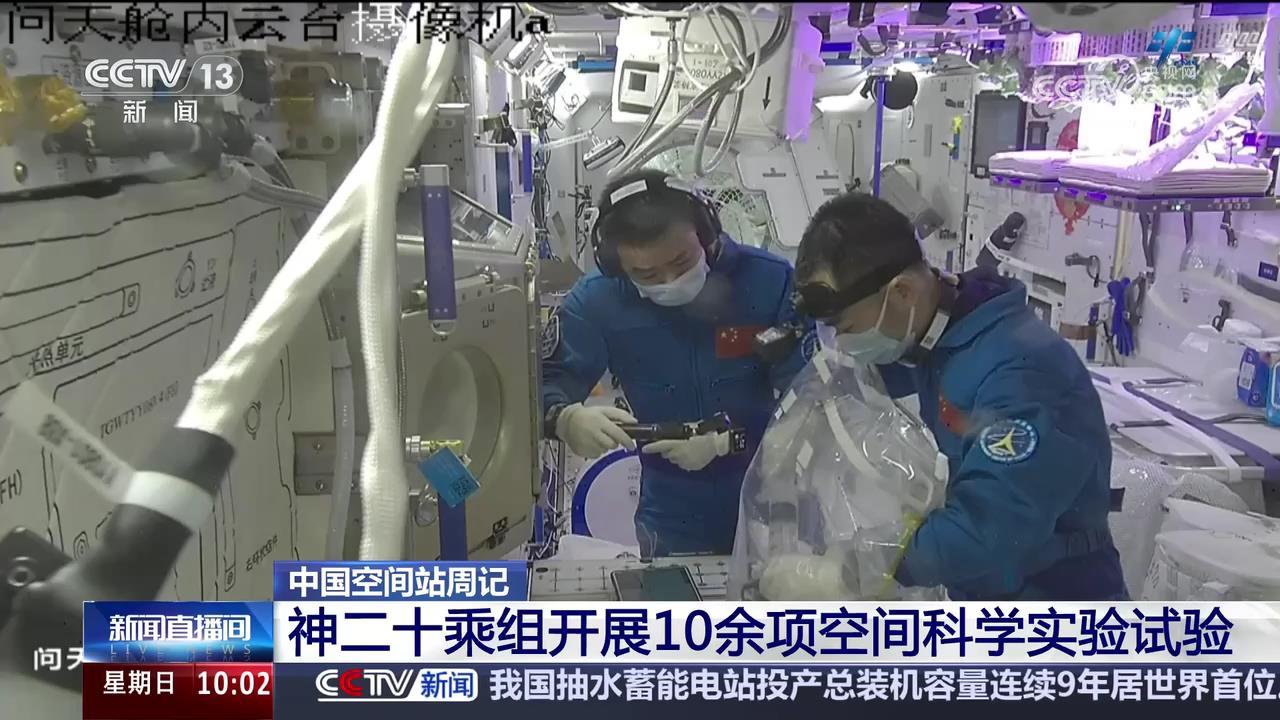
Core Insights - The Shenzhou 21 mission has successfully completed 60 days in orbit with astronauts Zhang Lu, Wu Fei, and Zhang Hongzhang, who have been engaged in various scientific experiments and maintenance tasks [1] Group 1: Space Science Experiments - Ongoing research in space medicine focuses on the kinematic characteristics of astronauts during long-term missions, utilizing 3D structured light video to collect data on their operational movements [2] - Astronauts are conducting studies on muscle and joint stress during exercise, measuring parameters such as foot pressure and joint kinematics to understand the relationship between different exercise states and muscle-tendon interactions [4] - Brainwave testing projects are being executed, including studies on visual fields and cognitive training, as well as research on the effects of long-term spaceflight on brain function networks [6] Group 2: Maintenance and Health Monitoring - Regular maintenance checks have been performed on the space treadmill and life support systems, along with routine cleaning of the cabin [9] - Environmental monitoring tasks have been completed, including assessments of sound levels, wind speed, and temperature within the spacecraft [9] - Health maintenance activities include routine medical examinations, non-invasive heart function tests, and data collection using traditional Chinese medicine diagnostic tools to support long-term health monitoring of astronauts [9]

开展10余项空间科学研究 神二十乘组“出差周记”上新
Yang Shi Wang· 2025-06-08 04:03
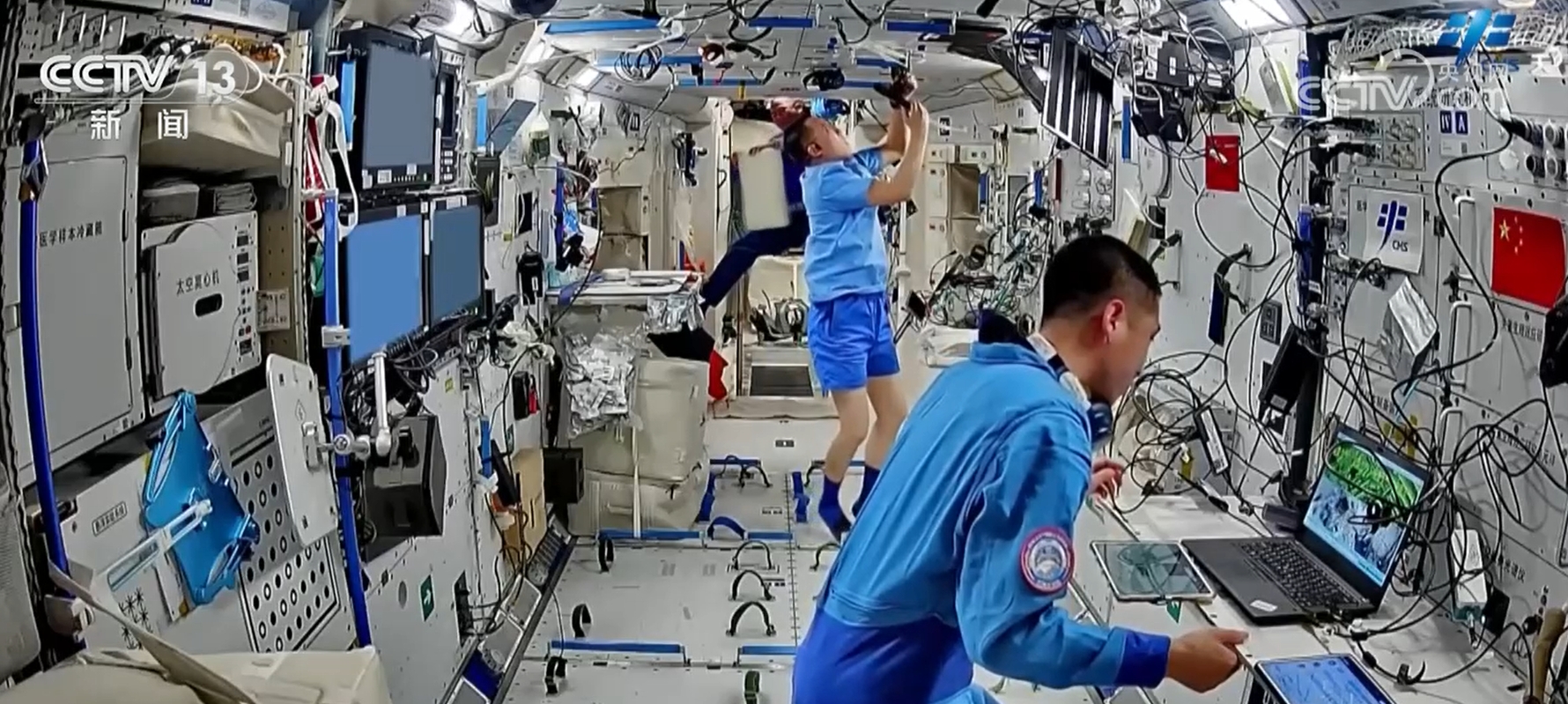
Core Insights - The Shenzhou-20 crew has been working and living in the Chinese space station for over a month, having completed their first extravehicular activity on May 22, and are now engaged in a new round of on-orbit work [1] Group 1: Space Science Experiments - The crew conducted over ten space science experiments, focusing on areas such as space medicine, human behavior, and human factors technology [1] - In the field of space medicine, blood samples were collected to study the physiological changes in astronauts' bones and nerves during long-duration flights [1] - The crew performed memory sliding tests to investigate fine motor control changes and adaptive learning mechanisms in astronauts [1][3] Group 2: Life Sciences and Microgravity Research - The crew completed sample collection and storage for a controlled aquatic ecological life experiment, studying the effects of microgravity on protein homeostasis in vertebrates [3] - In microgravity physics, the crew conducted maintenance and sampling for combustion science experiments and fluid physics studies, focusing on droplet behavior in microgravity [3] Group 3: Environmental Monitoring and Equipment Maintenance - The crew carried out environmental monitoring and maintenance of various equipment, including the regenerative life support system and humidity sensors [5] - Noise measurement and inspection of in-cabin equipment were also performed to ensure operational efficiency [5] Group 4: Health Monitoring - The crew conducted non-invasive cardiac function checks, hearing tests, and various health assessments to monitor their physical well-being during the mission [7]