
航空人口

Search documents
一周“靓”数:超5亿!我国成全球第一航空人口大国
Xin Lang Cai Jing· 2026-01-10 05:03
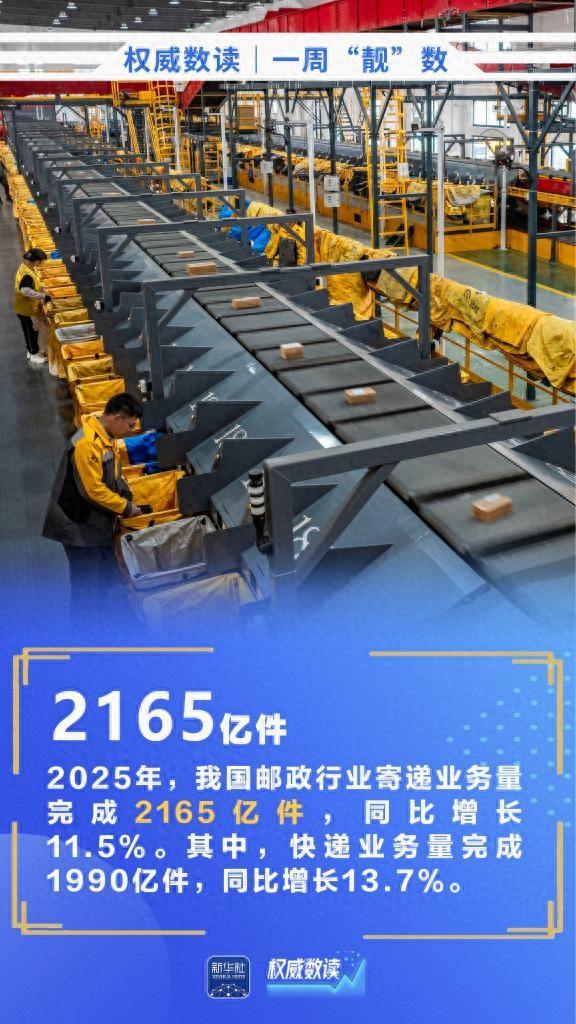
Economic Indicators - In December 2025, the national Consumer Price Index (CPI) increased by 0.2% month-on-month and 0.8% year-on-year [1] - The postal industry in China completed a delivery volume of 216.5 billion items in 2025, representing a year-on-year growth of 11.5% [2] Transportation Sector - In 2025, the national railway transported 4.588 billion passengers, a year-on-year increase of 6.4%, and handled 527.3 million tons of cargo, up by 2.0% [5] - By 2025, China's total aviation population exceeded 500 million, making it the largest aviation population in the world [7] Consumer Behavior - From 2024 to 2025, the vehicle trade-in program resulted in the replacement of 18.3 million cars, with nearly 60% being new energy vehicles, and 19.2 million home appliances were replaced under the same policy, leading to a total sales increase of 3.92 trillion yuan, benefiting 494 million consumers [9] Crime Statistics - In 2025, the number of criminal cases reported by public security agencies decreased by 12.8% year-on-year, while public order cases fell by 3.5% [11] Health Indicators - By 2025, the health literacy level of residents reached 33.69%, an increase of 1.82 percentage points compared to 2024, indicating a steady improvement [14]

航空人口超5亿 我国成为全球第一航空人口大国
Yang Shi Xin Wen· 2026-01-06 01:33
Core Insights - The civil aviation industry in China is projected to achieve a total transportation turnover of 1,640.8 billion ton-kilometers, a passenger transport volume of 770 million, and a cargo and mail transport volume of 10.172 million tons in 2025, representing year-on-year growth of 10.5%, 5.5%, and 13.3% respectively [1] - International flights are expected to recover to over 90% of 2019 levels, with international passenger transport volume increasing by 21.6% year-on-year [1] - The share of civil aviation passenger turnover in the overall transportation system is 39%, with the total aviation population exceeding 500 million, making China the world's largest aviation population country [1] Infrastructure and Investment - In 2025, the civil aviation sector will accelerate infrastructure construction, driving the industry to complete fixed asset investments of 120 billion yuan [1] - The industry is expected to achieve a profit of 6.5 billion yuan, indicating improved operational efficiency [1] Regulatory and Operational Developments - The newly revised Civil Aviation Law of the People's Republic of China has been promulgated [1] - Traditional general aviation completed 1.218 million flight hours, and the total number of registered drones surpassed 3.28 million, with cumulative flight hours reaching 45.3 million, reflecting a nearly 70% year-on-year growth [1]
中国还有多少人没坐过飞机?
Hu Xiu· 2025-10-01 06:32
Core Insights - The article discusses the significant number of people in China who have never flown, estimating around 900 million individuals who have not yet experienced air travel, despite an increase in the aviation population to 470 million by 2025 from 380 million in 2020 [4][5][6]. Infrastructure Development - The expansion of aviation infrastructure is a key factor in increasing the aviation population, with the number of transport airports in China growing from 259 in 2023 to an expected 263 in 2024, and potentially nearing 270 by the end of the 14th Five-Year Plan [7]. - New airports are not just about construction; they integrate entire regions into the "flying map," allowing local populations to access air travel directly without relying on ground transportation [8][9]. Market Dynamics - Low-cost airlines have made air travel more affordable, with ticket prices comparable to second-class train tickets, encouraging more people to fly [10]. - The increase in visa convenience, rising tourism interest, and the recovery of outbound travel have also contributed to more individuals trying air travel [11]. Changing Consumer Attitudes - The perception of flying has shifted from a luxury to a convenient mode of transportation, reflecting broader social progress [14]. - The aviation market has transitioned from being a luxury to a more widespread service, but challenges remain in reaching the remaining 900 million who have never flown [15]. Regional Disparities - There is a stark contrast in air travel frequency between urban and rural areas, with many people in rural and low-income regions still facing significant barriers to accessing air travel [18]. - The majority of those who have never flown are concentrated in rural areas, low-income groups, and among the elderly, highlighting the uneven distribution of air travel accessibility [18]. Financial Challenges for Airlines - Despite an increase in passenger transport volume, with a record of 730 million passengers expected in 2024, major airlines continue to struggle financially due to high operational costs [20][21]. - The airline industry often finds itself as the weakest link in the aviation value chain, with airports, fuel companies, and leasing firms typically profiting while airlines face losses [22]. Competition with High-Speed Rail - China's high-speed rail network, which exceeds 45,000 kilometers, poses significant competition to airlines, particularly on short-haul routes where travelers prefer the convenience of rail travel [24][25]. - The growth in aviation population does not necessarily translate to increased market share for airlines in the short and medium-haul segments, as high-speed rail continues to capture a significant portion of this market [26]. Future Opportunities - The potential market of 900 million individuals who have never flown represents a significant opportunity for airlines, especially as transportation becomes more accessible and incomes rise [28]. - Airlines have a responsibility to expand their reach into underserved markets, reduce ticket prices, and enhance travel experiences to attract new customers [29][30]. Conclusion - The expectation of 900 million people who have yet to fly signifies both a growth opportunity and a challenge for the aviation industry, as it transitions from a privilege for the few to a common mode of transport for many [31].