航空出行

Search documents
中国多条航线跻身全球“最忙”榜单,这里的人飞得最多
Guan Cha Zhe Wang· 2026-01-08 10:57
Core Insights - The OAG report highlights that several Chinese routes have excelled, with the Shanghai Hongqiao to Shenzhen Bao'an route making it into the top ten busiest global routes for the first time due to its high capacity and low ticket prices [1][2] Group 1: Global Route Rankings - The Asia-Pacific region dominates the top ten busiest routes, with nine out of ten routes located there [1] - The Jeju to Seoul Gimpo route in South Korea ranks first globally, offering 14.4 million seats and featuring seven airlines, leading to competitive pricing with one-way tickets as low as $44 [1] Group 2: Chinese Route Performance - Beijing Capital to Shanghai Hongqiao ranks ninth globally with 7.5 million seats, while Shanghai Hongqiao to Shenzhen Bao'an ranks tenth with 7.1 million seats, highlighting their significance in regional travel [1] - Other notable Chinese routes include Guangzhou Baiyun to Shanghai Hongqiao with 6.4 million seats, and routes from Chengdu to Beijing and Chengdu to Shenzhen showing stable performance [2] Group 3: Airport and Airline Rankings - By December 2025, Guangzhou Baiyun International Airport is projected to be the busiest airport in China, followed by Shenzhen Bao'an and Beijing Capital [2] - China Southern Airlines is expected to lead the domestic market with a 16% share, followed by China Eastern Airlines at 14% [2] Group 4: Growth Rates and Passenger Volume - Spring Airlines shows the highest growth rate in capacity with an 18% increase year-on-year, while China Southern Airlines follows with a 15% increase [2] - In terms of passenger volume, Shanghai Pudong Airport is expected to handle 84.995 million passengers, a 10.7% increase, making it the busiest airport for the second consecutive year [2][3] Group 5: Overall Aviation Trends - By 2025, China's total air travel population is projected to exceed 500 million, making it the largest in the world, with an annual passenger transport volume of 770 million, reflecting a 5.5% year-on-year growth [3] - The top ten cities for air travel in 2025 include Shanghai, Beijing, Chengdu, Guangzhou, and Shenzhen, collectively accounting for 47.8% of the national air travel volume [3]
山东首条直飞韩国大邱航线在青岛开通
Da Zhong Ri Bao· 2025-12-22 00:59
Core Viewpoint - The opening of the direct flight route from Qingdao to Daegu marks a significant development in enhancing connectivity between the two cities, facilitating travel and trade opportunities [1][2]. Group 1: Flight Route Details - The Qingdao to Daegu direct flight route officially commenced on December 21, with a flight time of approximately 2 hours, significantly reducing travel time compared to connecting flights [1]. - This route operates twice a week, on Wednesdays and Sundays, and offers competitive pricing, with initial one-way economy class tickets starting at 550 yuan [1]. Group 2: Regional Connectivity and Impact - Qingdao Jiaodong International Airport serves as a crucial gateway in Northeast Asia, currently offering 37 round-trip flights to South Korea daily, connecting major cities including Seoul, Busan, Jeju, Cheongju, and Daegu [2]. - The Seoul route is particularly prominent, projected to rank second nationwide in passenger flights and volume by 2025, enhancing business, tourism, and personal travel between the two countries [2]. - As of December 19, over 1.09 million mainland residents have traveled from Qingdao to South Korea, reflecting a year-on-year increase of approximately 7%, indicating growing travel demand [2].
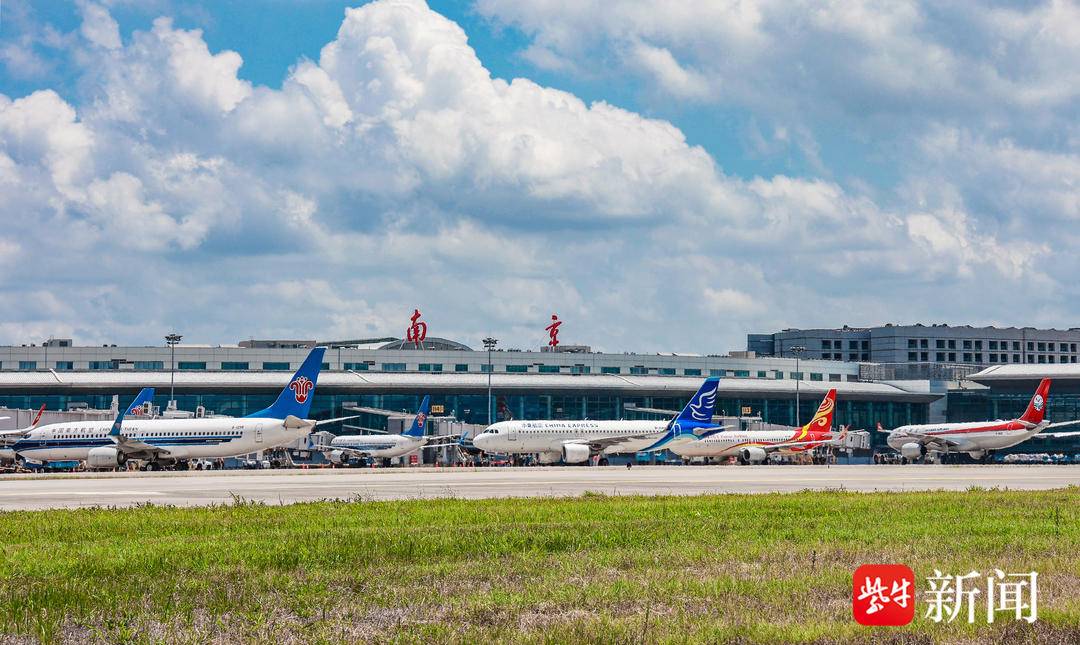
假期8天,东部机场集团旅客吞吐量130.5万人次
Yang Zi Wan Bao Wang· 2025-10-09 10:32
Core Insights - The Eastern Airport Group successfully managed operations during the 2025 National Day and Mid-Autumn Festival holiday, ensuring smooth operations, strong safety measures, and high-quality service [1] Group 1: Operational Performance - During the 8-day holiday, the group facilitated 9,079 flight departures and arrivals, with a total passenger throughput of 1.305 million, representing a daily average increase of 4.3% and 3.6% compared to last year's National Day holiday [4] - Nanjing Airport experienced robust market demand, with a daily average passenger throughput exceeding 100,000, achieving a high average outbound seat occupancy rate of 89.1%, up by 0.9% year-on-year [4] - Other airports such as Yangtai, Xuzhou, and Huai'an reported double-digit growth in daily average passenger throughput compared to last year's National Day holiday, with increases of 16.2%, 15.4%, and 11.9% respectively [4] Group 2: Service Enhancements - The group proactively assessed and coordinated resources to ensure safe, efficient, and convenient travel for passengers during peak holiday traffic [6] - Airports strengthened duty management and conducted comprehensive inspections to mitigate risks, ensuring efficient operations under safe conditions [6] - Service quality was enhanced by optimizing service processes and adjusting the number of check-in counters and security channels based on anticipated peak times, improving overall service levels for passengers [6] Group 3: Cultural Integration - The group integrated "air travel" with "cultural tourism" by organizing a series of themed activities to create a festive atmosphere [7] - Nanjing Airport hosted a themed flash mob event celebrating National Day, featuring performances and interactive activities to engage travelers [7] - Other airports, such as Xuzhou and Changzhou, organized cultural events and decorations to enhance the travel experience, promoting local cultural heritage and creating memorable moments for passengers [7]