船舶制造4.0

Search documents
打造船舶制造4.0时代 能源变革探寻零碳发展新路径
Yang Shi Xin Wen Ke Hu Duan· 2025-12-03 05:27
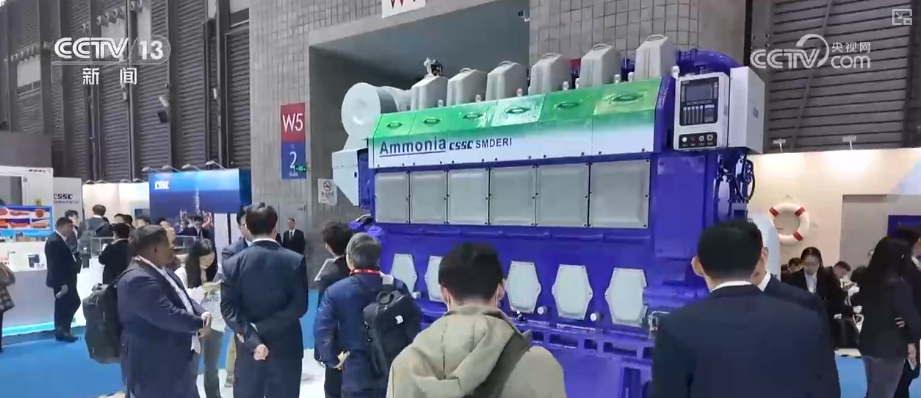
Core Insights - The 2025 China International Maritime Exhibition showcases the latest technologies in the global shipping sector, focusing on green energy products and comprehensive technologies related to green energy production, storage, transportation, and ship design and manufacturing [1]. Group 1: Green Energy Innovations - The China Shipbuilding Group unveiled the "Qiyao" series of marine engines, which received the world's first principle recognition certificate for ammonia-hydrogen fuel engines from the China Classification Society. This series can utilize ammonia, methanol, and hydrogen as fuel, addressing the urgent demand for high-performance, green, low-carbon engines in inland, nearshore, offshore vessels, and marine engineering platforms [3]. - The proportion of new ship orders utilizing renewable energy sources is increasing, with diverse power forms including LNG, methanol, ammonia fuel, and hybrid power with energy storage batteries. This trend indicates the future direction of marine power systems [5]. - The newly developed high-performance medium-speed ammonia engine can achieve an 86% replacement rate for ammonia, a performance indicator that is leading in comparison to similar international products [7]. Group 2: Shipbuilding 4.0 and Smart Manufacturing - The concept of Shipbuilding 4.0 is gaining traction, characterized by the integration of digital twin technology, artificial intelligence, and additive manufacturing, which are reshaping ship design and construction methods [8][9]. - The shipbuilding industry, being labor-intensive and complex, requires a different approach to smart manufacturing upgrades compared to conventional production lines. The integration of advanced technologies is essential for addressing manufacturing upgrade challenges [8]. - The transition to a digital era in shipbuilding involves rapid advancements in general technology, with a focus on integrating smart, AI, and digital technologies into the manufacturing process. Professional training and skill development for workers are crucial for maximizing efficiency [11].


突破!“船舶制造4.0”赋能造船业发展 我国在绿色船舶动力领域实现全域布局
Yang Shi Wang· 2025-12-02 09:13
Group 1: Core Insights - The 2025 China International Maritime Exhibition showcased the latest technologies in the global shipping sector, including the launch of the domestic "Qiyao" marine engine series, which received the world's first principle recognition certificate for ammonia-hydrogen fuel engines from the China Classification Society [1][3] - The new engine series can utilize fuels such as ammonia, methanol, and hydrogen, addressing the urgent demand for high-performance, green, and low-carbon advanced engines in inland, nearshore, offshore vessels, and marine engineering platforms, marking a significant breakthrough in China's green shipping power sector [3][5] - The proportion of new energy power in overall new ship orders has been increasing, with diverse power forms including LNG, methanol, ammonia fuel, and hybrid power with energy storage batteries, indicating the future direction of ship power development [5] Group 2: Industry Developments - There is a need to accelerate the resolution of industrial chain coordination and supporting issues after the development of green fuel power engines, including the construction of supporting infrastructure for the production, transportation, and refueling of marine green energy [7] - The exhibition highlighted the complete self-developed high-performance medium-speed ammonia engine, achieving an ammonia substitution rate of 86%, which is a leading performance indicator among international counterparts, forming a complete green industrial chain [9] - The concept of "Shipbuilding 4.0" emerged as a key term at the exhibition, emphasizing the integration of digital twin technology, artificial intelligence, and additive manufacturing in reshaping ship design and construction models [9][13] Group 3: Technological Advancements - The shipbuilding industry, being labor-intensive with large and complex components, requires a different approach to intelligent manufacturing upgrades compared to conventional production lines [11] - The introduction of programmable robotic arms in component manufacturing aims to reduce labor intensity and improve efficiency, while 3D modeling is utilized for construction simulations to enhance efficiency and shorten production cycles [13] - The "Shipbuilding 4.0" era is characterized by digitalization, with rapid advancements in general technology, integrating intelligent and AI digital technologies into shipbuilding processes, necessitating specialized training for workers to maximize efficiency [14]