色彩一致性

Search documents
手机影像狂卷2025:告别参数焦虑,开始“反向指导”相机了
3 6 Ke· 2025-12-15 10:16
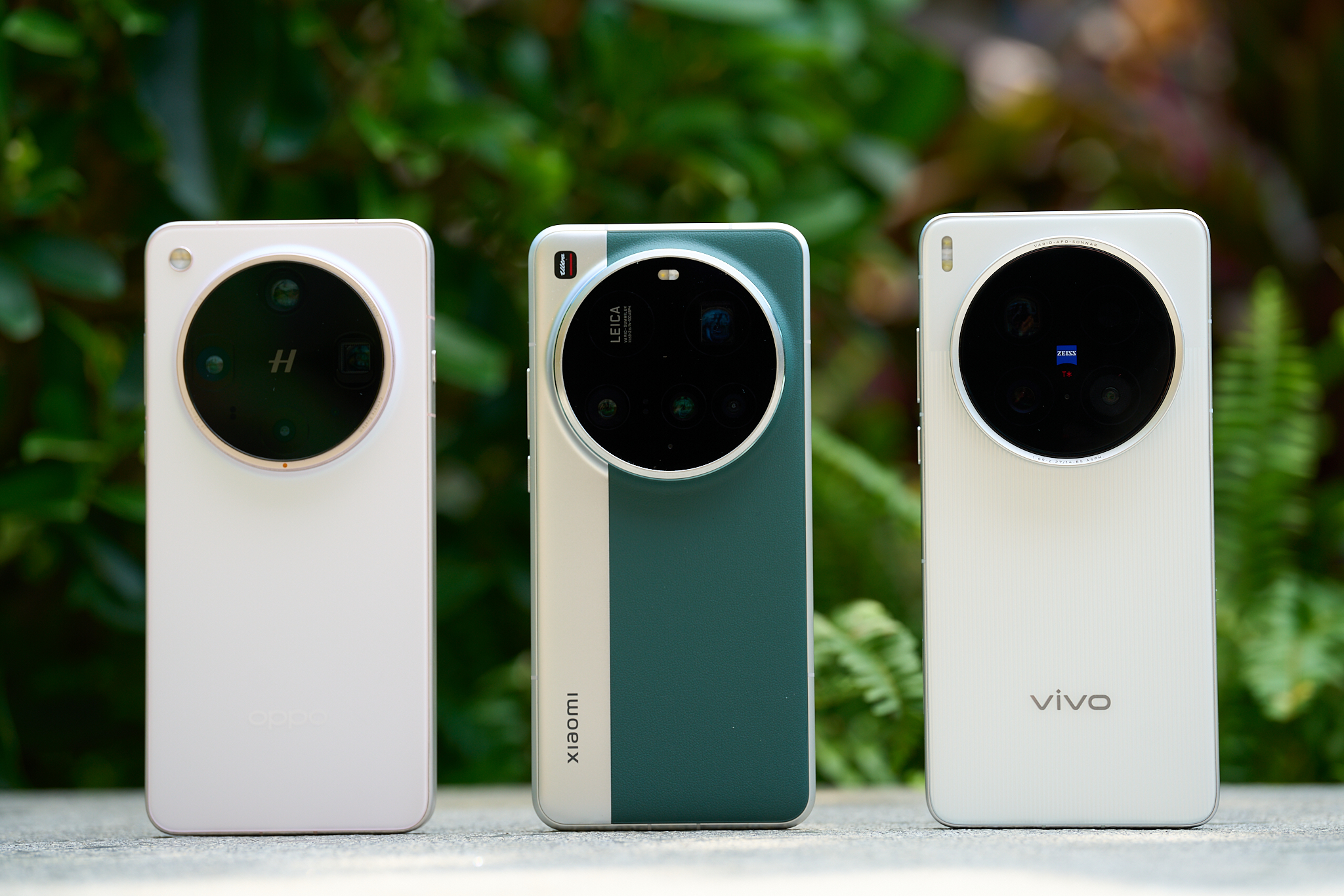
Core Insights - The mobile imaging landscape has shifted dramatically in the past year, moving away from hardware-centric advancements to a focus on algorithms and AI capabilities [1][23][32] - The trend indicates a departure from the obsession with large sensors, with manufacturers prioritizing overall system balance and user experience [2][4][7][32] Hardware Developments - The era of one-inch sensors is declining, with only a few models like Xiaomi 15 Ultra and OPPO Find X8 Ultra remaining on the market, primarily aimed at niche enthusiasts rather than mass consumers [2][4] - New flagship models are adopting smaller sensors, such as the 1/1.28-inch LYT-828, to enhance overall performance and user experience while maintaining a balance between size and functionality [4][5][32] AI and Algorithm Integration - Advancements in AI technology are narrowing the performance gaps in dynamic range, night scenes, and noise reduction, leading manufacturers to allocate resources towards enhancing long-focus capabilities and overall imaging experience [5][23] - Live Photo has evolved into a standard recording format, integrating seamlessly into the AI imaging workflow, allowing for dynamic content creation without the need for manual switching between photo and video modes [8][12][14] Color and Image Quality - The introduction of multi-spectral imaging and original color lenses by brands like Huawei, vivo, and OPPO aims to achieve consistent color reproduction across different lighting conditions, enhancing the overall image quality [18][32] - The focus has shifted from merely achieving high pixel counts to ensuring that images are visually appealing and consistent across various lenses [18][32] User Experience and Accessibility - The mobile imaging experience is increasingly designed for ease of use, allowing users to capture and share images without needing extensive knowledge of photography [27][29][32] - AI functionalities are being integrated into the camera systems to assist users in achieving better results, making advanced photography techniques more accessible to the average consumer [29][32] Future Directions - The industry is expected to continue refining hardware while enhancing software algorithms and AI capabilities, focusing on natural and unified image outputs [31][32] - The competition will shift from hardware specifications to the overall user experience, emphasizing reliability and ease of use in capturing and sharing images [32][33]

OmniRe全新升级!自驾场景重建色彩渲染和几何渲染双SOTA~
自动驾驶之心· 2025-07-27 14:41
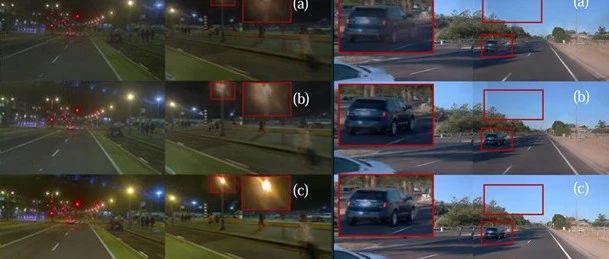
Core Insights - The article discusses a novel multi-scale bilateral grid framework that enhances the geometric accuracy and visual realism of dynamic scene reconstruction in autonomous driving, addressing challenges posed by photometric inconsistency in real-world environments [5][10][12]. Motivation - Neural rendering technologies are crucial for the development and testing of autonomous driving systems, but they heavily rely on photometric consistency among multi-view images. Variations in lighting conditions, weather, and camera parameters introduce significant color inconsistencies, leading to erroneous geometry and distorted textures [5][6]. Existing Solutions - Current solutions are categorized into two main types: global appearance coding and bilateral grids. The proposed framework combines the advantages of both methods to overcome their limitations [6][10]. Key Contributions - The framework introduces a multi-scale bilateral grid that seamlessly integrates global appearance coding and local bilateral grids, allowing adaptive color correction from coarse to fine scales. This significantly improves the geometric accuracy of dynamic driving scene reconstruction and effectively suppresses artifacts like "floaters" [9][10][12]. Method Overview 1. **Scene Representation and Initial Rendering**: The framework employs Gaussian splatting to model complex driving scenes, creating a hybrid scene graph that includes independently modeled elements like sky, static backgrounds, and dynamic objects [12]. 2. **Multi-Scale Bilateral Grid Correction**: The initial rendered image undergoes processing through a hierarchical multi-scale bilateral grid, resulting in a color-consistent, visually realistic high-quality image [13][14]. 3. **Optimization Strategy and Real-World Adaptability**: The model utilizes a coarse-to-fine optimization strategy and a composite loss function to ensure stable training and effective adaptation to real-world variations in image signal processing parameters [15][16]. Experimental Results - The proposed framework was extensively evaluated on four major autonomous driving datasets: Waymo, NuScenes, Argoverse, and PandaSet. The results demonstrate significant improvements in both geometric accuracy and visual realism compared to baseline models [17][18]. Quantitative Evaluation - The method achieved leading results in both geometric and appearance metrics. For instance, the Chamfer Distance (CD) metric on the Waymo dataset improved from 1.378 (baseline) to 0.989, showcasing the model's ability to handle color inconsistencies effectively [18][19]. Qualitative Evaluation - Visual comparisons illustrate the robustness of the proposed method in complex real-world scenarios, effectively reducing visual artifacts and maintaining high-quality outputs [23][24][29]. Generalizability and Plug-and-Play Capability - The method's core modules were integrated into advanced baseline models like ChatSim and StreetGS, resulting in substantial performance enhancements, such as an increase in reconstruction PSNR from 25.74 to 27.90 [20][21]. Conclusion - The multi-scale bilateral grid framework represents a significant advancement in the field of autonomous driving, providing a robust solution to the challenges of dynamic scene reconstruction and photometric inconsistency, thereby enhancing the overall safety and reliability of autonomous systems [10][12][18].