艺术革新

Search documents
海上粤风共新程,粤港澳大湾区文化周暨广东美术百年大展沪上启幕
2 1 Shi Ji Jing Ji Bao Dao· 2025-10-19 05:18
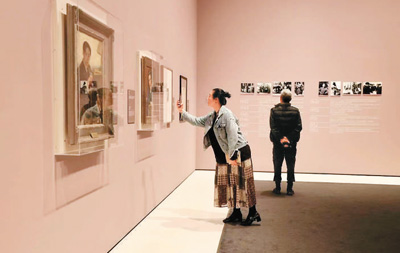
Core Points - The Guangdong-Hong Kong-Macao Greater Bay Area Cultural Week and the "Its Fate is Renewed - Guangdong Art Century Exhibition" opened in Shanghai, showcasing the cultural vitality and diversity of the Greater Bay Area [1][2] - The Guangdong Art Century Exhibition features approximately 800 pieces of art, highlighting the development of the Lingnan painting school and its innovative spirit [2][3] - The exhibition serves as a platform for cultural exchange between Guangdong and Shanghai, emphasizing the historical connections and mutual influences between the two regions [4][5] Summary by Sections Cultural Week Overview - The Cultural Week runs from October 18 to November 15, featuring various activities such as art exhibitions, performances, and international dialogues to promote cultural integration and innovation [1] - The event is co-hosted by multiple governmental cultural departments from Guangdong, Shanghai, Hong Kong, and Macau [1] Guangdong Art Century Exhibition - The exhibition, themed "Its Fate is Renewed," includes seven thematic sections and three special topics, reflecting a century of Guangdong art [2] - It aims to break the dichotomy between traditional preservation and Western imitation, advocating for an open and inclusive approach to art [3] Historical Significance - The exhibition marks a reunion of a century-old cultural lineage, highlighting the historical ties between the Lingnan painting school and Shanghai [4] - Notable figures like Gao Jianfu and Lin Fengmian played crucial roles in bridging Southern and Northern art movements [4] Contemporary Cultural Exchange - The event fosters dialogue and collaboration between Guangdong and Shanghai, promoting cultural mutual learning and integrated development [5][6] - The Cultural Week includes performances from various art forms, showcasing the diversity and innovation of the Greater Bay Area's cultural scene [6] Future Collaborations - A memorandum of cooperation was signed between the Shanghai International Arts Festival Center and the Greater Bay Area Cultural Arts Festival Center to enhance cultural exchanges and collaborations [6][7]
笔墨饱蘸家国情怀
Ren Min Ri Bao Hai Wai Ban· 2025-05-07 22:28
Core Viewpoint - The exhibition "A Sad Hong Across Millennia: Commemorating the 130th Anniversary of Xu Beihong's Birth" showcases over 70 works, including his famous pieces "The Foolish Old Man Removes the Mountains" and "Nine Fang Gao," highlighting Xu Beihong's contributions to Chinese art and his deep national sentiment during times of crisis [3][4]. Group 1: Exhibition Overview - The exhibition is co-hosted by the Guangdong Museum of Art and the Xu Beihong Memorial Museum, featuring significant works that reflect Xu Beihong's artistic journey and his response to national challenges [3]. - A notable piece in the exhibition is a giant granite relief titled "The Foolish Old Man Removes the Mountains," which is based on Xu Beihong's representative work and emphasizes the strength and determination of the human spirit [3]. Group 2: Artistic Themes - Xu Beihong's works often draw from traditional Chinese stories, aiming to revive the national spirit through art, with "The Foolish Old Man Removes the Mountains" serving as a prime example of this approach [4]. - His painting "Nine Fang Gao," which depicts a horse, symbolizes the desire for recognition and the struggle for talent to find its place, reflecting Xu Beihong's own experiences after returning to China [5]. Group 3: Historical Context - During the difficult years of the Anti-Japanese War, Xu Beihong created works that not only conveyed deep meanings but also expressed national sentiments through various subjects, becoming a vivid representation of the national spirit [6]. - His artistic evolution is marked by a shift from romanticism to realism, particularly in his depictions of lions, which evolved to reflect changing national sentiments and personal emotions [8]. Group 4: Symbolism in Art - Xu Beihong's portrayal of horses, particularly in "Galloping Horses," symbolizes the indomitable spirit of the Chinese people during the war, showcasing their resilience and courage [9]. - The various animals depicted in his works serve as reflections of his personality and the cultural zeitgeist, emphasizing the importance of integrating contemporary themes into artistic expression [9].