药价全渠道管理

Search documents
一颗急救药安宫牛黄丸,医院采购挂网价比药店贵超4倍,离谱差价背后的定价迷局
Hua Xia Shi Bao· 2026-02-06 06:10
Core Viewpoint - The Jilin Provincial Public Resource Trading Center has initiated a price verification for 48 drugs with significant price discrepancies between retail and hospital channels, marking a significant step in addressing the issue of higher hospital drug prices compared to retail prices [1][8]. Group 1: Price Discrepancies - The price differences for the 48 drugs range from 1.3 times to 5.2 times, with notable examples including the inhaled budesonide suspension showing a price difference of 5.2 times and the An Gong Niu Huang Wan produced by Shandong Hongjitang and Beijing Tongrentang exceeding 4 times [1][6]. - The inhaled budesonide suspension has a procurement price of 388.11 yuan per mg in medical institutions, while the retail price is only 75 yuan, highlighting a significant burden on patients and waste of medical insurance funds [2][6]. - The An Gong Niu Huang Wan from Shandong Hongjitang has a procurement price of 434.9 yuan, while the retail price is 99 yuan, resulting in a price difference of 4.4 times [6][5]. Group 2: Market Dynamics - The rapid development of retail pharmacies and online drug purchasing platforms has intensified price competition, yet some drugs remain at high procurement prices in medical institutions, leading to widening price gaps [1][7]. - The price verification process is based on the "mode price," which reflects the most frequently occurring price after excluding outliers, ensuring a more accurate representation of market prices [7][10]. - The price discrepancies are attributed to various factors, including the lengthy procurement process in medical institutions and different pricing strategies adopted by pharmaceutical companies for retail and institutional sales [7][10]. Group 3: Regulatory Implications - The price verification initiative in Jilin is part of a broader national effort by the National Medical Insurance Administration to address drug pricing issues, indicating a shift towards comprehensive price management across all channels [1][8]. - Pharmaceutical companies are required to adjust their listed prices to not exceed 1.3 times the retail mode price by February 2, 2026, or face penalties such as suspension of online trading qualifications [10][11]. - Similar regulatory measures are being explored in other provinces, suggesting a trend towards stricter monitoring and management of drug pricing across the country [11].

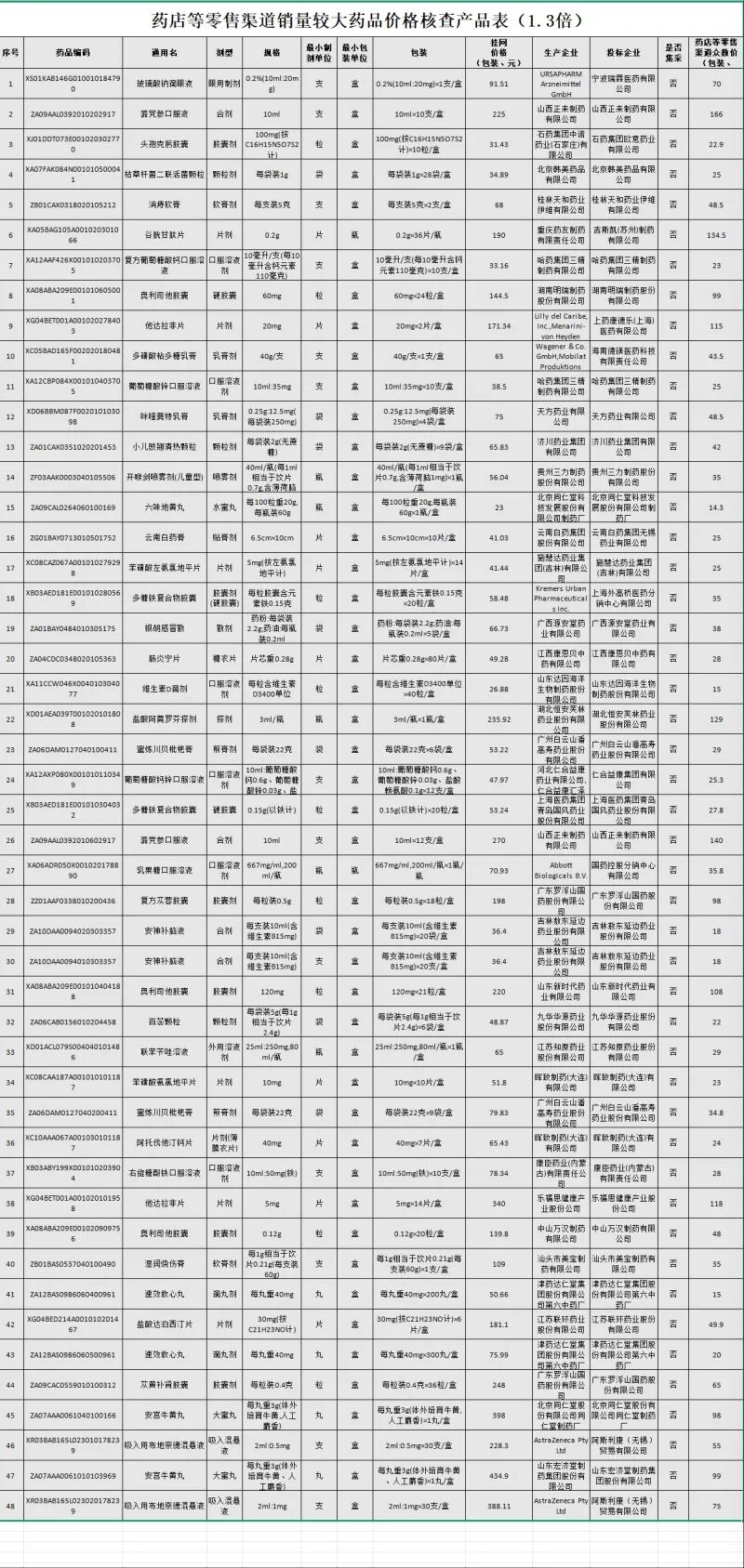
一颗急救药安宫牛黄丸,医院采购挂网价比药店贵超4倍
Xin Lang Cai Jing· 2026-02-06 01:30
Core Insights - The Jilin Provincial Public Resource Trading Center has initiated a price verification for 48 drugs with significantly higher listed prices compared to retail channels, marking a significant step in addressing the issue of hospital prices exceeding those in pharmacies [2][14] - The price discrepancies range from 1.3 times to 5.2 times, with notable examples including the inhaled budesonide suspension showing a 5.2 times difference and the An Gong Niu Huang Wan from Shandong Hongjitang and Beijing Tongrentang exceeding 4 times [2][15] - This initiative reflects a broader trend in drug price governance, indicating a shift from centralized procurement to comprehensive price management across all channels by 2026 [2][9] Price Discrepancy Details - The inhaled budesonide suspension has a procurement price of 388.11 yuan per mg in medical institutions, while the retail price is only 75 yuan, resulting in a 5.2 times price difference [3][15] - An Gong Niu Huang Wan produced by Shandong Hongjitang has a procurement price of 434.9 yuan per unit, compared to a retail price of 99 yuan, leading to a 4.4 times difference [7] - The price verification process is based on the "mode price," which reflects the most frequently occurring price after excluding outliers, ensuring a fair assessment of market prices [7][8] Industry Context - The rapid development of retail pharmacies and online drug purchasing platforms has intensified price competition, yet procurement prices in medical institutions remain high, exacerbating the price gap [2][8] - The National Medical Insurance Administration's upcoming initiatives, including monitoring online drug prices, aim to address these discrepancies and enhance price transparency [8][9] - The Jilin province's actions are part of a larger national strategy to improve drug pricing systems, with expectations for similar initiatives to be adopted by other provinces in the near future [12][14]