
阿托伐他汀钙片

Search documents
一颗急救药安宫牛黄丸,医院采购挂网价比药店贵超4倍
Xin Lang Cai Jing· 2026-02-06 01:30
Core Insights - The Jilin Provincial Public Resource Trading Center has initiated a price verification for 48 drugs with significantly higher listed prices compared to retail channels, marking a significant step in addressing the issue of hospital prices exceeding those in pharmacies [2][14] - The price discrepancies range from 1.3 times to 5.2 times, with notable examples including the inhaled budesonide suspension showing a 5.2 times difference and the An Gong Niu Huang Wan from Shandong Hongjitang and Beijing Tongrentang exceeding 4 times [2][15] - This initiative reflects a broader trend in drug price governance, indicating a shift from centralized procurement to comprehensive price management across all channels by 2026 [2][9] Price Discrepancy Details - The inhaled budesonide suspension has a procurement price of 388.11 yuan per mg in medical institutions, while the retail price is only 75 yuan, resulting in a 5.2 times price difference [3][15] - An Gong Niu Huang Wan produced by Shandong Hongjitang has a procurement price of 434.9 yuan per unit, compared to a retail price of 99 yuan, leading to a 4.4 times difference [7] - The price verification process is based on the "mode price," which reflects the most frequently occurring price after excluding outliers, ensuring a fair assessment of market prices [7][8] Industry Context - The rapid development of retail pharmacies and online drug purchasing platforms has intensified price competition, yet procurement prices in medical institutions remain high, exacerbating the price gap [2][8] - The National Medical Insurance Administration's upcoming initiatives, including monitoring online drug prices, aim to address these discrepancies and enhance price transparency [8][9] - The Jilin province's actions are part of a larger national strategy to improve drug pricing systems, with expectations for similar initiatives to be adopted by other provinces in the near future [12][14]



福元医药(601089):仿制药基本盘稳健,小核酸打开成长天花板
Hua Yuan Zheng Quan· 2026-01-28 00:59
Investment Rating - The report assigns an investment rating of "Buy" for the company, indicating a positive outlook based on its stable generics business and growth potential in small nucleic acid drugs [5]. Core Insights - The company has a solid foundation in generics, with a stable growth phase, and is strategically positioning itself in the small nucleic acid innovation space, which is expected to drive long-term growth [7][10]. - The generics business is projected to maintain steady cash flow, while the innovative drug segment is anticipated to create a second growth curve, enhancing the company's overall valuation [8][10]. Summary by Relevant Sections Market Performance - The closing price of the company's stock is 28.82 yuan, with a market capitalization of 13,833.60 million yuan [3]. Financial Forecast and Valuation - Revenue projections for 2023 to 2027 are as follows: 3,340 million yuan (2023), 3,446 million yuan (2024), 3,472 million yuan (2025E), 3,852 million yuan (2026E), and 4,266 million yuan (2027E) [6]. - The expected growth rates for revenue are 3.07% (2023), 3.17% (2024), 0.75% (2025), 10.95% (2026), and 10.74% (2027) [6]. - The projected net profit for the same years is 489 million yuan (2023), 489 million yuan (2024), 465 million yuan (2025), 481 million yuan (2026), and 520 million yuan (2027) [6]. - The company’s price-to-earnings (P/E) ratios are estimated at 28.30 (2023), 28.31 (2024), 29.78 (2025), 28.76 (2026), and 26.61 (2027) [6]. Business Overview - The company, formerly known as Wansheng Pharmaceutical, has been in the generics business for over 20 years and has recently expanded into innovative drugs, particularly small nucleic acids [7]. - As of the first half of 2025, the company holds 209 domestic drug registration approvals, with a revenue contribution of 32.09 billion yuan from drug formulations, accounting for 93% of total revenue [7][20]. - The company’s core therapeutic areas include cardiovascular, diabetes, digestive, skin diseases, and chronic kidney disease, which collectively contribute 77% of its revenue [20]. Growth Drivers - The generics business is entering a stable growth phase, with a compound annual growth rate (CAGR) of 7.75% from 2019 to 2024 [10]. - The company is actively investing in small nucleic acid drugs, with R&D expenses increasing from 180 million yuan in 2021 to 417 million yuan in 2024 [10][49]. - The N-ER platform for nucleic acid drug delivery has been established, supporting multiple projects in clinical development [50]. Competitive Position - The company has successfully navigated the challenges posed by national drug procurement policies, with a significant portion of its core products already included in procurement programs [32][43]. - The upcoming unified procurement for previously selected products is expected to stabilize cash flow and enhance the company's competitive position in the generics market [42][43].

493亿!中国市场创新药“销冠”诞生
Xin Lang Cai Jing· 2025-12-22 04:16
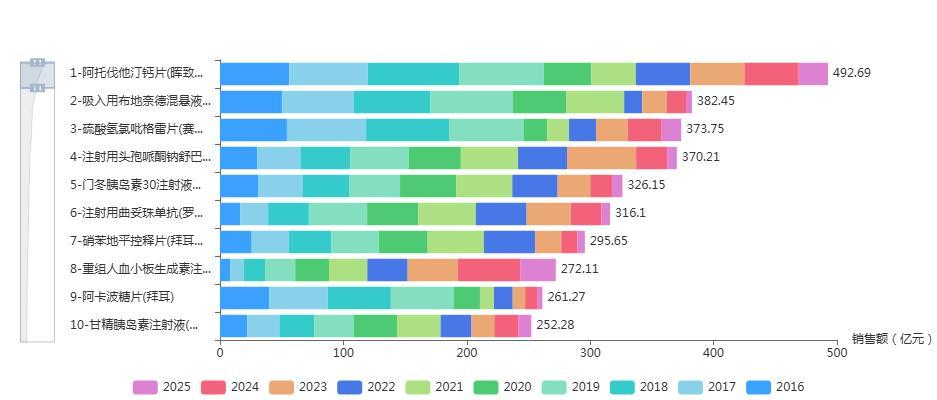
Core Insights - The article highlights that Pfizer's Atorvastatin Calcium Tablets have achieved a cumulative sales figure of 492.7 billion yuan, making it the top-selling innovative drug in China's public medical institutions over the past decade [1][13][15] - Atorvastatin's market share is approximately 15% of the total sales in the top 10 innovative drugs, significantly surpassing the second-place inhaled Budesonide suspension by 110 billion yuan [2][15] Sales Performance Analysis - From 2016 to 2019, Atorvastatin experienced a golden growth period, with sales increasing from 5.612 billion yuan to 6.854 billion yuan, peaking at 7.405 billion yuan in 2018 [4][17] - In 2020, sales dropped to 3.847 billion yuan due to national procurement policies, but stabilized between 4.3 billion and 4.4 billion yuan from 2021 to 2024, with a forecast of 4.1 billion yuan for 2025 [4][19] - The drug's resilience in the market post-policy adjustments is evident, with 2.375 billion yuan in sales achieved in the first half of 2025 [4][19] Market Dynamics - The success of Atorvastatin is attributed to the large patient base suffering from cardiovascular diseases, which have high incidence and mortality rates, necessitating long-term management [5][18] - The demand for lipid-lowering medications is driven by the rising prevalence of dyslipidemia, with a reported 35.6% prevalence among adults over 18 years old in China [5][18] - The innovative drug market in China is heavily influenced by chronic diseases, with cardiovascular and metabolic drugs dominating the top 10 sales list, accounting for 59.9% of total sales [20][21] Competitive Landscape - The top 10 innovative drugs list is predominantly occupied by foreign pharmaceutical companies, which hold a market share of 92%, showcasing their strong market position due to patent protections and established marketing strategies [22] - The only domestic product in the top 10 is the recombinant human thrombopoietin injection, which has shown significant growth, increasing from 849 million yuan in 2016 to an expected 5.076 billion yuan in 2024 [22] Future Outlook - The article speculates that the next leading drug could emerge from the oncology or autoimmune sectors, with advancements in ADCs, bispecific antibodies, and cell therapies showing promise [24][25] - Chronic disease management, particularly with GLP-1 receptor agonists, is expected to gain traction, potentially replicating or surpassing the market trajectory of Atorvastatin [24][25]

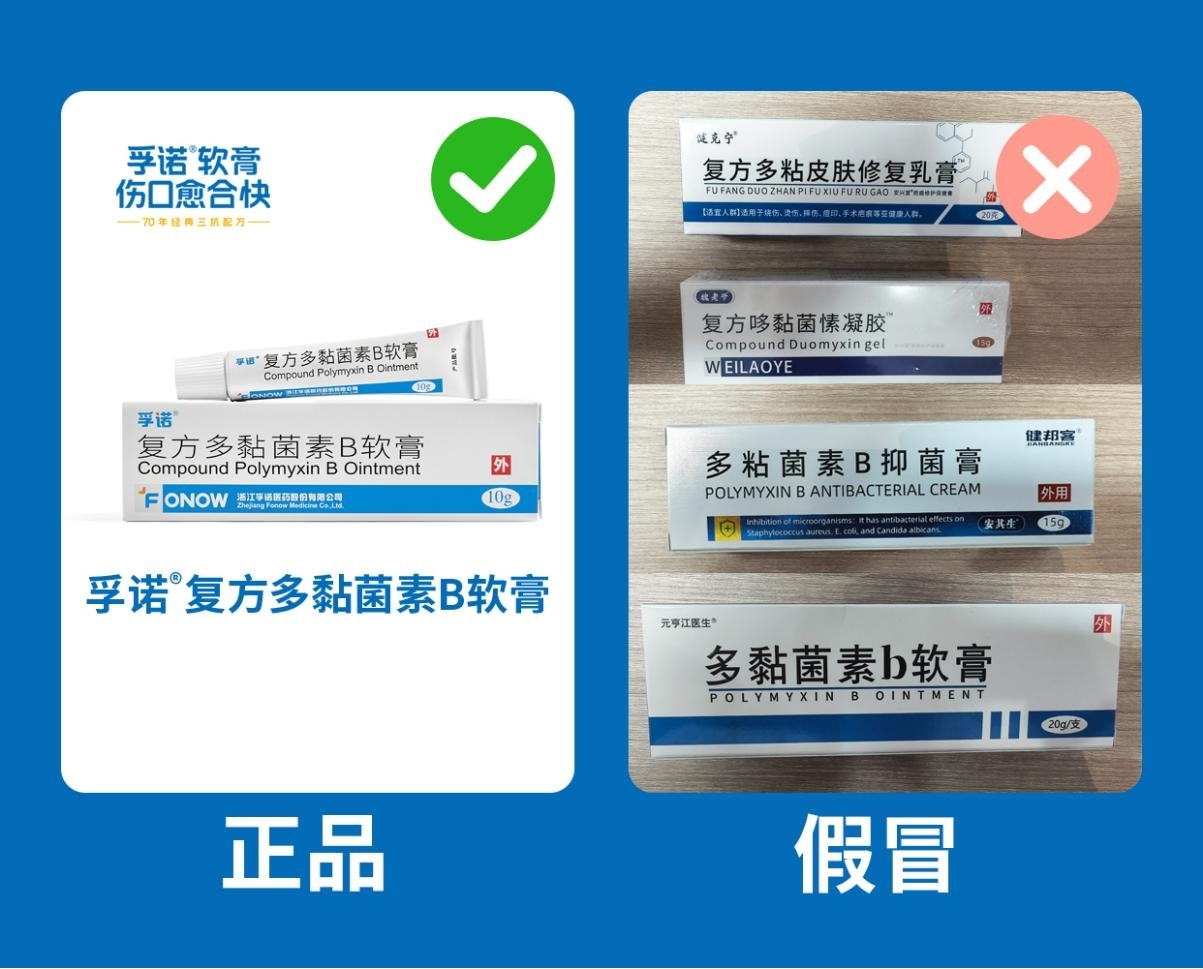
电商购药乱象丛生,真假药品混战,消费者该如何辨认正品?
Cai Fu Zai Xian· 2025-07-22 09:59
Core Viewpoint - The article highlights the rampant issues in online pharmaceutical sales, including counterfeit products, misleading labeling, and fraudulent reviews, which pose significant risks to consumers' safety and trust in e-commerce platforms [1][2][4]. Group 1: Counterfeit and Misleading Products - Numerous counterfeit products flood e-commerce platforms, often mimicking legitimate medications with similar packaging and names, leading to consumer confusion [1][2]. - Common tactics include "word games" where product names are altered to include terms like "repair" or "skin," and using similar color schemes to deceive consumers [2][4]. - Products labeled with "消字号" (disinfection) or "械字号" (medical device) are often misrepresented as effective medications, despite lacking rigorous clinical testing [4]. Group 2: Consumer Confusion and Regulatory Gaps - Consumers are often unfamiliar with the different product classifications, such as "国药准字" (national drug approval), which is the only legitimate identifier for approved medications [4]. - The approval process for non-drug products is less stringent, allowing potentially unsafe items to enter the market without adequate oversight [4]. Group 3: Fraudulent Practices on E-commerce Platforms - E-commerce sellers frequently engage in practices like fake reviews and inflated sales figures to mislead consumers into purchasing counterfeit products [6]. - The lack of a return policy for legitimate medications complicates consumer efforts to identify counterfeit products, as those that allow returns are likely not approved drugs [6]. Group 4: Regulatory Responses and Future Directions - The National Medical Insurance Administration is set to enhance drug traceability regulations starting January 1, 2025, aiming to create a comprehensive tracking system for pharmaceuticals [7]. - Experts emphasize the need for refined regulations to address the challenges posed by online drug sales, urging consumers to recognize legitimate products and utilize official tracking tools [8].
千金药业: 天健会计师事务所(特殊普通合伙)关于株洲千金药业股份有限公司发行股份及支付现金购买资产暨关联交易申请的审核问询函之问询问题中有关财务事项的说明(修订稿)
Zheng Quan Zhi Xing· 2025-07-04 16:34
Company Overview - Zhuzhou Qianjin Pharmaceutical Co., Ltd. primarily engages in the research, production, and sales of chemical synthetic raw materials and solid preparations, with key products including Valsartan capsules and other medications [3][5] - Qianjin Xiangjiang Pharmaceutical's nine centralized procurement varieties have seen sales growth exceeding 20% year-on-year, while Qianjin Xieli Pharmaceutical's product, Benazepril, has experienced over 30% sales growth [3][5] Revenue Analysis - The company has reported significant revenue from centralized procurement, with the revenue from centralized procurement increasing substantially over the reporting period [9][10] - For Qianjin Xiangjiang Pharmaceutical, the revenue from centralized procurement accounted for 57.09% in 2024, up from 7.50% in 2020, indicating a strong shift towards centralized procurement sales [9][10] - The average selling price for centralized procurement has decreased from 7.66 to 6.61, while the non-centralized procurement price has also seen a decline from 25.99 to 17.50 [9][10] Market Position and Competitive Landscape - The market for hypertension medications is projected to grow, with the number of hypertension patients in China expected to reach 400 million by 2030, driving demand for products like Valsartan [7][8] - Qianjin Xiangjiang holds approximately 3% market share in the Valsartan segment, while its market share in other products varies, indicating a competitive landscape with several key players [7][8] - The company benefits from a self-operated team and strong brand recognition, which enhances its market position against competitors [7][8] Product Development and Pipeline - The company has several products undergoing research and development, with a focus on expanding its portfolio in response to market needs [6][8] - The market for liver protection drugs, such as Silymarin, is expected to grow significantly, with Qianjin Xieli's market share projected to reach 40% by 2030 [8] Cost and Expense Management - The company has optimized its production processes, which is expected to enhance its cost management and pricing strategies in future centralized procurement rounds [8][9] - The gross profit margin for centralized procurement products has improved, reflecting better cost control and pricing strategies [9][10]
