药物临床开发

Search documents
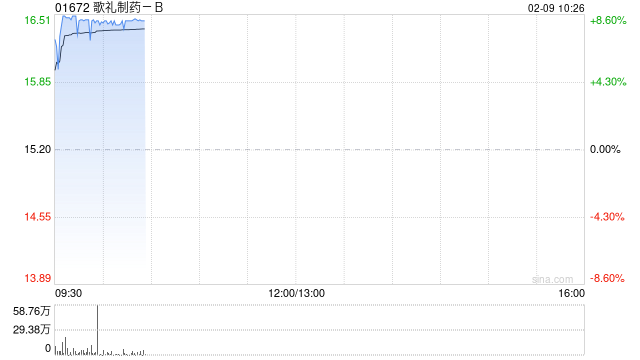
歌礼制药-B早盘涨超8% 获GIC斥资7.81亿港元增持歌礼制药
Xin Lang Cai Jing· 2026-02-09 02:27
Core Viewpoint - Gilead Sciences-B (01672) shares rose nearly 9% in early trading, with a current price of HKD 16.45 and a trading volume of HKD 42.25 million, following a significant investment from the Government of Singapore Investment Corporation (GIC) [1][5]. Group 1 - GIC purchased approximately 64.12 million new shares of Gilead Sciences at an average price of HKD 12.18 per share, totaling around HKD 781 million, resulting in GIC holding a 6.42% stake in the company [1][5]. - The investment is part of Gilead Sciences' recent completion of a placement plan, where the company sold a total of 69.26 million shares, raising a net amount of approximately HKD 835 million [1][5]. - Gilead Sciences indicated that 90% of the funds raised will be allocated for the global Phase III clinical development of the oral small molecule GLP-1 receptor agonist ASC30, covering trial preparation, foundational work, and formal initiation; the remaining 10% will be used for operational funding [1][5].

百济神州20251111
2025-11-12 02:18
Summary of B One Pharmaceuticals Conference Call Company Overview - B One Pharmaceuticals has a vertically integrated clinical development system with over 3,600 professionals, accelerating drug market entry [2][3][4] Key Points and Arguments Clinical Development and Pipeline - The company plans to initiate a pivotal trial for the CDK4 project in mid-2026 [2] - The Celestial trial for CLL patients was completed in just 14 months, showcasing efficient clinical advancement capabilities [2][4] - Brukinder, a BTK inhibitor, shows a 72% progression-free survival (PFS) at 72 months, improving to 77% after adjusting for COVID factors [2][4] - Significant market growth observed: China up 47% YoY, Europe up 71% YoY [2][4] Treatment Strategies - B One supports fixed-duration treatments that meet specific criteria: deep response (umrd), sustained PFS, good safety, and convenience [2][5] - The combination of Sorrow and Perkins A is expected to meet these standards, expanding market reach and addressing various patient needs [2][5] - The new BCL-2 inhibitor, Sun Rotoclass, is anticipated to have broader application potential [2][5] Competitive Positioning - The addition of the Celestial 301 study aims to eliminate market biases and ensure Brukinder's competitive edge against Calquence [2][6] - The study is designed to provide a fixed-duration regimen that ensures comparable or superior long-term outcomes for patients [2][6] Market Dynamics - The introduction of non-covalent BTK inhibitors is expected to significantly alter the market landscape [2][7] - Initial data from the Alps trial indicates a response rate difference of about 12% in relapsed or refractory patients, with over 20% in the aggressive 17p deletion cohort [2][7] B2K Business Strategy - B One's B2K strategy focuses on the BTKC DAC molecule, a catalytic degrader that effectively degrades the entire BTK protein while maintaining activity against kinase domain mutations [2][8] - Key phase II studies show an 84% response rate in heavily pre-treated patients, with a 79% 12-month PFS [2][8] Upcoming Developments - At the upcoming ASH meeting, B One will present new data on BTKC DAC across various malignancies, including CLL [2][9] - The product Sonora, designated for relapsed/refractory MCL, is expected to show higher efficacy and a larger therapeutic window compared to existing treatments [2][9][10] - A phase III trial for multiple myeloma is planned for next year, exploring Sun Rotor Clarks as part of a combination therapy [2][10] CDK4 Inhibitor Project - The CDK4 inhibitor project is prioritized for first-line breast cancer trials due to promising early data and less competition in the first-line setting compared to the second-line market [2][10] - Early data shows a high response rate similar to Pfizer's CDK4 inhibitor, with plans to provide further data next year [2][10] Additional Important Information - B One has successfully advanced 26 internally developed candidates into clinical trials since 2004, highlighting its strong discovery capabilities [2][3] - The company recognizes the critical importance of the clinical development phase and has invested in building a comprehensive clinical development system [2][3]
Syntara (SNT) Update / Briefing Transcript
2025-08-11 03:00
Summary of Syntara Investor Webinar Company Overview - **Company**: Syntara - **Product**: Amsulostat - **Indication**: Myelofibrosis Key Points from the Webinar FDA Guidance and Clinical Development - Syntara received FDA guidance on the clinical development of amsulostat, which was more conservative than expected, suggesting a phased approach rather than a direct transition to a pivotal study [3][6][11] - The FDA's concerns centered around the lack of control data in the ongoing phase two study, which complicates the assessment of safety and efficacy [7][11] - The proposed new pathway involves conducting a phase two b study with a control group, followed by a phase three study, which is expected to be more efficient and potentially smaller in size [8][9][10][11] - The estimated cost for the phase two b study is around $25 million, significantly lower than the previously estimated $80 million for the phase three study [20][21] Financial Position and Funding - Syntara's cash position is projected to last until the first half of 2027, extended due to the postponement of phase three activities [14][44] - The company plans to explore two funding avenues: partnering the drug and raising capital [12][22][26] - Previous successful partnerships for drugs in similar stages indicate a strong market appetite for amsulostat, despite the shift to a phase two b study [24][36] Clinical Trial Design and Patient Recruitment - The phase two b study will involve approximately 90 patients, with a focus on understanding the baseline characteristics of suboptimal patients [29][30] - The endpoints for the phase two b study will include symptom score and spleen volume [33] - The FDA has emphasized the need for clear definitions of suboptimal patients, which will be refined during the trial design process [35][46] Pipeline and Future Studies - Syntara has multiple ongoing studies, including those for myelodysplastic syndrome and skin scarring, which are funded through non-dilutive cash sources [16][39] - Results from these studies are expected to provide additional safety and efficacy data that could support the FDA review process for amsulostat [16][17] Market Reaction and Company Outlook - The market reaction to the FDA guidance was negative, reflecting disappointment over the slower development pathway [56][57] - Despite the delay, the company maintains that the clinical development pathway remains solid and recognizes the potential value of amsulostat for patients with myelofibrosis [57] Conclusion - Syntara is positioned to navigate the revised clinical development pathway for amsulostat while leveraging its other assets to maintain a robust pipeline and financial stability [57][58]