
莱姆病

Search documents
马斯克首席AI脑与莱姆病抗争!曾师从丘成桐,杨格宣布辞职
Sou Hu Cai Jing· 2026-01-21 10:57
Core Insights - Greg Yang, co-founder and core architect of xAI, has announced his departure from the company due to ongoing health issues related to Lyme disease, transitioning to an informal advisory role [2][5][6] - Yang has been a key figure in developing the mathematical framework behind Elon Musk's vision for "understanding the universe AI" [3][10] Group 1: Departure and Health Issues - Yang's resignation marks a significant loss for xAI, as he was considered a vital member of the team [5] - He has publicly shared his struggles with Lyme disease, which has severely impacted his health and productivity since 2025 [6][8] - Yang's symptoms included extreme fatigue and a decline in creativity, leading to a diagnosis of Lyme disease after extensive medical evaluations [6][8] Group 2: Contributions to AI - Greg Yang is recognized as a mathematical genius and a pivotal figure in AI, having developed the Tensor Programs theory, which aims to transform deep learning into a rigorous science [13][19] - His work has significantly reduced computational costs for training large models, making it feasible to transfer hyperparameters from smaller models to larger ones [19] - Yang's ambition includes establishing a unified theory of large-scale deep learning, which would enhance understanding of neural network expansion and guide safety and alignment research [19] Group 3: Company Context - Yang's departure follows a trend of leadership changes at xAI, with two other co-founders having left the company in the past year [19] - Despite these changes, Musk has promised the launch of Grok 5 in the first half of the year, indicating ongoing developments within the company [20]

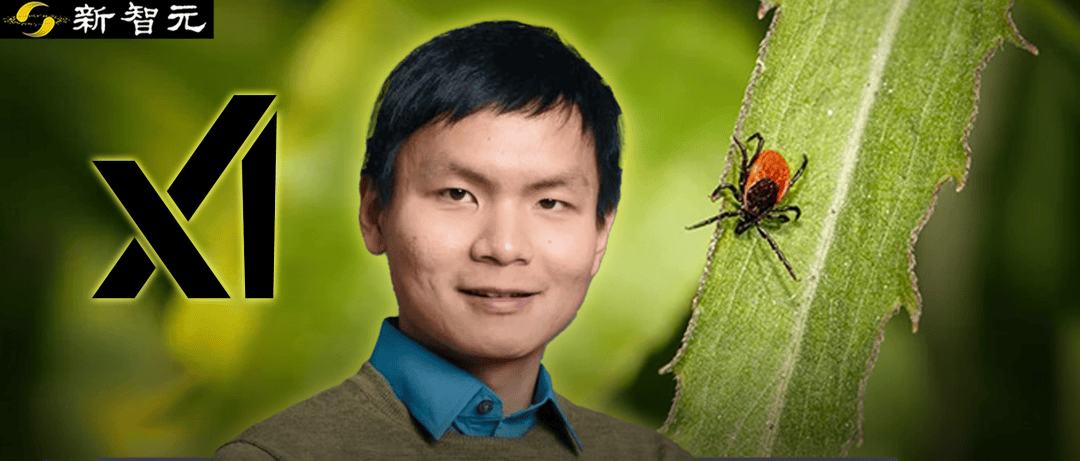
八旬老人被蜱虫叮咬住进ICU 这份防虫攻略请收好
Yang Shi Xin Wen· 2025-08-24 11:30
Core Points - An elderly woman was hospitalized in ICU for 15 days due to tick bites, highlighting the severe health risks associated with tick-borne diseases [2] - Ticks can carry various viruses, bacteria, and protozoa, leading to serious conditions such as Lyme disease and fever with thrombocytopenia syndrome [2] - There is currently no vaccine or specific treatment for fever with thrombocytopenia syndrome, making timely supportive care crucial [2] Symptoms of Tick Bites - Common reactions include redness, swelling, itching, and pain at the bite site, with possible hardening or ulceration [4] - Allergic reactions may occur in sensitive individuals, potentially leading to hives or anaphylaxis [5] - Tick paralysis can develop 4-7 days post-bite, causing progressive muscle weakness and potentially leading to respiratory failure [7] Handling Tick Bites - Proper removal involves using alcohol on the tick, grasping it close to the skin with tweezers, and pulling it out vertically [8] - If the tick is embedded deeply, immediate medical attention is advised [9] - After removal, the bite area should be cleaned thoroughly with soap and water, followed by disinfection [10] - Monitoring for symptoms such as fever or nausea for two weeks post-bite is essential, and any symptoms should prompt medical consultation [11] - Keeping the removed tick in a sealed container can aid in diagnosis if symptoms arise later [12] Prevention of Tick Bites - Reducing skin exposure by wearing long sleeves and pants in areas where ticks are prevalent is recommended [14] - Applying insect repellent containing DEET on exposed skin can help prevent tick attachment [15] - Regular checks for ticks in hidden areas of the body, especially after outdoor activities, are crucial [16][17] - Pets should also be checked for ticks after outdoor exposure [18] - Maintaining a clean environment by clearing weeds and debris can help reduce tick populations [19]
省疾控发布远离虫媒传染病防护指南
Hai Nan Ri Bao· 2025-07-26 02:01
Core Points - The article emphasizes the increased risk of vector-borne diseases during summer outdoor activities, particularly from mosquitoes and ticks, which can lead to illnesses such as dengue fever and Lyme disease [2][3] - The provincial disease control center has released a scientific prevention guide to help individuals stay healthy while enjoying outdoor activities [2] Summary by Category Vector-Borne Diseases - Common vector-borne diseases include dengue fever and chikungunya, which have early symptoms similar to common cold or flu, making them easy to overlook [2] - Symptoms of these diseases include high fever, headache, muscle and joint pain, and rash [2] - Tick bites may initially cause mild local reactions but can lead to serious symptoms if tick-borne diseases are contracted, including fever, headache, fatigue, and in severe cases, confusion and bleeding tendencies [2][3] Prevention Measures - To prevent dengue and chikungunya, it is advised to eliminate standing water in household items like vases and buckets, and to keep outdoor areas clean to avoid water accumulation [3] - Wearing long sleeves and pants, preferably in light colors, and using mosquito repellent on exposed skin are recommended when outdoors [3] - Installing screens on doors and windows and using mosquito nets while sleeping can provide physical barriers against mosquitoes [3] - For tick prevention, it is important to clear weeds and debris around gardens, avoid prolonged stays in tick-infested areas, and check for ticks on oneself and pets after outdoor activities [3]