葡萄酒产业发展规划

Search documents
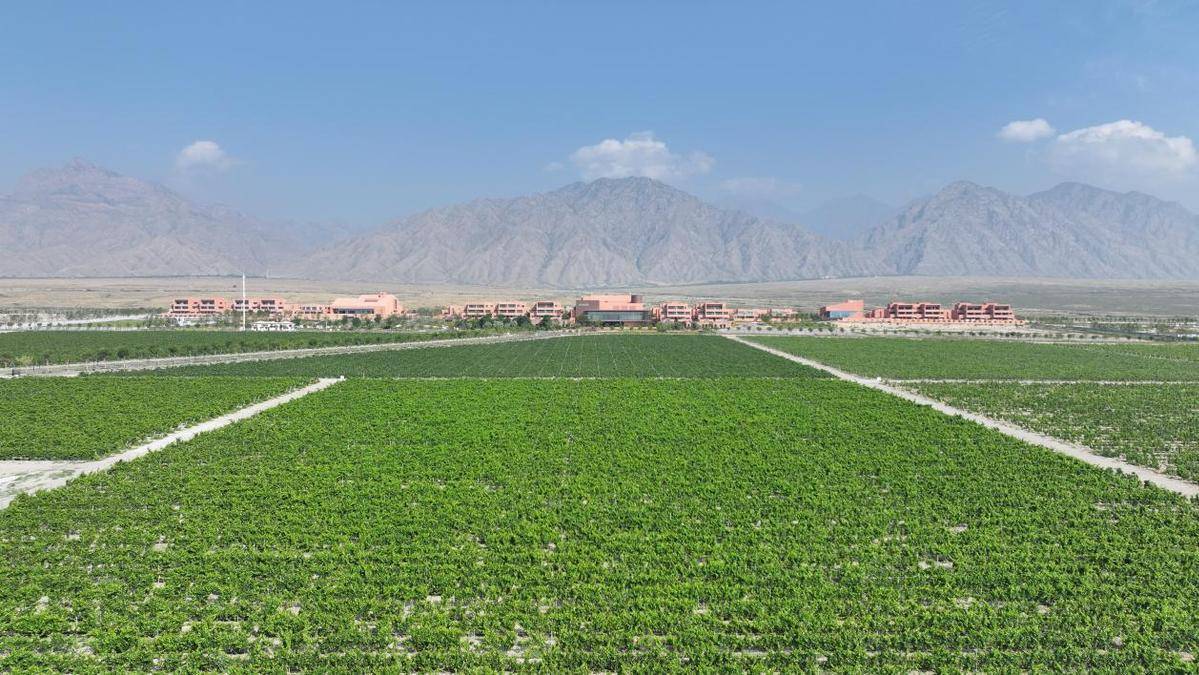
宁夏贺兰山东麓酿酒葡萄开发及种植面积2030年将达100万亩
Zhong Guo Xin Wen Wang· 2025-09-30 06:50
Core Insights - By 2030, the planting area for wine grapes in the Helan Mountain East region of Ningxia is expected to reach 1 million acres, with the establishment of 300 wineries and a brand value of 50 billion yuan, aiming for a comprehensive benefit of 150 billion yuan [1][3]. Group 1: Development Plans - The first provincial-level special spatial planning for the wine industry in China, titled "Ningxia Wine Industry Development Spatial Planning (2025-2035)," was officially released in August this year [3]. - The planning covers 4 cities and 12 counties in Ningxia, encompassing 32 towns, 95 administrative villages, and farms, with a total area of approximately 5,890 square kilometers [3]. - The plan aims to benchmark against world-renowned wine regions such as Bordeaux, Tuscany, and Mendoza, optimizing the spatial layout of Ningxia's wine industry to ensure adequate land for grape planting and industry development [3][4]. Group 2: Environmental and Economic Integration - The planning emphasizes strict adherence to relevant laws and regulations, utilizing desertified grasslands, unused land, and abandoned industrial sites for grape planting [3]. - Ningxia aims to address current geographical constraints and resource shortages in the wine industry by coordinating land use and promoting ecological and economic value [4]. - The region will focus on digital empowerment and multi-industry integration, aiming to create a new pattern where the wine production, sales, and circulation chain is fully digitalized [4].


看宁夏贺兰山东麓8个酿酒葡萄产区发展规划
Sou Hu Cai Jing· 2025-08-07 12:53
Core Viewpoint - The planning document outlines the development, protection, and utilization of the Ningxia wine industry, designating a million acres for growth over the next decade [2] Summary by Sections Planning Scope - The planning area spans approximately 5,890 square kilometers, covering four prefecture-level cities and twelve counties, including key regions such as Shizuishan, Wuzhong, and Yinchuan [2] Key Development Areas - The wine grape production will focus on eight designated regions, with a target of 1,006,400 acres of wine grape cultivation by 2035, including 710,000 acres specifically for wine grape planting [5] Regional Development Plans - **Xixia Region**: Current area of 79,000 acres, with plans to expand by 60,900 acres by 2035, focusing on premium wine production and tourism integration [7] - **Yongning Region**: Current area of 213,900 acres, with an additional 47,500 acres planned, emphasizing high-end wine production and a comprehensive wine industry center [9] - **Helan Region**: Current area of 34,000 acres, with plans for 124,300 acres of new development, promoting ecological wine production and health tourism [10] - **Shizuishan Region**: Current area of 11,200 acres, with an expansion of 16,400 acres planned, focusing on enhancing existing vineyards and developing cultural tourism [12] - **Hongshibao Region**: Current area of 55,100 acres, with plans for 70,000 acres of new development, aiming for a blend of cultural and ecological tourism [13] - **Tongxin Region**: Current area of 41,800 acres, with an expansion of 62,100 acres planned, focusing on cultural and creative tourism [14] - **Qingtongxia Region**: Current area of 165,100 acres, with plans for 19,200 acres of new development, integrating cultural and technological elements into wine tourism [15] - **Zhongwei Region**: Current area of 5,900 acres, focusing on enhancing existing vineyards and integrating wine with tourism experiences [16]