干白

Search documents
董事长专访 | 中信尼雅王毅:用“静气”厚植发展“底气”
Sou Hu Cai Jing· 2025-12-24 11:35
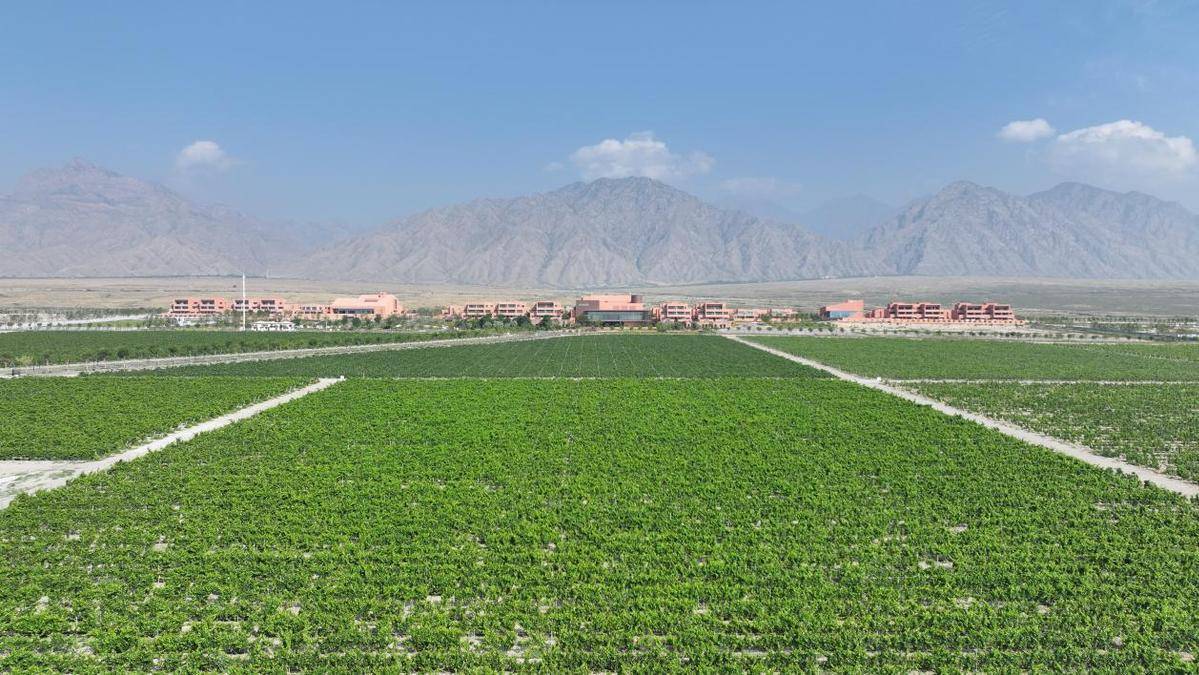
Core Viewpoint - The company emphasizes the importance of building brand strength and consumer connection during challenging times in the wine industry, advocating for a transformation into a lifestyle that resonates with consumers [1][4]. Group 1: Brand and Product Development - The company is recognized as a significant force in the Chinese wine industry, focusing on the unique characteristics of the Tianshan terroir to create "Chinese flavor" wines [4]. - The company has a commitment to ecological protection and "zero pollution" cultivation methods, ensuring that every bottle of wine reflects the essence of Xinjiang's terroir [5]. - The company has developed a range of innovative products, including dry red, dry white, sweet white, and distilled wines, continuously upgrading quality and individuality over its 28-year history [5]. Group 2: Research and Quality Control - The company has established four national and seven provincial research platforms, contributing to the formulation of national standards and securing 11 authorized patents, which provide scientific and technical support for wine production [6]. - The company believes that maintaining stable product quality and transitioning from quality advantages to brand advantages is essential for realizing the long-term value of wine terroir [7]. Group 3: Market Strategy and Consumer Engagement - The company has conducted extensive research on the Manas small wine region, identifying five grape varieties suitable for local cultivation and producing five mid-to-high-end products through innovative techniques [8]. - The company aims to translate professional value into consumer-friendly language, enhancing brand recognition and cultural confidence in Chinese wine [8]. - The company is addressing the dual trends of "high cost-performance" and "premiumization" by launching affordable wine products and integrating them into diverse lifestyle scenarios [9]. Group 4: Crisis Management and Future Outlook - The wine industry is facing significant challenges, including declining consumer demand and inventory issues, prompting the company to focus on reducing excess capacity and optimizing its product matrix [10]. - The company has shifted its sales strategy towards e-commerce and direct-to-consumer models, resulting in a 4.05% increase in total revenue and a significant rise in online sales by 356.28% in the first half of the year [10]. - The company emphasizes the importance of long-term strategic patience in managing a business that requires a minimum of five years from grape planting to market [11].


中信尼雅王毅:用“静气”厚植发展“底气”
Shang Hai Zheng Quan Bao· 2025-12-22 18:23
Core Viewpoint - The company, CITIC Niyah, is focusing on brand development and adapting to market changes by emphasizing quality, ecological protection, and consumer engagement in the Chinese wine industry, especially during challenging times for the sector [3][4][5]. Group 1: Brand and Product Development - CITIC Niyah is committed to exploring the unique terroir of the Tianshan region to create distinctive wines that reflect "Chinese flavor" [3][4]. - The company has developed a range of innovative products, including dry red, dry white, sweet white, and alcohol-free wines, achieving continuous quality upgrades [5]. - The company has received multiple national and provincial research platform certifications and has participated in the formulation of national standards, securing 11 authorized patents [5]. Group 2: Market Strategy and Consumer Engagement - CITIC Niyah aims to translate the professional value of wine into relatable consumer experiences, enhancing brand recognition and cultural confidence in Chinese wine [6][7]. - The company is addressing the dual demand for high cost-performance and premium products by launching affordable wines and integrating them into diverse consumption scenarios [7]. - The focus is on creating a connection with consumers by showcasing the unique qualities of Xinjiang wines through innovative marketing strategies, including live streaming and direct sales [7][9]. Group 3: Industry Challenges and Strategic Response - The global wine industry is facing a crisis characterized by declining consumer demand, shrinking revenues, and high inventory levels, necessitating a focus on supply-side adjustments [8]. - CITIC Niyah has reduced vineyard area from 150,000 acres to 13,000 acres to address supply-demand imbalances and is optimizing its product matrix to alleviate financial pressures [8]. - The company has shifted its sales strategy towards a more direct model, achieving a 4.05% increase in total revenue and a significant 356.28% growth in online sales in the first half of the year [9].

莫高股份: 莫高股份2025年半年度报告
Zheng Quan Zhi Xing· 2025-08-29 17:12
Core Viewpoint - Gansu Mogao Industrial Development Co., Ltd. reported a significant decline in revenue and increased losses in the first half of 2025, primarily due to a shrinking domestic wine market and challenges in its biodegradable materials business [1][4]. Company Overview and Financial Indicators - The company achieved operating revenue of CNY 120.82 million in the first half of 2025, a decrease of 25.05% compared to CNY 161.20 million in the same period last year [2][4]. - The total profit for the period was a loss of CNY 32.66 million, compared to a loss of CNY 9.29 million in the previous year, indicating a worsening financial situation [2][4]. - The net assets attributable to shareholders decreased by 3.94% to CNY 777.76 million from CNY 809.62 million at the end of the previous year [2][5]. Main Business Analysis - The wine business generated CNY 9.83 million in revenue, down 30.32% from CNY 43.29 million in the previous year, while the membrane bag business saw an increase of 36.51% to CNY 55.51 million [4]. - The company has implemented a new marketing strategy for its wine products and restructured its sales headquarters to enhance operational efficiency [3][4]. Industry Context - The domestic wine market is experiencing a downturn, with the government promoting the wine industry through various initiatives aimed at increasing production and sales [3]. - The biodegradable materials sector faces intense competition and pricing pressures, impacting the company's profitability in this area [6]. Operational Changes - The company has made significant changes to its organizational structure, including the establishment of a new wine sales headquarters and the integration of the wine division into this new structure [3][4]. - The company is focusing on product innovation, particularly in developing low-alcohol and fruit-flavored wines to meet changing consumer preferences [3][4]. Financial Performance Metrics - Basic earnings per share for the period were -CNY 0.0992, reflecting a decline from -CNY 0.03 in the previous year [2][4]. - The weighted average return on net assets decreased by 2.94 percentage points to -4.01% [2][4].

看宁夏贺兰山东麓8个酿酒葡萄产区发展规划
Sou Hu Cai Jing· 2025-08-07 12:53
Core Viewpoint - The planning document outlines the development, protection, and utilization of the Ningxia wine industry, designating a million acres for growth over the next decade [2] Summary by Sections Planning Scope - The planning area spans approximately 5,890 square kilometers, covering four prefecture-level cities and twelve counties, including key regions such as Shizuishan, Wuzhong, and Yinchuan [2] Key Development Areas - The wine grape production will focus on eight designated regions, with a target of 1,006,400 acres of wine grape cultivation by 2035, including 710,000 acres specifically for wine grape planting [5] Regional Development Plans - **Xixia Region**: Current area of 79,000 acres, with plans to expand by 60,900 acres by 2035, focusing on premium wine production and tourism integration [7] - **Yongning Region**: Current area of 213,900 acres, with an additional 47,500 acres planned, emphasizing high-end wine production and a comprehensive wine industry center [9] - **Helan Region**: Current area of 34,000 acres, with plans for 124,300 acres of new development, promoting ecological wine production and health tourism [10] - **Shizuishan Region**: Current area of 11,200 acres, with an expansion of 16,400 acres planned, focusing on enhancing existing vineyards and developing cultural tourism [12] - **Hongshibao Region**: Current area of 55,100 acres, with plans for 70,000 acres of new development, aiming for a blend of cultural and ecological tourism [13] - **Tongxin Region**: Current area of 41,800 acres, with an expansion of 62,100 acres planned, focusing on cultural and creative tourism [14] - **Qingtongxia Region**: Current area of 165,100 acres, with plans for 19,200 acres of new development, integrating cultural and technological elements into wine tourism [15] - **Zhongwei Region**: Current area of 5,900 acres, focusing on enhancing existing vineyards and integrating wine with tourism experiences [16]