西周礼乐文明

Search documents
鼎天鬲地首次合璧展出 生动讲述燕都肇建传奇
Huan Qiu Wang· 2025-09-11 01:16
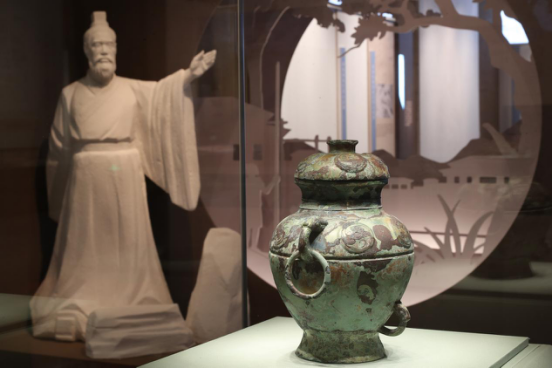
Core Viewpoint - The exhibition "Tai Baoyong Yan - Special Exhibition of Fangshan Liuli River Site" marks the 80th anniversary of the discovery of the Liuli River site, showcasing significant archaeological findings and cultural heritage from the Western Zhou Dynasty [1][6]. Group 1: Exhibition Highlights - The exhibition features 180 artifacts, with 113 items being publicly displayed for the first time, making it the largest and highest-standard exhibition of the Liuli River site [1][2]. - A key highlight is the "Ding Tian Li Di" combination of national treasures, including the Jin Ding, the largest and heaviest bronze ritual vessel found in Beijing, standing 62 cm tall and weighing 41.5 kg, which bears inscriptions detailing historical events [2][3]. - The exhibition also includes the Bo Ju Li, a bronze vessel adorned with intricate bull motifs, showcasing advanced artistic design and casting techniques from the early Zhou period [2][3]. Group 2: Archaeological Significance - The artifacts, such as the "Zuo Ce Huan" bronze vessels, provide evidence of the earliest documentation of Beijing's city construction history, linking to the historical figure of Shao Gong and the establishment of the Yan state [2][3]. - Recent archaeological findings indicate that the Yan capital had a "double city wall structure," covering an area of up to one million square meters, comparable to the Zhouyuan site in Shaanxi, highlighting the importance of the Liuli River site in understanding the Western Zhou state and urban systems [3][6]. Group 3: Community Engagement and Cultural Value - The exhibition includes a public voting area for the design plan of the Liuli River National Archaeological Site Park, encouraging community involvement in the future planning of the site [4]. - A creative cultural product exhibition area has been established, featuring non-heritage crafts and designs from Fangshan District, allowing visitors to take home a piece of history [4][6]. - The Liuli River site is recognized as a significant historical witness to over 3,000 years of urban civilization in Beijing and is included in major archaeological discoveries, emphasizing its cultural and social value [6].
“太保墉燕——房山琉璃河遗址专题展”在首都博物馆展出
Huan Qiu Wang· 2025-09-04 08:50
Core Points - The "Taibao Yongyan - Fangshan Liulihe Site Special Exhibition" has opened at the Capital Museum, focusing on the Liulihe site, which is the largest known Western Zhou site in the Yanshan southern foothills and has the longest excavation history in China [1][3] - The exhibition highlights the Liulihe site as evidence of the Western Zhou feudal system and the capital of the Yan state, pushing the history of Beijing's city construction back over 3,000 years, earning it the title "Source of Beijing City" [3] - The exhibition features 180 selected precious cultural relics, with 113 items being exhibited for the first time, marking a significant proportion in recent exhibitions at the Capital Museum [3] Exhibition Details - The exhibition includes important artifacts such as the Jin Ding and Bo Ju Ge, as well as items that substantiate the Yan state's initial feudal status, like Ke Le and Ke Lei [3] - This is the first large-scale gathering of artifacts unearthed from the Liulihe site since the 1970s, providing a rare opportunity for public viewing [3] - Educational activities, such as "Meeting Bo Ju Ge," are planned during the exhibition to engage audiences, especially families, in understanding the exquisite bronze casting techniques and the profound cultural significance of the Western Zhou period [3] - The exhibition will run until November 28, 2025 [3]