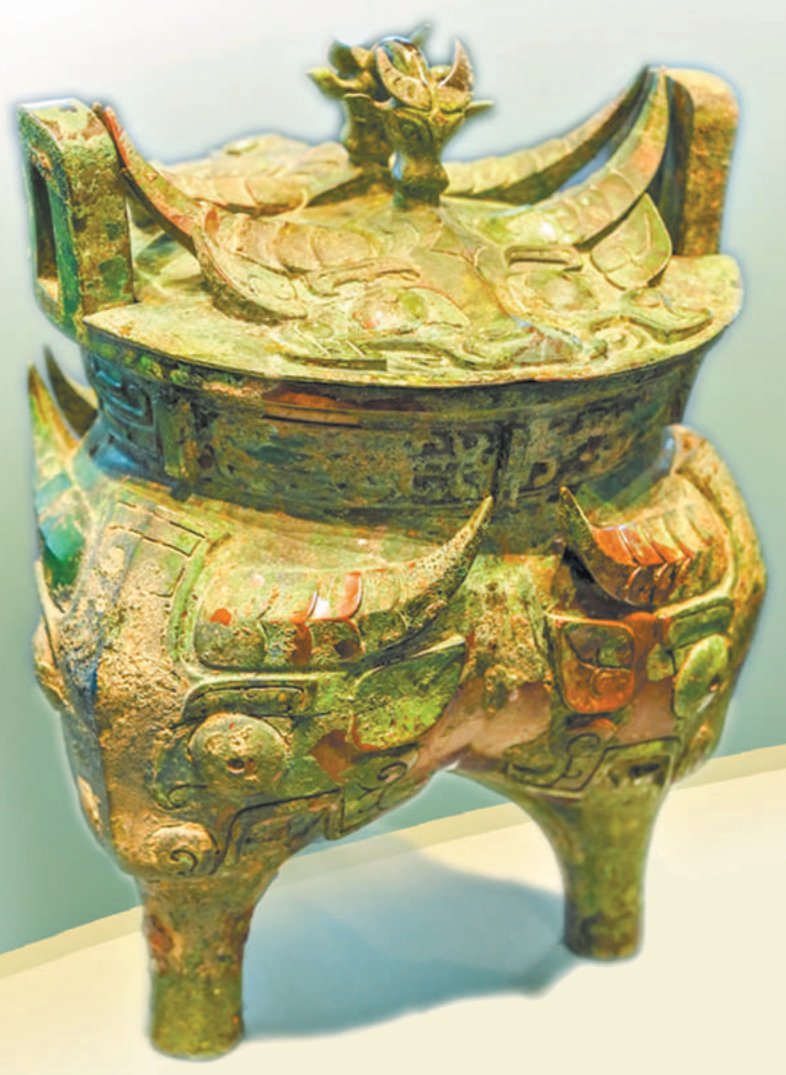
伯鱼簋

Search documents
琉璃河遗址申遗写入市“十五五”规划建议,这里是“北京城之源”
Xin Jing Bao· 2025-11-28 03:24
Core Insights - The Beijing Municipal Committee has officially released the proposal for the 15th Five-Year Plan, which includes the promotion of the Liulihe site for World Cultural Heritage status [1] - The archaeological discoveries at the Liulihe site have been recognized as significant, with the site being referred to as the "source of Beijing" and showcasing the earliest urban civilization in the region [2] Archaeological Discoveries - The Liulihe site has yielded numerous artifacts, including bronze vessels and jade items, with over a hundred cultural relics discovered during recent excavations [2] - Notable findings include a small noble tomb with an area of only 7 square meters, which contained bronze artifacts, indicating the site's historical significance [2] - The site has been recognized in various archaeological accolades, including being selected as one of the top ten archaeological discoveries in 2024 [4] Cultural Significance - The Liulihe site is crucial for understanding the early urban planning and social structures of the Western Zhou Dynasty, revealing a dual city wall structure that was previously unrecognized [6][7] - The excavation has also uncovered a small-scale commoner cemetery, allowing researchers to reconstruct family trees and social relationships among the inhabitants [7] Preservation and Future Plans - The preservation efforts for the Liulihe site are ongoing, with significant land reclamation completed to protect the core area of the site [9] - The site has been included in the list of national archaeological parks, and preparations for its nomination as a World Cultural Heritage site are underway [9]
3000多年前北京“城之源”娓娓道来
Bei Jing Wan Bao· 2025-10-20 06:50
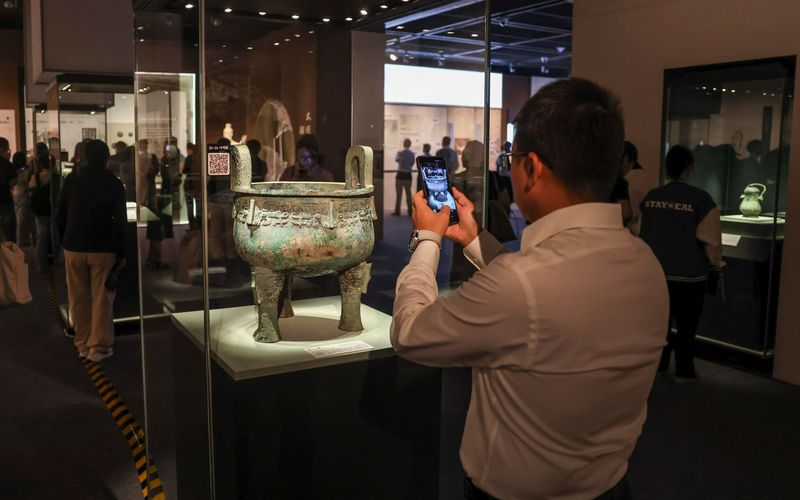
Core Viewpoint - The Liuli River site has been recognized as one of the top ten archaeological discoveries in China for 2024, showcasing significant findings from the Western Zhou period, including bronze artifacts that highlight the cultural and historical importance of the site [1]. Exhibition Highlights - The exhibition titled "Taibao Yong Yan - Special Exhibition of Liuli River Site" features 180 precious artifacts, including the largest and heaviest bronze ritual vessel, the Jin Ding, which weighs over 40 kilograms [1][4]. - The exhibition is the first public display of the artifacts since the site received the highest award in Chinese archaeology [1]. Artifacts and Their Significance - The Jin Ding and Boju Li are highlighted as national treasures, with inscriptions that narrate stories from over 3,000 years ago, reflecting the advanced material civilization of the Beijing area during the Western Zhou period [4][5]. - The Boju Li, adorned with seven bull heads, represents the pinnacle of Western Zhou bronze art in Beijing, with inscriptions detailing royal rewards and rituals [5][6]. Historical Context - The artifacts provide insights into the spiritual world of the Yan people, emphasizing their reverence for heaven and earth, and showcasing the cultural characteristics of the Yan state [6]. - The exhibition also features a group of bronze vessels known as "Zuo Ce Huan," which document significant historical events related to the construction of the capital city, providing evidence of Beijing's urban history over 3,000 years [9][10]. New Discoveries - A set of newly discovered bronze artifacts, including a unique combination of human face-shaped decorations, adds to the understanding of Yan culture and its artistic expressions [11]. - The exhibition includes a rare reunion of two bronze gui vessels, which were found to have been mixed up during burial, providing valuable evidence for the study of naming conventions in the Western Zhou period [14][15]. Cultural Representation - The exhibition utilizes modern technology, such as 3D projections and digital sand tables, to recreate the life in the Western Zhou Yan capital, enhancing the visitor experience [10]. - The artifacts collectively illustrate a vivid picture of ancient society, showcasing the craftsmanship and cultural practices of the Yan state [10].

鼎天鬲地首次合璧展出 生动讲述燕都肇建传奇
Huan Qiu Wang· 2025-09-11 01:16
Core Viewpoint - The exhibition "Tai Baoyong Yan - Special Exhibition of Fangshan Liuli River Site" marks the 80th anniversary of the discovery of the Liuli River site, showcasing significant archaeological findings and cultural heritage from the Western Zhou Dynasty [1][6]. Group 1: Exhibition Highlights - The exhibition features 180 artifacts, with 113 items being publicly displayed for the first time, making it the largest and highest-standard exhibition of the Liuli River site [1][2]. - A key highlight is the "Ding Tian Li Di" combination of national treasures, including the Jin Ding, the largest and heaviest bronze ritual vessel found in Beijing, standing 62 cm tall and weighing 41.5 kg, which bears inscriptions detailing historical events [2][3]. - The exhibition also includes the Bo Ju Li, a bronze vessel adorned with intricate bull motifs, showcasing advanced artistic design and casting techniques from the early Zhou period [2][3]. Group 2: Archaeological Significance - The artifacts, such as the "Zuo Ce Huan" bronze vessels, provide evidence of the earliest documentation of Beijing's city construction history, linking to the historical figure of Shao Gong and the establishment of the Yan state [2][3]. - Recent archaeological findings indicate that the Yan capital had a "double city wall structure," covering an area of up to one million square meters, comparable to the Zhouyuan site in Shaanxi, highlighting the importance of the Liuli River site in understanding the Western Zhou state and urban systems [3][6]. Group 3: Community Engagement and Cultural Value - The exhibition includes a public voting area for the design plan of the Liuli River National Archaeological Site Park, encouraging community involvement in the future planning of the site [4]. - A creative cultural product exhibition area has been established, featuring non-heritage crafts and designs from Fangshan District, allowing visitors to take home a piece of history [4][6]. - The Liuli River site is recognized as a significant historical witness to over 3,000 years of urban civilization in Beijing and is included in major archaeological discoveries, emphasizing its cultural and social value [6].
首博重磅新展拿出镇馆之宝,百余件文物首亮相探寻北京“城之源”
Xin Jing Bao· 2025-08-28 10:21
Core Viewpoint - The "Taibao Yongyan - Liuli River Site Special Exhibition" at the Capital Museum showcases 180 precious cultural relics, marking the most comprehensive and highest standard exhibition of archaeological findings from the Liuli River site in 80 years, and is the first exhibition of the "2024 Annual Top Ten New Archaeological Discoveries in China" [1][3]. Summary by Sections Exhibition Overview - The exhibition runs from August 28 to November 28, featuring 180 artifacts that illustrate the historical significance of the Liuli River site, which is considered the "source of Beijing city" [1]. - It is the first exhibition in the "Beijing Historical and Cultural Exhibition" series at the Capital Museum [1]. Artifacts and Their Significance - Among the 180 artifacts, 39 are categorized as important relics, representing one of the highest proportions in recent years, with 113 items being publicly exhibited for the first time [3]. - The exhibition includes significant items such as the Jin Ding, the largest and heaviest bronze ritual vessel found in Beijing, and the Niutouwen Daigebuju, recognized as one of China's most beautiful bronze artifacts [4][3]. Thematic Structure - The exhibition is divided into four sections: "Receiving Orders from the Northern Frontier," "Establishment of Yandu," "Ding Tian Li Di," and "Inheritance and Continuity," focusing on archaeological achievements and cultural heritage protection from the Liuli River site [3]. - It aims to reveal the mysterious past of the Liuli River site through a historical and archaeological narrative that integrates text, capital, and artifacts [3]. Notable Discoveries - The exhibition features three bronze vessels inscribed with "Taibao Yongyan," which provide undeniable textual evidence of Beijing's city-building history, pushing the timeline back over 3,000 years [9][11]. - The "one mistake for three thousand years" artifacts, the Boyu Gui and the Yu Gui, are also displayed, showcasing their historical significance and the confusion in their burial context [9][11]. Interactive and Educational Features - The exhibition incorporates multimedia interactions, allowing visitors to engage with the artifacts and the historical context of the Liuli River site [12]. - A creative space features 116 unique cultural products inspired by the Liuli River site, enhancing visitor experience and connection to the historical elements [12]. Community Engagement and Future Plans - The exhibition includes a message book for visitors to share their thoughts, fostering community involvement in the narrative of the Liuli River site [14][15]. - Future plans for the Liuli River Archaeological Park are underway, with design proposals being collected from the public to shape the site's development [15].