视觉语言行动模型

Search documents
寻找AI的杀手级应用:机器人、智能驾驶和可穿戴设备
2 1 Shi Ji Jing Ji Bao Dao· 2025-09-30 23:08
Core Insights - The continuous iteration of AI large models is driving transformative upgrades in traditional industries, particularly in the chip sector, which is expected to undergo significant changes [1] - AI is anticipated to foster the evolution of new industries and demands, with a focus on smart driving and robotics, as highlighted by Qualcomm's efforts in adapting its technology for various sectors [2] - The emergence of physical and biological intelligence is expected to lead to breakthroughs in AI healthcare, new drugs, and foundational sciences, with a projected increase in the number of robots surpassing humans by 2035 [3] Group 1: AI Development Trends - Zhang Yaqin identified five trends in AI development, including the transition from generative AI to intelligent agents and the rapid rise of AI risks [1] - The scaling law in the pre-training phase is expected to slow down, while the structure of the industry will evolve into a "foundation model + vertical model + edge model" framework [3] Group 2: Qualcomm's Strategic Focus - Qualcomm is actively exploring the robotics and smart wearable device markets, believing that their application scale could rival or exceed that of smartphones [2] - The company has launched the "Leap Dragon" brand to target industrial and embedded IoT markets, aiming to create a comprehensive platform matrix covering both consumer and industry-grade terminals [2] Group 3: Market Opportunities and Challenges - The robotics market is unique, with a significant overlap in technology between automotive and robotics sectors, presenting opportunities for chip development tailored to specific applications [4] - Qualcomm has been collaborating with local supply chain partners in China to foster innovation, particularly in the XR (AR and VR) space, which has seen extensive development over the past decade [5] Group 4: Industry Collaboration and Future Outlook - Qualcomm emphasizes the importance of collaboration with industry partners to drive the redesign and redefinition of products through AI [6] - The company is committed to providing high-quality products and has integrated NFC support in its chips to meet IoT application demands [7] - By creating application demonstration cases and conducting industry-specific analyses, Qualcomm aims to help various sectors, including manufacturing, realize the potential of 5G and AI technologies for transformation [8]


理想汽车自动驾驶部门大调整!
Mei Ri Jing Ji Xin Wen· 2025-09-22 13:51
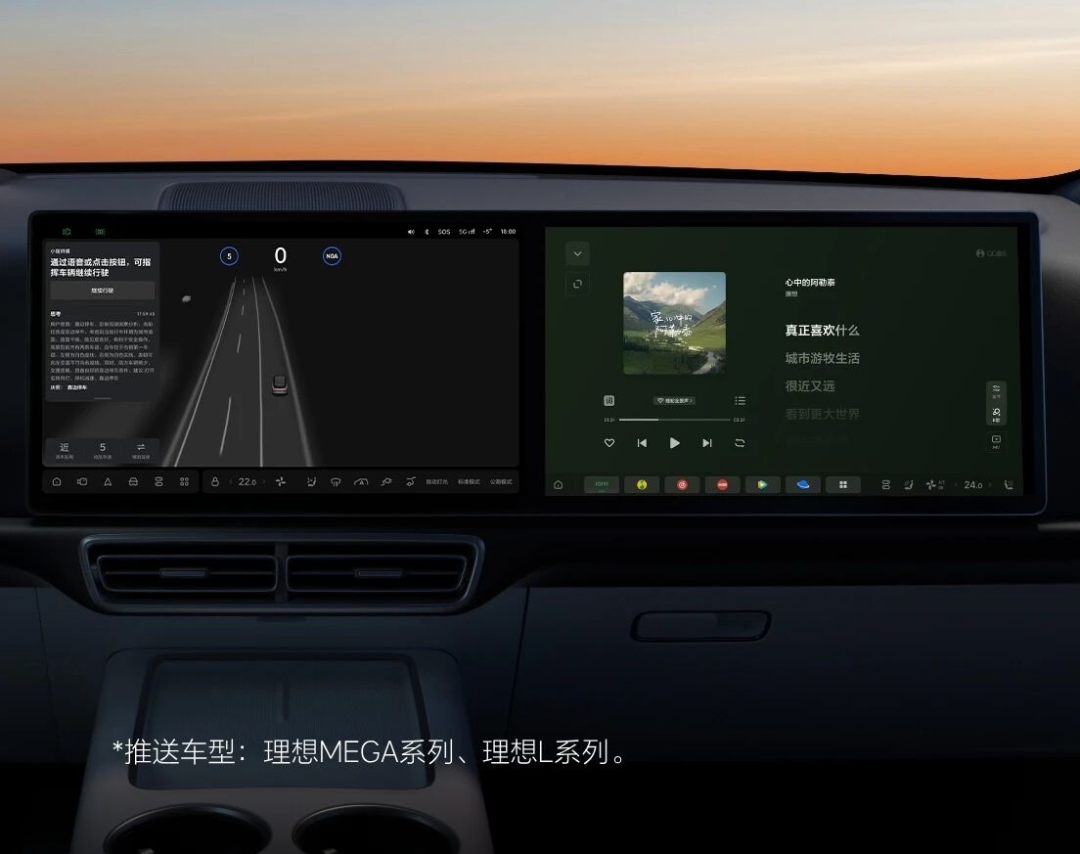
Group 1 - Recently, Li Auto has restructured its autonomous driving department, splitting the original three secondary departments into multiple new ones to enhance efficiency and quality in technology breakthroughs and product implementation [1][4] - The restructuring includes the division of the model algorithm team into three departments: foundational models, VLA models, and model engineering; the mass production R&D team into mass production delivery, software R&D, and active safety; and the data closed-loop team into data platform and data annotation [1][4] - The CEO, Li Xiang, outlined the development of the company's assisted driving in three stages, with the latest stage involving the VLA model, which aims to achieve a level of intelligence comparable to humans by integrating 3D and 2D visual data [2][4] Group 2 - The VLA driver model is described as the third generation of Li Auto's assisted driving technology, capable of understanding road conditions, responding to human commands, and remembering driver habits, resembling a personal driver [4] - The restructuring has resulted in the autonomous driving department being divided into 11 secondary departments, indicating a significant organizational shift to adapt to new R&D rhythms [4] - An innovation department has been added to oversee external technology collaborations and overseas development, managed by the former head of the data closed-loop team [4]


拆分为11个二级部门!理想汽车调整自动驾驶部门组织架构
Mei Ri Jing Ji Xin Wen· 2025-09-22 08:20
Group 1 - The core point of the news is that Li Auto has restructured its autonomous driving department to enhance the speed and quality of technological breakthroughs and product implementation, evolving towards an AI organization [1] - The restructuring involves splitting the original three secondary departments into multiple new departments, including foundational models, VLA models, model engineering, production delivery, software development, active safety, data platform, and data annotation, resulting in a total of 11 secondary departments [1][3] - Li Auto's CEO, Li Xiang, outlined the development of the company's assisted driving in three stages, with the latest stage being the VLA model, which aims to achieve a level of intelligence comparable to humans by integrating 3D and 2D vision [2] Group 2 - The VLA model has been established as a separate secondary department under the autonomous driving division, indicating a clear technical direction and the need for organizational adaptation to match the new research and development pace [3] - The company has also created an innovation department responsible for external technical cooperation, research, and overseas development, managed by the former head of the data loop team [3]
“智驾”是否该叫停?理想汽车CEO李想回应!小米、理想、问界改口,“智驾”更名为“辅助驾驶”
Mei Ri Jing Ji Xin Wen· 2025-05-07 15:14
Core Insights - The CEO of Li Auto, Li Xiang, believes that the smart driving industry is at a critical juncture, comparing the current state to "darkness before dawn," suggesting that significant advancements are imminent despite current challenges [2][3] Industry Developments - Li Auto has transitioned from traditional algorithms to end-to-end models and is now entering the Visual Language Action (VLA) model phase, indicating a technological evolution in smart driving [2] - The company aims to address industry challenges, such as high battery costs and slow charging times, by developing solutions like range-extended products and advanced battery technology [3] Market Trends - Recent shifts in terminology from "smart driving" to "assisted driving" by companies like Xiaomi and Aito have sparked discussions in the industry, reflecting a broader trend towards more cautious language regarding autonomous driving capabilities [3][6] - Xiaomi has updated its marketing materials to replace "Xiaomi Smart Driving" with "Xiaomi Assisted Driving," indicating a strategic rebranding effort [3] - Aito has also adopted the term "smart assisted driving" in its communications, showing a similar trend in the industry [6]