豪华品牌转型

Search documents
以赛赋能+深耕中国!捷豹路虎突围豪华合资品牌转型深水区
Zhong Guo Zheng Quan Bao· 2026-02-09 05:53
Core Viewpoint - Luxury brands are facing unprecedented transformation challenges, including intensified price competition, pressure for electrification, and a restructured joint venture model. Jaguar Land Rover (JLR) has proposed its own strategies to navigate these challenges and maintain brand value while exploring sustainable development paths [1]. Group 1: Market Positioning and Strategy - JLR is focusing on the high-end market amidst a homogenized price competition in the luxury car sector, aiming to leverage its clear brand positioning and product advantages for steady growth [2]. - JLR has maintained a leading position in the domestic luxury SUV market priced above 700,000 yuan, with the Range Rover brand achieving a market share of 38% in the luxury SUV segment priced above 1.5 million yuan, marking three consecutive years as the sales champion [2]. - The company has established a comprehensive local presence in China over 16 years, contributing approximately 22% to the UK's total exports to China, highlighting the critical role of the Chinese market in its global strategy [2]. Group 2: Brand Value and Customer Experience - JLR is committed to enhancing its core brand value by focusing on high-end product quality and avoiding low-end price competition, which has led to its recognition as the champion among luxury brands in six key areas of J.D. Power's 2025 research [3]. - The company emphasizes the importance of long-term value and resilience in uncertain environments, as articulated by its executives [4]. Group 3: Local Innovation and Collaboration - JLR is deepening its commitment to the Chinese market with a strategy of "more China in China," which includes high-level interactions to reinforce its dedication to local growth [4]. - The collaboration with its joint venture partner, Chery Automobile, is progressing with the development of the "Freelander" model, set to launch in 2026 to meet the diverse high-end demands of the Chinese new energy market [4]. Group 4: Technological Advancement through Motorsport - JLR leverages its motorsport heritage to build a technological moat, with participation in events like the Dakar Rally and Formula E driving technical advancements and product upgrades [6][7]. - The Dakar Rally serves as a rigorous testing ground for vehicle durability and performance, while the Formula E involvement reflects JLR's long-term commitment to electric vehicle technology development [7]. - The success of the Jaguar TCS team in Formula E, including record-breaking achievements, underscores the brand's competitive edge in electric vehicle technology [7]. Group 5: Future Outlook - JLR's development path in 2025 serves as a valuable reference for other joint venture luxury brands, emphasizing resilience, value preservation, and deep market integration [8]. - The company aims to continue its local innovation and strategic clarity to drive long-term value in the evolving landscape of luxury automotive brands [8].
Z时代的豪华,奔驰交出了高分答卷
Tai Mei Ti A P P· 2025-11-08 10:21
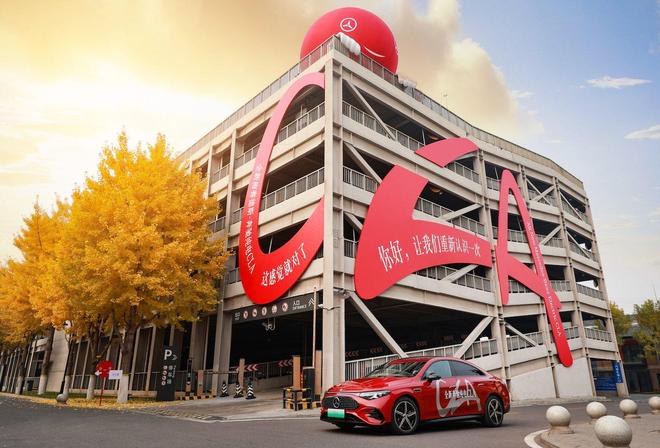
Core Insights - The launch of the all-new Mercedes-Benz pure electric CLA marks a significant cultural shift for the brand, moving from traditional luxury to a more relatable and interactive approach aimed at resonating with Generation Z [2][3][4] - Mercedes-Benz emphasizes that true luxury now encompasses long-term social responsibility and commitment, as demonstrated by its partnership with Wang Chuqin to provide educational resources to schools [3][4] - The CLA represents a transition from mechanical luxury to intelligent luxury, focusing on user experience and understanding rather than just technical specifications [5][19] Product and Technology - The new CLA features advanced engineering, including an 800V high-voltage system, dual-speed electric drive transmission, and a multi-source heat pump system, achieving a CLTC range of 866 kilometers and an energy consumption of 10.9 kWh/100 km [7][10] - The vehicle is equipped with the new MB.OS operating system, developed with significant input from Chinese teams, which enhances user interaction by understanding context and emotions [9][17] - The intelligent driving system reflects a philosophy of restraint, prioritizing a harmonious human-machine interaction rather than aggressive automation [10][11] Market Strategy - Mercedes-Benz adopts a "non-involution" strategy in the competitive Chinese market, opting for a transparent national pricing model instead of engaging in price wars [13][14] - The brand aims to simplify user experience and decision-making, focusing on pure luxury rather than excessive features [14][15] - The CLA's launch signifies a strategic shift towards understanding and integrating local market dynamics, positioning China as a key player in the brand's future [18][25] Cultural Transformation - The CLA embodies a new definition of luxury that transcends traditional materialistic values, emphasizing digital experiences, trust, and emotional connections [20][22] - The brand's collaborations with popular culture entities reflect a desire to engage with contemporary audiences and redefine luxury in a modern context [22][23] - Mercedes-Benz is evolving to become more attuned to Chinese consumer preferences, emphasizing speed, understanding, and warmth in its brand narrative [25][26]