
负荷预测

Search documents
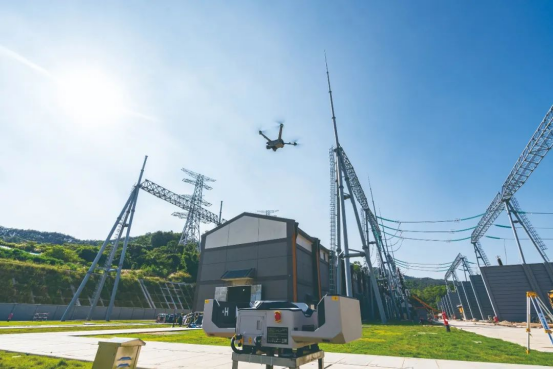
电网企业全力保障迎峰度夏电力稳定供应
Zhong Guo Neng Yuan Wang· 2025-07-14 08:59
Core Viewpoint - The article highlights the increasing electricity demand across various regions in China as summer approaches, prompting power companies to implement multiple strategies to ensure stable electricity supply during peak periods [2][5][10]. Group 1: Electricity Demand and Historical Data - The National Climate Center predicts that by 2025, most regions in China will experience higher temperatures than usual, leading to sustained high electricity demand [3]. - On July 4, the national electricity load reached a record high of 1.465 billion kilowatts, an increase of 0.14 billion kilowatts compared to last year's peak [3]. - Jiangsu's electricity load hit a historical high of 14,996 megawatts on July 3, while Hubei's load reached 5,456.8 megawatts on July 4, marking a 1.02% increase from the previous year's peak [4]. Group 2: Infrastructure Development and Upgrades - Power companies are accelerating key project constructions to enhance grid stability and capacity, with Sichuan completing 13 major projects to bolster its electricity supply [5]. - The Sichuan Panxi 500 kV grid optimization project, which enhances transmission capacity by 2.5 million kilowatts, is set to be operational soon [5]. - In Zhejiang, the completion of nine ultra-high voltage projects has significantly improved the grid's supply capacity, with expectations of peak loads increasing by approximately 1 million kilowatts year-on-year [6]. Group 3: Operational Management and Emergency Preparedness - Power companies are enhancing operational management of key transmission channels and substations, implementing specialized inspections to ensure equipment safety [7]. - Fujian's power company has initiated 425 disaster prevention projects to improve grid resilience against extreme weather [11]. - The use of smart technologies is being prioritized to improve grid regulation capabilities, with Fujian developing an AI-based infrared image screening module to enhance inspection efficiency [8]. Group 4: User Service Enhancements - Power companies are taking measures to improve user service levels during peak demand, including optimizing maintenance operations to minimize outages [10]. - In Zhejiang, over 1,300 micro-grid service points have been established to provide tailored services to businesses, promoting energy efficiency through time-of-use pricing [10]. - Fujian's implementation of AI technology has significantly reduced the workload for manual inspections, enhancing operational efficiency [10].


看看这个:监管解决方案以实现大型负载的更好预测
落基山研究所(美国)北京代表处· 2025-03-05 07:51
Executive Summary - In the U.S., electricity demand has begun to grow after decades of stagnation, with utilities projecting a 20% increase in load from 2023 to 2035, up from previous estimates of 7% in January 2021 [10][25][41] - Accurate load forecasting is crucial for managing affordability and reliability risks, as well as for considering all available investment options [12][13] - The report emphasizes the unique characteristics of new large loads, such as data centers and advanced manufacturing, which should be integrated into modern forecasting processes [13][20] Load Growth and Forecasting - Utilities have revised their five-year peak load forecasts from an expected increase of 23 GW to 128 GW between 2022 and 2024 [25] - The Integrated Resource Plans (IRPs) covering 48% of U.S. electricity sales predict a 20% load growth by 2035, indicating a significant upward revision in forecasts [10][25][27] - The report highlights the need for improved forecasting methods to accommodate the unique characteristics of new loads, which differ significantly from traditional load types [20][25] Regulatory Measures for Improved Forecasting - Regulatory agencies play a critical role in establishing forecasting guidelines, reviewing utility forecasts, and approving investment cost recovery based on these forecasts [21][22] - Recommendations for regulators include enhancing understanding of new load drivers, revising planning guidelines, and coordinating with state and local governments [22][23] - The report suggests that frequent updates to long-term load forecasts and transparent data sharing can improve forecasting accuracy and stakeholder engagement [22][23] Characteristics of New Loads - New large loads, particularly data centers and industrial manufacturing, present unique challenges for load forecasting due to their rapid growth and specific operational characteristics [60][68] - Data centers are expected to account for a significant portion of electricity load in certain states, with projections indicating they could represent 46% of Virginia's load by 2030 [61] - The flexibility potential of different load types varies, with some, like cryptocurrency mining operations, being more price-sensitive and flexible compared to traditional industrial loads [62][63] Best Practices for Load Forecasting - The report outlines best practices for improving load forecasting, including scenario-based forecasting methods and integrating end-use demand forecasts with econometric models [17][18] - Ensuring consistent application of load forecasts across planning processes is essential for informed decision-making [19] - The integration of new large loads into forecasting processes is still in its early stages, necessitating further development of modern forecasting systems [20][21] Conclusion - The report concludes that improving load forecasting can expand the options available to utilities and regulators when addressing load growth [36] - It emphasizes the importance of adapting forecasting practices to account for the rapid changes in load characteristics and the associated risks [36][37]