公用事业

Search documents
投资者微观行为洞察手册3月第4期:市场高波动之下:外资比内资更积极
GUOTAI HAITONG SECURITIES· 2026-04-01 09:40
Group 1 - The report indicates a slight decrease in market trading activity, while the profitability effect is on the rise, with the average daily trading volume for the entire A-share market dropping to 2.1 trillion yuan and the proportion of stocks rising by 40.7% [8][10][11] - The report highlights that foreign capital has significantly flowed into the A-share market, with a net inflow of approximately 6.7 million USD as of March 25, while financing funds have seen a slight outflow [22][43][45] - The report notes that the issuance of new public equity funds has decreased to 16.9 billion yuan, indicating a decline in public fund activity [31][36] Group 2 - The report observes that the confidence index for private equity funds has decreased by 0.1% compared to the previous month, suggesting a decline in sentiment among private investors [41][47] - The report states that the net inflow of foreign capital into the A-share market has reached a historical percentile of 88.5%, indicating strong foreign interest [43][44] - The report mentions that the trading concentration in primary industries has decreased, while the concentration in secondary industries has increased, with seven industries maintaining a turnover rate above 90% historically [19][20] Group 3 - The report indicates that the electric power equipment sector has seen significant inflows from financing and ETF funds, while the electronics sector has experienced notable outflows [3][29][43] - The report highlights that the public utilities and coal sectors have shown a marked increase in trading activity, with public utilities seeing a 39.95% increase in trading volume [18][19] - The report notes that the top three industries on the trading leaderboard are public utilities, environmental protection, and electronics, reflecting current market trends [3][22] Group 4 - The report indicates that the southbound capital has significantly flowed into the Hong Kong stock market, with net purchases rising to 25.15 billion yuan, reflecting increased foreign investment in the region [4][24] - The report highlights that global foreign capital has marginally flowed into the Chinese market, with China being one of the top recipients of foreign investment [4][24][43] - The report mentions that the Nasdaq index has declined by 3.2%, with most global markets experiencing losses, particularly the South Korean composite index, which fell by 5.9% [4][24]
粤开市场日报-20260401-20260401
Yuekai Securities· 2026-04-01 08:06
Market Overview - The A-share major indices closed higher today, with the Shanghai Composite Index rising by 1.46% to 3948.55 points, the Shenzhen Component Index increasing by 1.70% to 13706.52 points, the Sci-Tech 50 up by 3.33% to 1298.20 points, and the ChiNext Index gaining 1.96% to 3247.52 points [1][10] - Overall, 4492 stocks rose while 881 stocks fell, with a total trading volume of 20,125 billion yuan, an increase of 199 billion yuan compared to the previous trading day [1] Industry Performance - Most of the Shenwan first-level industries closed higher today, with notable gains in the pharmaceutical and biological sector (3.99%), communication (3.36%), media (2.94%), and electronics (2.93%). Conversely, public utilities, coal, and oil and petrochemicals experienced declines of 0.52%, 0.19%, and 0.13%, respectively [1][10] Concept Sector Performance - The leading concept sectors with significant gains today included CRO, innovative drugs, optical modules (CPO), selected medical services, weight loss drugs, biotechnology, optical chips, copper-clad laminates, antibiotics, selected shipping, glass fiber, generic drugs, selected air transport, medical supplies exports, and brain-computer interfaces [2]
2026年一季度A股大数据排行榜
Wind万得· 2026-04-01 05:45
Market Performance - In Q1 2026, A-share market showed significant style differentiation, with the CSI 1000 index being the only broad index to rise, up by 0.32%, while major indices generally declined [1][3] - The Shenzhen Component Index, ChiNext Index, and Wind All A Index saw slight declines of 0.35%, 0.57%, and 1.15% respectively, while the Shanghai Composite Index fell by 1.94% and the CSI 300 dropped by 3.89% [3] - The North Exchange 50 performed the weakest, with a substantial decline of 13.34% in Q1 2026 [3] Industry Performance - Among 35 industries classified by Wind, 9 recorded gains in Q1 2026, with the oil and petrochemical and coal industries leading, rising by 18.27% and 17.64% respectively [5] - Utilities, building materials, and electrical equipment also performed well, with increases of 8.78%, 8.26%, and 6.02% respectively [5] - Consumer and financial real estate sectors faced significant declines, with discretionary retail down by 14.90% and non-bank financials down by 14.84% [5] Style Performance - In Q1 2026, small and mid-cap value and growth styles outperformed, while large-cap styles faced pressure [8] - Mid-cap value style was the strongest, with a cumulative increase of 7.50%, while mid-cap growth rose by 5.73% [8] - Large-cap growth index fell by 2.77%, and large-cap value index declined by 4.53% [8] Concept Performance - Energy and power infrastructure concepts led the market in Q1 2026, with the ultra-high voltage concept rising by 32.39% [10] - Fiberglass and oil and gas extraction indices also saw significant gains, exceeding 30% [10] - Other concepts like optical communication, shipping selection, TOPcon batteries, and rare metals selection rose over 20% [10] Company Listings - As of the end of Q1 2026, there were 5,496 listed companies in the A-share market, an increase of 26 from the end of 2025 [13] - The Shanghai main board had the highest number of listed companies at 1,703, accounting for 30.98% of the total [15] Market Capitalization - The total market capitalization of A-shares was 118.81 trillion yuan at the end of Q1 2026, a slight decrease of 0.1% from the end of 2025 [17] - The Shanghai main board's market capitalization was 62.94 trillion yuan, representing 52.93% of the total [19] Trading Volume - A-share market trading remained active in Q1 2026, with total trading volume reaching 144.5 trillion yuan, a quarter-on-quarter increase of 22.15% and a year-on-year increase of 66.28% [21] - The average daily trading volume was 25.97 billion yuan, up 29.43% quarter-on-quarter and 69.04% year-on-year [21] Margin Financing - As of the end of Q1 2026, the margin financing balance was 26.17 billion yuan, an increase of 2.41% from the end of 2025 and a year-on-year increase of 36.12% [25] Top Gainers and Losers - In Q1 2026, Hangzhou Electric Co. led the gainers with a cumulative increase of 253%, followed by Xuelang Environment at 232% and Tianzhong Precision at 210% [27] - The biggest loser was Tianpu Co., which fell by 55%, with Rongke Technology and Jin Hao Medical both down by 49% [27] Market Valuation - As of the end of Q1 2026, the highest P/E ratio among A-share boards was on the Sci-Tech Innovation Board at 195.68 times [43] - The lowest P/E ratio was in the financial sector at 7.72 times [47] IPO Activity - In Q1 2026, the A-share market saw 35 IPOs, a year-on-year increase of 29.63% [50] - The total fundraising from IPOs was 29.78 billion yuan, up 79.61% year-on-year [52] - The automotive and parts industry led with 6 IPOs, while the medical devices and services sector had 5 [55]


Jim Cramer on Berkshire Hathaway: “I Would hold on to It for a Year”
Yahoo Finance· 2026-03-31 16:04
Group 1 - Berkshire Hathaway Inc. (NYSE:BRK-B) is a conglomerate with a diverse range of businesses, including insurance, freight rail, utilities, manufacturing, retail, and consumer products [4] - The company also provides construction materials, aerospace and industrial components, energy services, and financial and logistics solutions [4] Group 2 - Jim Cramer suggests that investors should hold onto Berkshire Hathaway stock for at least one year before making any judgments about its performance [1] - Concerns were raised about the potential negative impact of philanthropic stock sales on the share price, but Cramer believes it is too early to assess this [1]
【31日资金路线图】两市主力资金净流出近500亿元 银行板块实现净流入
证券时报· 2026-03-31 11:13
Market Overview - The A-share market experienced an overall decline on March 31, with the Shanghai Composite Index closing at 3891.86 points, down 0.8%, the Shenzhen Component Index at 13478.06 points, down 1.81%, the ChiNext Index at 3184.95 points, down 2.7%, and the Sci-Tech Innovation Index at 1618.58 points, down 2.48% [1] - The total trading volume for both markets reached 19925.43 billion yuan, an increase of 766.62 billion yuan compared to the previous trading day [1] Capital Flow - The net outflow of main funds from the Shanghai and Shenzhen markets was nearly 500 billion yuan, with a net outflow of 493.6 billion yuan for the day [2][3] - The net outflow for the CSI 300 index was over 150 billion yuan, specifically 151.54 billion yuan, while the ChiNext saw a net outflow of 249.7 billion yuan [4][5] Sector Performance - The banking sector achieved a net inflow of 28.97 billion yuan, with a slight increase of 0.47% [6][7] - The sectors with the largest net outflows included: - Power Equipment: -221.42 billion yuan, down 2.56% - Electronics: -217.00 billion yuan, down 2.55% - Basic Chemicals: -142.82 billion yuan, down 2.21% - Public Utilities: -114.72 billion yuan, down 2.61% - Machinery: -78.16 billion yuan, down 0.53% [7] Institutional Investment - The top stocks with significant institutional net purchases included: - Pingtan Development: +9.98%, net purchase of 234.31 million yuan - TeFa Information: +10.01%, net purchase of 150.30 million yuan - New Energy Technology: +10.08%, net purchase of 178.63 million yuan [8][10] - Notable stocks with institutional interest and their target prices include: - Bank of China: Target price 6.69 yuan, current price 5.87 yuan, potential upside 13.97% - 360 Security Technology: Target price 15.17 yuan, current price 10.70 yuan, potential upside 41.78% [11]

每日报告精选-20260331
GUOTAI HAITONG SECURITIES· 2026-03-31 08:01
Group 1: Aerospace Industry Insights - The successful launch of the "Li Jian No. 2" rocket enhances China's payload capacity, with a 12-ton capacity for low Earth orbit and 8 tons for sun-synchronous orbit[6] - The rocket features a core diameter of 3.35 meters, a total length of 53 meters, and a launch weight of 625 tons, with a thrust of 753 tons[6] - The commercial aerospace industry is expected to accelerate during the 14th Five-Year Plan, focusing on technologies like reusable rockets and satellite internet[7] Group 2: Insurance Sector Performance - The insurance industry reported a total premium income of CNY 16,422 billion in January-February 2026, reflecting an 8.4% year-on-year growth[14] - Life insurance premiums reached CNY 13,108 billion, up 9.7% year-on-year, driven by strong demand during the "opening red" period[14] - Non-auto insurance premiums increased by 7.0%, while auto insurance premiums decreased by 0.9%[15] Group 3: Market Trends and Recommendations - The insurance sector is expected to see valuation recovery due to strong demand for savings products and stable long-term interest rates[17] - Recommended stocks include China Ping An, China Taiping, and New China Life, reflecting a positive outlook for the insurance sector[17] - The aerospace industry is advised to focus on companies involved in satellite internet and commercial space launches, with recommended stocks including Aerospace Electronics and Xi'an Huada[7]
流动性、交易拥挤度、投资者温度计周报:自媒体A股搜索热度创今年以来新高-20260331
Huachuang Securities· 2026-03-31 06:09
Group 1: Liquidity and Capital Flow - The supply side of equity public offerings remains at a historically high level, with new fund issuance at 110 billion yuan, maintaining an 81% percentile over the past three years[6] - Margin financing net inflow decreased to -247.2 billion yuan, placing it in the 7% percentile over the past three years[11] - Southbound capital net inflow increased to 223.2 billion yuan, reaching the 72% percentile historically[38] Group 2: Trading Activity and Market Sentiment - Trading heat in the light industry sector rose by 13 percentage points to 38%, while the construction materials sector fell by 16 percentage points to 53%[44] - The search interest for A-shares on social media reached a new high for the year, driven by a 3.6% drop in the Shanghai Composite Index on March 23[2] - Retail investor net inflow decreased to 1200.5 billion yuan, down 610.2 billion yuan from the previous value, representing the 67.8% percentile over the past five years[2] Group 3: Stock Buybacks and Financing - The total amount of stock buybacks last week was 20.9 billion yuan, up from 9.8 billion yuan, placing it in the 59% percentile historically[23] - Equity financing amounted to 121.3 billion yuan, with IPOs contributing 45.8 billion yuan and refinancing 75.5 billion yuan, at the 58% percentile historically[26] Group 4: Investor Behavior - The number of individual investors participating in margin trading reached 8.071 million, with daily active participants decreasing by 45,000 from the previous value[14] - The overall margin trading turnover rate last week was 36.2%, down from 38.7%, placing it in the 68% percentile historically[14]
2026年4月A股及港股月度金股组合:把握布局机遇-20260331
EBSCN· 2026-03-31 05:46
Overall Research - In March, both A-shares and Hong Kong stocks experienced a general pullback, with significant differentiation across sectors. The A-share market saw the ChiNext index decline by 0.4%, while the Sci-Tech 50 index fell by 12.6%. In Hong Kong, the Hang Seng China Enterprises Index dropped by 4.6%, and the Hang Seng Index fell by 6.3% [1][2]. A-share Insights - Chinese assets are expected to show internal stability and potential for mid-term upward movement. Despite facing short-term risks from oil price fluctuations and declining risk appetite, the domestic market's high energy self-sufficiency provides some resistance to rising external energy prices. Historically, domestic exports tend to benefit from increased external uncertainties, indicating a stable supply chain [1]. Sector Recommendations - Focus on sectors that have previously experienced significant declines, those benefiting from rising commodity prices, and industries with potential for exceeding performance expectations. The report highlights resource products, essential consumption, hard technology, and government investment-related sectors as key areas of interest [2]. Hong Kong Market Insights - The Hong Kong market is positioned for resilience, with the OpenClaw framework redefining the AI industry narrative. The performance of leading AI companies in the US, such as Nvidia and Google, supports a robust fundamental backdrop for a rebound in Hong Kong stocks. The market is experiencing a convergence of three favorable factors: clear industry prosperity, improving sentiment as geopolitical concerns ease, and strong capital support, with net inflows of 63.2 billion HKD as of March 27 [3]. Investment Focus - The report recommends prioritizing investments in the technology sector, particularly through Hong Kong technology ETFs, to capitalize on the overall rebound. Specific focus should be on companies that are rapidly commercializing AI and have stable cash flows and low valuations [3]. A-share Stock Recommendations - The recommended A-share stocks for April 2026 include: - Zhongji Xuchuang (中际旭创) - Communication - Teruid (特锐德) - Power Equipment - Jereh (杰瑞股份) - Machinery - Nanjing Bank (南京银行) - Banking - Zijin Mining (紫金矿业) - Non-ferrous Metals - China Petroleum (中国石油) - Oil and Petrochemicals - China National Offshore Oil Corporation (中国海油) - Oil and Petrochemicals - Jinjiang Hotels (锦江酒店) - Social Services - Huaneng International (华能国际) - Utilities - Haier Smart Home (海尔智家) - Home Appliances [4][6]. Hong Kong Stock Recommendations - The recommended Hong Kong stocks for April 2026 include: - Hon Teng Precision (鸿腾精密) - Communication - Huiju Technology (汇聚科技) - Power Equipment - Alibaba (阿里巴巴-W) - Retail [4][7].





银泰证券鑫新闻:研究所日报-20260331
Yintai Securities· 2026-03-31 03:05
Regulatory Environment - The Market Regulation Administration has issued a notice to combat "involution" competition in key industries such as platform economy, photovoltaic, lithium batteries, and new energy vehicles[2] - The Ministry of Finance has announced plans to accelerate the development of local additional tax laws for 2026, marking the first official mention of such legislation[2] Market Performance - On Monday, A-shares experienced a slight decline, with the CSI 300 index down 0.24%, while small-cap indices like the CSI 2000 and CSI 1000 rose by 0.37% and 0.28% respectively[3] - The total market turnover was approximately 1.93 trillion yuan, an increase of 637 billion yuan from the previous trading day[3] Sector Analysis - The leading sectors included non-ferrous metals (+1.84%), building materials (+1.67%), and telecommunications (+1.31%), while utilities (-2.97%) and household appliances also saw significant declines[3] - The A-share market's total market capitalization reached 109.73 trillion yuan, with a year-to-date increase of 0.98 trillion yuan[15] Global Market Context - Major global indices showed mixed results, with European markets rising and the UK FTSE 100 gaining 1.61%, while the US markets, including the Nasdaq and S&P 500, experienced declines of 0.36% and 0.39% respectively[3] - The US dollar index rose by 0.33% to 100.51, and the offshore RMB appreciated slightly to 6.9164 against the dollar[12] Economic Outlook - Goldman Sachs has slightly downgraded the fair value of Chinese stocks by approximately 5% due to the impact of high energy prices and geopolitical risks, while maintaining an overweight view on the market[7] - The forecast for China's GDP growth in 2026 has been adjusted down by 20 basis points, reflecting a more resilient position compared to the US and other emerging markets[7] Investment Trends - There is a growing interest in sectors with high cash/dividend returns and earnings realization during uncertain market conditions, with expectations for A/H share profit growth to reach low double digits in 2026[9] - Signs indicate that international capital may be flowing into Hong Kong, as evidenced by a drop in interbank rates and increased trading volumes post-conflict[8]
价量一致性和RSI信号本周同步转空,市场情绪指标进一步回落——量化择时周报20260329
申万宏源金工· 2026-03-31 01:02
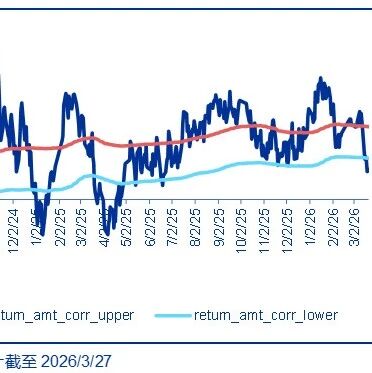
Market Sentiment - The market sentiment indicator as of March 27 is 1.2, down from 1.7 the previous week, indicating a bearish outlook as sentiment continues to decline throughout the week [1][6]. - The price-volume consistency indicator and RSI have both turned negative this week, reflecting a shift from previous oscillation to a sustained bearish view, indicating a weakening market [1][8]. Trading Volume - The total trading volume for the A-share market decreased by 0.65% week-on-week, with an average daily trading volume of 1,394.17 billion yuan, suggesting a slight decline in market activity compared to the previous week [1][10]. Industry Performance - As of March 27, the short-term score rankings for industries show that utilities, coal, power equipment, telecommunications, and oil and petrochemicals are leading, with utilities scoring 91.53, the highest among industries, and coal scoring 84.75, second [1][34]. - The industry crowding indicator shows a low correlation of 0.17 with the weekly price changes, indicating that the crowding level is not significantly impacting price movements [1][37]. Risk Appetite - The relative trading volume of the Sci-Tech 50 index remains low, indicating that market risk appetite is also low, with a slight fluctuation observed [1][13]. - The financing balance ratio has slightly increased this week, suggesting a minor rise in market sentiment and trading activity in the financing market [1][21]. Technical Indicators - The RSI indicator has penetrated the lower boundary and continues to decline rapidly, indicating a weakening short-term momentum [1][25]. - The main buying power indicator has shown a downward trend, reflecting reduced willingness from institutional investors to actively allocate capital in the market [1][28].