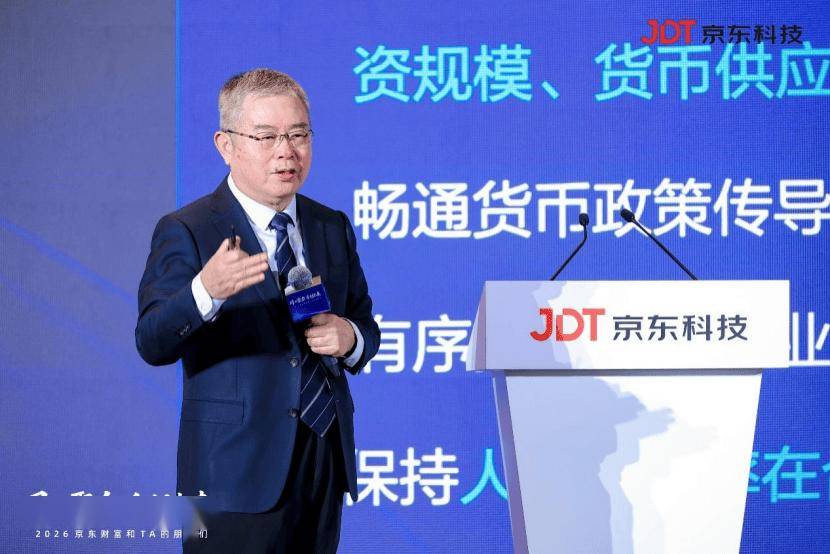
货币政策范式转变

Search documents
李扬:银行等机构要完成从“卖产品”到提供服务的转变
Sou Hu Cai Jing· 2026-01-13 03:47
Core Viewpoint - The recent speech by Li Yang highlights significant changes in China's monetary and financial environment, emphasizing the need for an adaptive monetary financial environment to support the "14th Five-Year Plan" [1] Group 1: Changes in Financing Structure - The goal of reducing indirect financing and increasing direct financing is a key objective of financial reform, with indirect financing's share in total social financing decreasing from 81% in 2015 to 64% in 2025, a drop of approximately 17 percentage points [2] - From the end of 2015 to November 2025, China's total social financing increased from 138.14 trillion yuan to 440.07 trillion yuan, a rise of 2.19 times, while indirect financing grew from 112.55 trillion yuan to 282.17 trillion yuan, an increase of 1.51 times [2] Group 2: Interest Rate Trends - Since 2015, interest rates in China have been on a downward trend, which is not unique to China but part of a global phenomenon that has led to profound changes in financial structures [3] - As of mid-2025, the net interest margin for Chinese commercial banks has fallen to 1.42%, with non-interest income accounting for only 25.75% of total income, indicating a need for banks to transform their business models [3] Group 3: Monetary Policy Paradigm Shift - Li Yang argues that as the financialization of the real economy increases, fluctuations in asset prices should be considered in monetary policy, leading to innovations in both theory and policy tools since the 1990s [4] - Recent measures by the central bank, such as the establishment of 500 billion yuan in swap facilities and 300 billion yuan in special re-loans for stock repurchases, demonstrate the flexibility of China's monetary policy [4][5] - The central bank's actions aim to enhance the coordination between monetary and fiscal policies, improve the pricing capabilities of financial institutions, and support the development of the bond market [5]

中国社会科学院学部委员李扬:银行等中介机构要完成从“卖产品”到提供服务的转变
Sou Hu Cai Jing· 2026-01-12 12:33
Group 1 - The core viewpoint of the article is that the Chinese monetary and financial environment is undergoing significant changes, including adjustments in financing structure, declining interest rates, and the evolution of monetary policy paradigms [1][3]. Group 2 - The financing structure in China is experiencing profound changes, with a goal to reduce indirect financing and increase direct financing. From the end of 2015 to the end of November 2025, the total social financing in China increased from 127.68 trillion yuan to 440.07 trillion yuan, a rise of 2.45 times. During the same period, indirect financing grew from 110.55 billion yuan to 286.77 billion yuan, an increase of 1.59 times, leading to a decrease in the proportion of indirect financing from 86% in 2015 to 65.1% in 2025, a drop of 21 percentage points [4]. Group 3 - Interest rates in China have been on a downward trend since 2015, which is part of a global phenomenon. The net interest margin for commercial banks fell to 1.42% in the first half of 2025, with non-interest income accounting for only 25.75%. Banks are required to transform in four directions: developing financial services, enhancing asset management, strengthening asset trading, and promoting comprehensive operations [5]. Group 4 - The paradigm of monetary policy is shifting to include asset market considerations. Since the 1990s, there have been theoretical and policy innovations in the financial sector, including quantitative easing and ultra-low interest rates. Recent measures by the central bank, such as the establishment of 500 billion yuan in securities and fund swap facilities, demonstrate the flexibility of China's monetary policy and its focus on supporting capital market development [6][7].