脱媒

Search documents
李扬:银行等机构要完成从“卖产品”到提供服务的转变
Sou Hu Cai Jing· 2026-01-13 03:47
Core Viewpoint - The recent speech by Li Yang highlights significant changes in China's monetary and financial environment, emphasizing the need for an adaptive monetary financial environment to support the "14th Five-Year Plan" [1] Group 1: Changes in Financing Structure - The goal of reducing indirect financing and increasing direct financing is a key objective of financial reform, with indirect financing's share in total social financing decreasing from 81% in 2015 to 64% in 2025, a drop of approximately 17 percentage points [2] - From the end of 2015 to November 2025, China's total social financing increased from 138.14 trillion yuan to 440.07 trillion yuan, a rise of 2.19 times, while indirect financing grew from 112.55 trillion yuan to 282.17 trillion yuan, an increase of 1.51 times [2] Group 2: Interest Rate Trends - Since 2015, interest rates in China have been on a downward trend, which is not unique to China but part of a global phenomenon that has led to profound changes in financial structures [3] - As of mid-2025, the net interest margin for Chinese commercial banks has fallen to 1.42%, with non-interest income accounting for only 25.75% of total income, indicating a need for banks to transform their business models [3] Group 3: Monetary Policy Paradigm Shift - Li Yang argues that as the financialization of the real economy increases, fluctuations in asset prices should be considered in monetary policy, leading to innovations in both theory and policy tools since the 1990s [4] - Recent measures by the central bank, such as the establishment of 500 billion yuan in swap facilities and 300 billion yuan in special re-loans for stock repurchases, demonstrate the flexibility of China's monetary policy [4][5] - The central bank's actions aim to enhance the coordination between monetary and fiscal policies, improve the pricing capabilities of financial institutions, and support the development of the bond market [5]

中国社会科学院学部委员李扬:银行等中介机构要完成从“卖产品”到提供服务的转变
Sou Hu Cai Jing· 2026-01-12 12:33
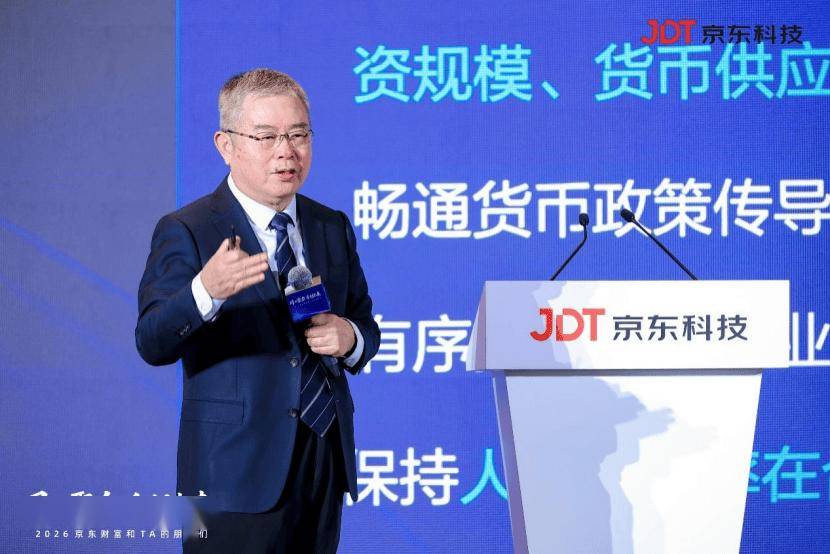
近日,在"2026京东财富和TA的朋友们"大会上,中国社会科学院学部委员、国家金融与发展实验室理事长李扬发表主 题演讲,系统阐述了中国货币金融环境的新变化与中长期趋势,为"十五五"提供适配的货币金融环境。 李扬认为当前货币金融环境正发生着融资结构调整、利率下行、货币政策范式演进的三大重要变化。 融资结构发生深刻变化 "脱媒"为资本市场发展提供了必要条件 李扬指出,我们孜孜以求的"降低间接融资比重、提高直接融资比重"的金融改革和发展的重要目标之一,其中降低间 接融资比重的目标已初步实现,但提高直接融资比重还有待努力。 李扬教授展示了一组关键数据:从2015年底到2025年11月底的10年间,我国社会融资总量从127.68万亿元增加至 440.07万亿元,十年提升2.45倍。同期,包括人民币贷款、外币贷款、委托贷款和未贴现银行承兑汇票等在内的间接 融资规模,则从110.55亿元增加至286.77亿元,十年提升1.59倍。显然,后者提升速度落后于前者。这种增速的差距, 导致间接融资占社会融资总量之比,从2015年的86%下降至2025年的65.1%,十年降低21个百分点。李扬认为,这意 味着,"降低间接融资比重"的 ...

财经与Al研究者吴晨:大学未来真正意义上的改变或需1万天
Xin Lang Cai Jing· 2025-12-08 11:45
Core Insights - The future transformation of universities may take approximately 10,000 days (around 25 years), emphasizing the need to preserve human qualities such as intuition, imagination, emotion, and common sense in the age of AI [3][7] - The first global cohort of "AI native" graduates will emerge in 2026, having utilized AI tools like ChatGPT since their entry into university, which will provide significant insights into educational reform [3][7] Educational Value Breakdown - The core values of universities can be deconstructed into three levels: knowledge acquisition and discipline accumulation, the formation of peer social relationships, and the signaling function of degrees and brand prestige [4][7] - While AI may replace some aspects of knowledge accumulation, social interactions within campus activities and the long-term brand influence of universities are unlikely to be disrupted in the short term [4][7] Future Considerations - The concept of "de-mediation" suggests that if future AI agents can comprehensively document personal growth and efficiently connect with hiring AI, the signaling value of prestigious universities may diminish, leading education's core value to revert to its essence [8] - AI's fundamental distinction from past technologies lies in its ability to transform human imagination into reality, providing powerful tools for individuals to realize their creative ideas [8]

李扬:值得注意的金融格局变化
和讯· 2025-12-08 10:25
Group 1 - The core viewpoint of the article highlights significant structural changes in China's financial landscape, particularly the transition to a low-interest-rate environment and the shift in monetary policy focus towards asset price stability [2][5] - The downward trend in interest rates is not unique to China but part of a global phenomenon, with various indicators pointing to a decline in rates across different markets [4][5] - The "disintermediation" trend is accelerating, indicating a shift in the financing structure, with a notable decrease in the proportion of indirect financing in total social financing from 86% to 65.3% over the past decade [6] Group 2 - The transformation of monetary policy is emphasized, moving from a traditional focus that ignored asset prices to an active management approach aimed at stabilizing financial markets [8][9] - Historical lessons from past financial crises underscore the importance of central banks being responsive to asset market conditions, marking a significant shift in China's monetary policy approach since September 2024 [8][9] - The People's Bank of China has begun to engage in market operations, such as buying and selling government bonds, which enhances its ability to manage liquidity and supports the development of the bond market [9]

李扬:“脱媒”已经成为发展资本市场的有效条件
Xin Lang Cai Jing· 2025-12-07 10:26
Core Viewpoint - The downward trend in interest rates may become a norm for China's financial operations in the near future, and addressing the challenges posed by low interest rates will be a primary task for the financial industry [1] Group 1: Reasons for Interest Rate Decline - The first reason is related to the real economy, where changes in global population structure and slowing technological progress have led to a decline in potential growth rates, resulting in total global savings exceeding total investments, which determines the downward trend of natural interest rates [3][7] - The second reason pertains to the financial system, where large-scale financialization of the real economy has altered the transmission mechanism of monetary policy to the real economy, indicating a shift from traditional economic cycles to financial cycles [3][7] - The third reason involves changes in the paradigm of monetary policy, where central banks are now more decisive in responding to crises, as seen after the subprime mortgage crisis in the U.S. [3][7] Group 2: Impacts of Interest Rate Decline - The decline in interest rates reduces financial costs for the real economy, providing a positive stimulus for its development, while in the financial sector, lower interest rates lead to a narrowing of interest margins [8] - Additionally, the decline in interest rates may cause funds to flow out of commercial banks' balance sheets, a phenomenon known as "disintermediation," where funds move away from financial intermediaries to the market and non-bank financial institutions [8] - The impact on monetary policy will lead to significant changes in financial structure, with social financing in China increasing from 12.768 trillion yuan in 2015 to 43.772 trillion yuan by October 2025, a 2.42-fold increase over ten years [9] Group 3: Financial Structure Changes - The scale of indirect financing, which includes various types of loans, has increased from 11.055 trillion yuan to 28.617 trillion yuan over the same period, a 1.58-fold increase [9] - The proportion of indirect financing in total social financing has decreased from 86% to 65.3%, a reduction of 21 percentage points over ten years, indicating progress towards the goal of reducing the proportion of indirect financing and increasing direct financing [9][10] - Disintermediation has become a favorable condition for the development of capital markets, although it does not guarantee that capital markets will develop well, as other conditions are also necessary [10]
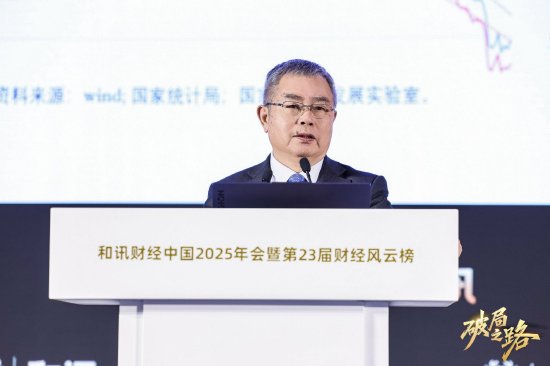
李扬:“脱媒”成为发展资本市场的有效条件 | 和讯2025年会
Sou Hu Cai Jing· 2025-12-07 07:15
Group 1 - The core viewpoint is that declining interest rates may become a norm in China's financial operations, and addressing the challenges posed by low interest rates will be a primary task for the financial industry [1][3] Group 2 - The reasons for the decline in interest rates include changes in global population structure, slowing technological progress, and a decrease in potential growth rates, leading to a situation where global savings exceed total investments [3] - The financial system's transformation, characterized by significant financialization of the real economy, has altered the transmission mechanism of monetary policy to the real economy [3] - The historical lessons from the Great Depression have led global monetary authorities to inject substantial liquidity into the financial system and real economy during economic fluctuations, resulting in a persistent decline in nominal interest rates [3] Group 3 - The impact of declining interest rates on the real economy includes reduced financial costs, which positively stimulates economic development [3] - In the financial sector, lower interest rates can lead to a narrowing of interest rate spreads and potential outflows of funds from commercial banks' balance sheets, resulting in changes to the social financing structure [3] - For monetary authorities, the decline in interest rates and the resulting disintermediation may weaken the credit transmission mechanism of monetary policy, increasing the importance of liquidity management [3] Group 4 - Data from the People's Bank of China indicates that the total social financing amount increased from 12.768 trillion yuan in 2015 to 43.772 trillion yuan by October 2025, a growth of 2.42 times over ten years [4] - The scale of indirect financing, including various types of loans, rose from 11.055 trillion yuan to 28.617 trillion yuan, an increase of 1.58 times over the same period [4] - The proportion of indirect financing in total social financing decreased from 86% to 65.3%, a reduction of 21 percentage points, indicating progress towards the goal of reducing indirect financing and increasing direct financing [4] - The conclusion drawn is that disintermediation has become an effective condition for the development of the capital market, although other conditions are also necessary for successful market growth [4]
【银行】一轮“稳息差”的降息——银行LPR报价利率下降与存款挂牌利率下调点评(王一峰/赵晨阳)
光大证券研究· 2025-05-21 14:00
Core Viewpoint - The central theme of the article revolves around the recent monetary policy adjustments by the central bank, including interest rate cuts and reserve requirement ratio reductions, aimed at stabilizing economic growth and restoring total demand in the face of external uncertainties and economic pressures [2][3]. Group 1: Monetary Policy Impact - Since May 7, the central bank has implemented a series of financial policies, including rate cuts, to create a favorable monetary environment for economic recovery [2]. - The recent interest rate cuts are part of a broader strategy to balance support for the real economy while ensuring the stability of the banking sector amid narrowing net interest margins (NIM) [3]. Group 2: Interest Margin Projections - The comprehensive impact of the recent rate adjustments is expected to improve the net interest margin (NIM) of listed banks by 1.6 basis points in 2025, leading to a 1.1 percentage point increase in annual revenue growth [4]. - However, in 2026, the NIM is projected to decrease by 0.4 basis points, resulting in a 0.2 percentage point decline in annual revenue growth [4]. Group 3: Future Challenges - The article highlights potential challenges for the banking sector, including renewed pressures from deposit "disintermediation" and the timing of government bond supply, which could affect liquidity in the market [5]. - There are concerns regarding the influence of various interest rate mechanisms on liquidity and the likelihood of further monetary policy tightening in the near term [5].