贯通式培养

Search documents
民生样本 年度记录丨“贯通”每个孩子的成长之路
Yang Guang Wang· 2025-12-28 02:07
Core Viewpoint - The article discusses the implementation of a "贯通式培养" (integrated cultivation) educational reform in Chengdu, which aims to create a seamless educational experience from primary to high school, focusing on holistic student development and reducing the pressure of traditional examinations [1][10]. Group 1: Educational Reform Overview - The integrated cultivation reform allows students to progress from primary to high school without selection or "cutting" admissions, emphasizing a continuous learning experience [6][10]. - Chengdu's pilot program includes 265 eligible students, with 153 opting for the integrated cultivation model, resulting in 91 students being randomly assigned to two classes [6][10]. - The reform aims to address knowledge gaps and adapt to students' diverse needs, fostering a more relaxed teaching environment [6][9]. Group 2: Curriculum Development - The curriculum is designed to be flexible and responsive, incorporating the latest developments in artificial intelligence and technology into lessons [3][4]. - Teachers are encouraged to develop their own subject-specific curriculum outlines, fostering a cohesive educational strategy across different grade levels [4][5]. - The curriculum emphasizes foundational skills and gradual progression, rather than premature specialization in subjects like coding [3][5]. Group 3: Teacher and Parent Involvement - Teachers are seen as "educational observers" and "learning planners," adapting their teaching methods to better suit the integrated model [14][15]. - Parents are encouraged to engage in their children's learning process, fostering a collaborative environment between home and school [7][12]. - The focus is on recognizing and nurturing each child's unique strengths, rather than solely concentrating on academic performance [6][12]. Group 4: Long-term Goals and Evaluation - The integrated cultivation model aims to develop students' comprehensive abilities, including emotional and practical skills, alongside academic knowledge [10][12]. - The evaluation system is being restructured to focus on students' overall development rather than just academic scores, promoting a more holistic view of student success [12][13]. - The long-term vision is to create a supportive educational ecosystem that adapts to the needs of all students, particularly those who may not excel in traditional academic settings [10][12].

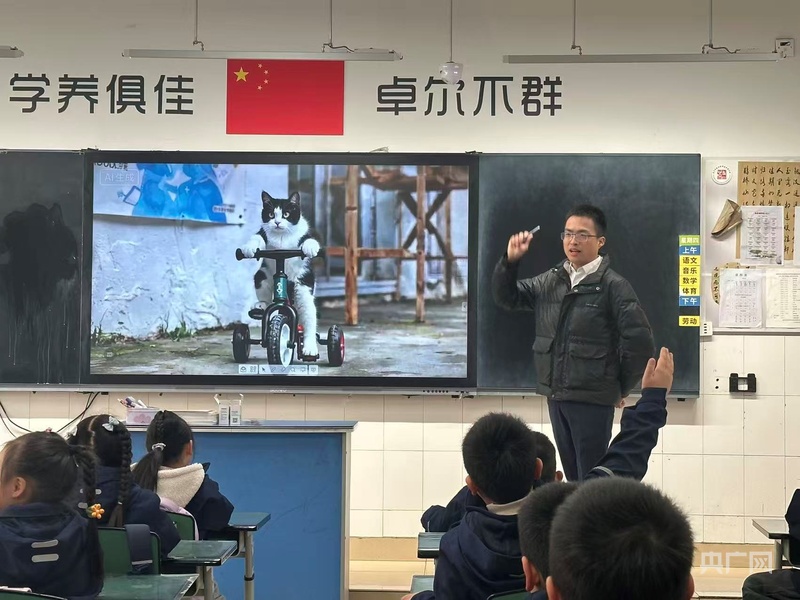
不“掐尖”、能退出,打破学段壁垒给成长松绑 “贯通式培养”试点如何缓解“升学焦虑”?
Xin Hua She· 2025-11-17 08:27
Core Perspective - The article discusses the implementation of a "12-year integrated training model" in Chengdu, aimed at alleviating "academic anxiety" among parents and students by breaking down educational barriers and focusing on holistic development rather than mere knowledge transfer [1][3][6]. Group 1: Educational Reform Initiatives - Chengdu is launching a pilot program for a "12-year integrated training model" starting in 2025, which will encompass primary, middle, and high school education [1][3]. - The pilot emphasizes a shift from "score-oriented" education to "student-centered" learning, focusing on comprehensive development and individual growth [3][4]. - The program includes a mechanism for students to voluntarily exit the integrated classes, ensuring flexibility and reducing pressure on students [3][5]. Group 2: Classroom Experience and Student Engagement - In the integrated classes, students engage in tasks that promote self-directed learning, such as acting as tour guides and creating projects, which enhances their confidence and learning autonomy [2][4]. - Parents have reported a positive impact on their children's learning experience, noting increased autonomy and opportunities for personal interests [2][5]. Group 3: Broader Educational Context - The integrated training model in Chengdu is part of a larger trend across China, with other cities like Beijing and Shanghai also exploring similar educational reforms [5][6]. - The initiative aims to create a more supportive educational environment that prioritizes student well-being and reduces the competitive pressure associated with traditional exam-oriented systems [6][7].
被辟谣的“取消中考”,能走进现实吗
经济观察报· 2025-10-23 15:15
Core Viewpoint - The current reform of the examination framework in basic education, specifically the "integrated training" model, has limited effectiveness and requires further development to alleviate the exam-oriented nature of education [2][6]. Group 1: Integrated Training Model - The Shanghai Municipal Education Commission has issued a plan for high-quality development in high schools, including a pilot program for long-term integrated training [3]. - Chengdu's education bureau announced a reform to explore a 12-year integrated training model starting in 2025, with eight schools participating in the pilot [3][4]. - The integrated training model is currently limited to a few pilot schools, primarily of medium-level quality, to avoid exacerbating competition for top-tier high schools [4]. Group 2: Examination System and High School Education - The discussion around the potential cancellation of the high school entrance examination (Zhongkao) has been fueled by parental desires for reduced pressure, but the current reforms only represent limited changes [3][5]. - The integrated training model allows students to apply voluntarily without entrance exams, but it does not significantly alter the overall examination landscape, as most students will still take the Zhongkao [4][5]. - The existing disparities among high schools, such as elite and demonstration schools, complicate the potential for abolishing the Zhongkao, as different levels of high schools still exist [5]. Group 3: Future Directions for High School Education - The proportion of students in general high schools is expected to exceed 80% by 2034, but this does not imply the cancellation of the Zhongkao due to the persistence of school-level differences [5]. - A shift in educational strategy is necessary to promote diversity and balance in high school education, which may include the eventual abolition of the elite high school system [5]. - The integration of vocational education into general high schools is suggested as a means to create comprehensive high schools that offer a wider range of courses and options for students [5].