资源地缘战略合作论坛(FORGE)

Search documents
都想抗衡中国稀土主导地位,“美国往巴西砸了5亿,欧盟一看跑了”
Guan Cha Zhe Wang· 2026-02-07 14:11
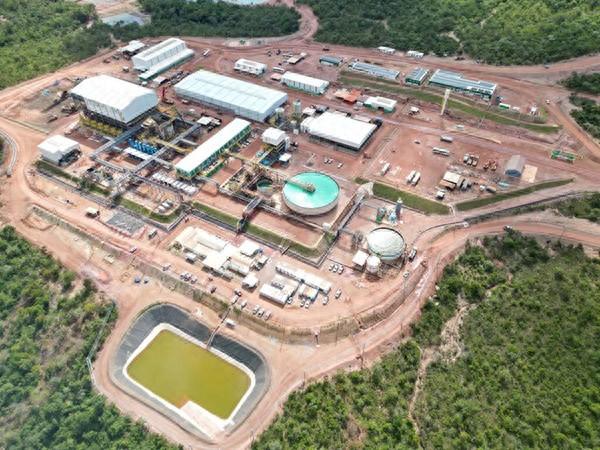
Core Viewpoint - Brazil, with the second-largest global reserves of rare earth materials, is becoming a focal point for the U.S. and Europe to reduce dependence on China for rare earth supplies, leading to a competitive landscape among major economies [1][2]. Group 1: Investment and Financing - Brazil's rare earth projects have raised approximately $700 million in equity and debt financing over recent years, primarily from Western investors, including the London-listed Hochschild Group and various private investors [1]. - The U.S. has invested over $500 million in Brazil's only operational rare earth mine, operated by Serra Verde, positioning itself as the largest investor in this sector [2][4]. Group 2: Geopolitical Dynamics - The U.S. is actively seeking to secure Brazil's undeveloped rare earth reserves, viewing Brazil as a key ally in its strategy to reduce reliance on China [2][4]. - The European Union is attempting to counter U.S. investments by focusing on supporting local employment and mineral processing industries in Brazil, although its decision-making and financing capabilities are perceived as less efficient compared to the U.S. [4][6]. Group 3: China's Position - China currently dominates the global rare earth market, accounting for over 60% of production and 92% of processing, making it a formidable competitor for both the U.S. and Europe [7][10]. - Chinese investments in Brazil's mining sector are projected to reach $556 million in 2024, indicating a strong interest in securing mineral resources [6]. Group 4: Challenges in Development - Despite Brazil's significant rare earth potential, large-scale production remains years away, with only one mine currently operational and producing limited quantities [10][11]. - The processing of Brazilian rare earths is still reliant on China, which possesses unique capabilities in separating and processing high atomic number rare earths [11].